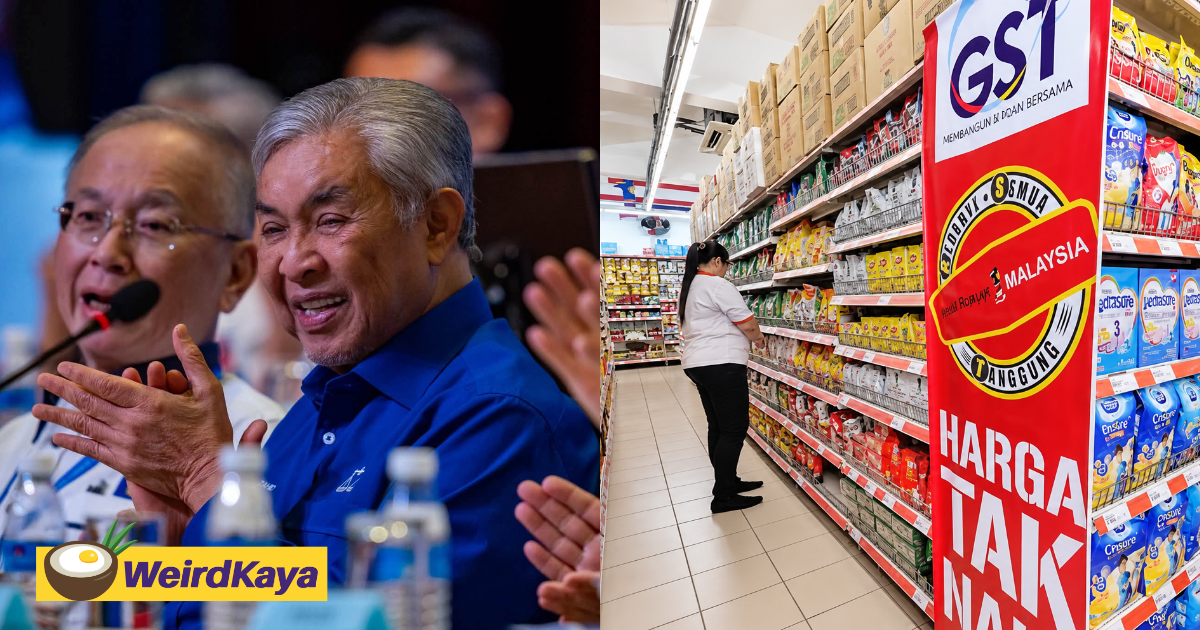
As political leaders and industry groups revive calls to reinstate the Goods and Services Tax (GST)—with UMNO making it a central pillar of its next general election platform and business chambers floating a lower 3% starting rate—proponents frequently sell the tax on a single promise: certainty.
On paper, a multi-stage value-added tax offers clear rules, eliminates hidden tax cascading under the Sales and Service Tax (SST), and broadens national revenue.
Yet for the Malaysian business community, particularly small and medium enterprises (SMEs), reintroducing the GST is far from a painless reset.
Make no mistake: bringing back the GST will still increase immediate operating costs for businesses.
While advocates correctly point out that companies today are better equipped than they were in 2015—thanks to existing accounting infrastructure and the ongoing rollout of the MyInvois e-invoicing system—transitioning tax regimes is never free.
Even with modern ERP systems and API integrations already built for LHDN’s MyInvois portal, reconfiguring tax logic across supply chains carries heavy friction.
Businesses still face direct expenses in updating point-of-sale terminals, auditing legacy contracts for tax-inclusive pricing, retraining finance teams, and absorbing short-term cash flow bottlenecks while input tax credit mechanisms stabilize—costs that disproportionately squeeze small and medium enterprises already stretched thin by recent compliance mandates.
For micro and small enterprises operating on razor-thin margins, the administrative overhead of tracking every input and output tax invoice represents a tangible financial drain, regardless of whether the headline tax rate is 6% or 3%.
More importantly, the promise of "certainty" rings hollow when measured against Malaysia’s institutional track record on tax refunds.
In theory, GST is cash-flow neutral for businesses because input tax credits paid on supplies are refunded by the government.
In practice, that neutrality depends entirely on the Treasury honoring its statutory timelines.
During the 2015–2018 GST era, legal safeguards failed when billions of ringgit meant for the GST Refund Trust Account were diverted into general government spending, leaving businesses waiting months—and in some cases years—for over RM19 billion in verified refunds and more than RM30 billion in total disputed claims.
For a small manufacturer or exporter, a delayed refund is not an accounting technicality.
It is an involuntary, interest-free loan to Putrajaya that chokes working capital and forces firms into costly short-term borrowing.
With recurring headlines in 2026 highlighting multi-billion-ringgit backlogs in corporate and income tax refunds at LHDN, skepticism among business owners remains deeply justified.
Until the government demonstrates ironclad fiscal discipline—backed by automated, legally ring-fenced refund mechanisms and automatic interest penalties for late payouts—reintroducing the GST will not deliver certainty.
Instead, it risks trading one set of tax inefficiencies for higher compliance costs and the very real threat of another liquidity squeeze.
FLK (leekhean.foo@gmail.com) is a content creator under the Newswav Creator programme, where you get to express yourself, be a citizen journalist, and at the same time monetize your content & reach millions of users on Newswav. Log in to creator.newswav.com and become a Newswav Creator now!
The User Content (as defined on Newswav Terms of Use) above including the views expressed and media (pictures, videos, citations etc) were submitted & posted by the author. Newswav is solely an aggregation platform that hosts the User Content. If you have any questions about the content, copyright or other issues of the work, please contact creator@newswav.com.