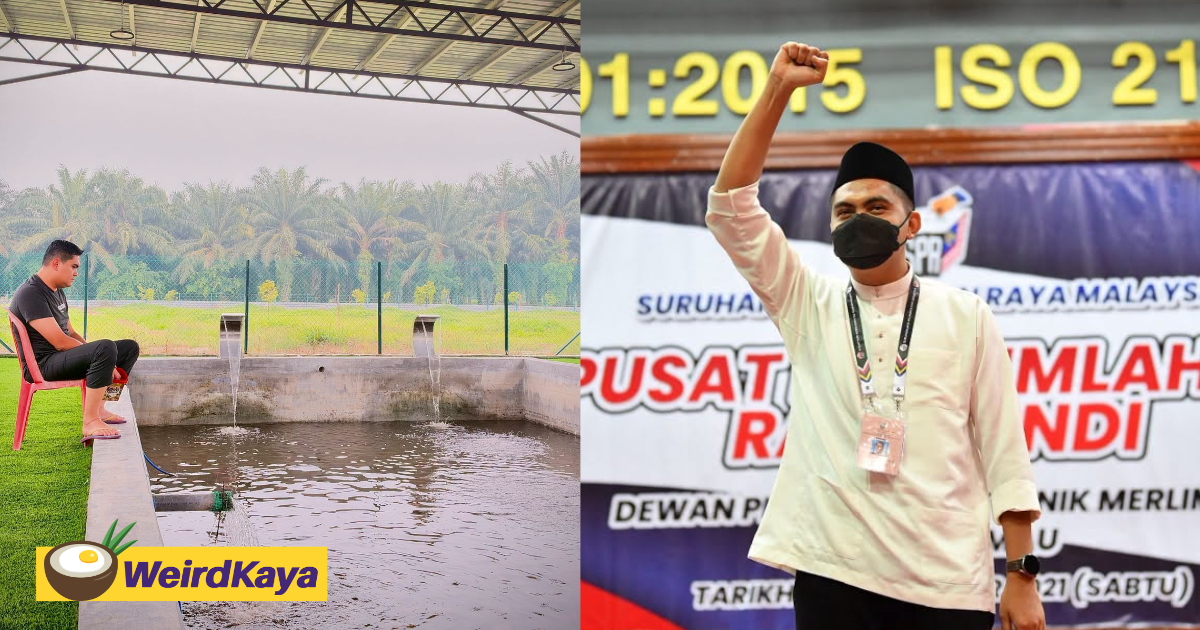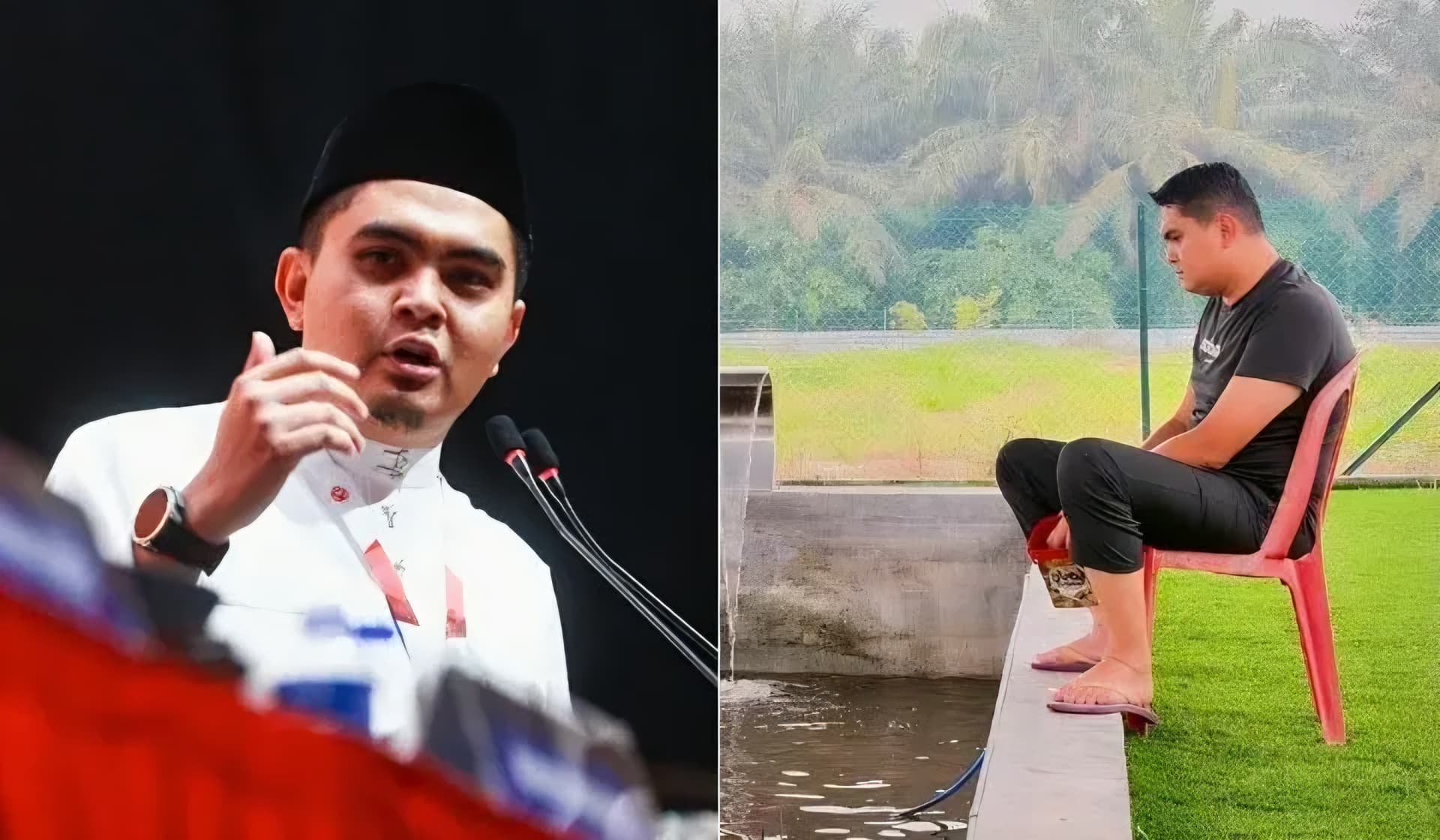
When the High Court gavel fell, delivering a definitive verdict that ordered UMNO Youth Chief Dr. Muhamad Akmal Saleh to pay RM300,000 in damages and legal costs to DAP veteran Teresa Kok, it sent a seismic jolt across Malaysia’s digital and political spheres. What began as a fiery social media clash over proposed mandatory halal certification guidelines ultimately transformed into a landmark legal reckoning on the boundaries of free speech and political rhetoric. For months, the digital space had been saturated with provocative video clips, sharp exchanges, and polarized reactions from supporters on all sides. Yet, when reality caught up with online bravado, the political firebrand found himself facing a heavy financial penalty, prompting a very public transition from fiery digital posturing to auctioning off personal assets including his favorite Honda X-ADV motorcycle and a tilapia fish farming pond to settle the debt.
This high-profile legal showdown forces us to look past partisan cheering and examine a deeper institutional reality. According to reports from the Malay Mail, the court ruled that the remarks made on social media crossed the line from legitimate public critique into actionable defamation. As coverage by The Malaysian Reserve highlights, the judgment underscores a vital legal reminder: public discourse on matters of public interest must still operate within the bounds of legal accountability and civil responsibility. But beyond the courtroom drama, this case exposes a fascinating cultural and psychological paradox within Malaysian politics. How do we balance the populist hunger for unfiltered, aggressive political performance with the sober, legally binding realities of institutional governance? To understand this shift, we must deconstruct the roots of the dispute, analyze the cultural appetite for viral confrontation, and explore what this verdict signals for the future of Malaysian public discourse.
The Anatomy of a Halal Flashpoint
The conflict that led to this historic defamation suit did not emerge in a vacuum; it was born out of a volatile mix of cultural sensitivities and economic anxieties. The friction ignited when Seputeh MP Teresa Kok voiced concerns that proposed regulations making halal certification compulsory for restaurants and food companies excluding those serving pork and alcohol might impose an undue administrative and financial burden on smaller businesses, local traders, and food vendors. In a multicultural nation like Malaysia, where halal standards are deeply tied to religious identity and consumer trust, any policy adjustment surrounding certification instantly becomes a high-stakes cultural touchstone.
Rather than engaging in a policy-driven debate within legislative chambers, the discourse rapidly migrated to algorithmic platforms like TikTok, where nuance is frequently sacrificed for maximum emotional impact. As detailed by The Vibes, the contentious video posted in September 2024 featured sharp, personal attacks that went far beyond discussing the economics of food regulation. In modern Malaysian politics, digital platforms have turned into colosseums where inflammatory rhetoric is rewarded with shares, views, and instant populist clout. Yet, this case demonstrates that the digital playground operates under a different set of rules than a physical ceramah; words broadcasted globally on social media leave a permanent digital footprint that courts can scrutinize with unyielding precision.
Cultural Perceptions of Populism Versus Accountability
Malaysian political culture has long wrestled with the tension between traditional displays of strong leadership and modern constitutional accountability. Figures who adopt a combative, unapologetic style often cultivate loyal followings by positioning themselves as fearless defenders of community interests. In the wake of the court ruling, analyses from platforms like Malaysia Dateline noted how the public reaction reflected deep-seated ideological divides. While critics viewed the verdict as a long-overdue check against political bullying and hate-laden rhetoric, supporters initially rallied with offers of crowdfunding to shoulder the financial burden.
However, Dr. Akmal’s subsequent decision to decline public donations and instead liquidate personal assets explicitly stating that he wanted to bear the responsibility himself without burdening everyday citizens struggling with their own economic pressures added a complex human layer to the narrative. This moment of personal accountability struck a chord in a society that values taking responsibility for one's actions. It highlights a critical cultural shift: even when political figures thrive on aggressive posturing, the Malaysian public increasingly expects leaders to face the direct consequences of their words. When populist bravado crashes into the rule of law, the romanticized veneer of political invincibility fades, replaced by the sobering truth that words carry real-world weight.
Institutional Realities and the Legal Boundaries of Free Expression
The High Court’s ruling in Melaka, delivered by Judicial Commissioner Datuk Isa Aziz Ibrahim, serves as a stark reminder of the institutional guardrails governing public speech in Malaysia. Under local legal frameworks, freedom of speech guaranteed under the Federal Constitution is not absolute; it is subject to restrictions designed to prevent defamation, public disorder, and malicious falsehoods. News reports compiled by Utusan Malaysia outline how the court not only mandated the financial damages and legal costs totaling RM300,000 but also issued a strict injunction requiring the removal of the offending video within seven days and banning any repetition of similar statements.
This institutional enforcement highlights a growing judicial intolerance for weaponized rhetoric that exploits sensitive ethnic and religious fault lines for political mileage. For institutional watchdogs, civil society organizations, and legal experts, this verdict establishes a vital precedent. It signals that political immunity does not extend to defamatory attacks disguised as public advocacy. As tech platforms and regulatory bodies tighten oversight under guidelines monitored by entities akin to the Malaysian Communications and Multimedia Commission (MCMC), political actors are discovering that the virtual world is no longer a lawless frontier. Institutional integrity relies on maintaining a legal environment where debates can be robust and passionate, yet remain anchored in truth and mutual respect.
What Do You Think? I’d Love to Hear Your Opinion in The Comments Section.
The conclusion of the defamation suit between Teresa Kok and Dr. Akmal Saleh marks a defining moment in contemporary Malaysian political history. It illustrates that accountability is inescapable, bridging the gap between fiery online rhetoric and the sober mandates of the judicial system. As Malaysia navigates its complex multicultural identity and economic aspirations, this case stands as a powerful reminder that words matter, character is tested in times of crisis, and the rule of law remains the ultimate arbiter of justice. The path forward demands a more mature, respectful, and policy-driven political culture one where leaders uplift the nation rather than fracturing it for temporary applause.
AM World (tameer.work88@gmail.com) is a content creator under the Newswav Creator programme, where you get to express yourself, be a citizen journalist, and at the same time monetize your content & reach millions of users on Newswav. Log in to creator.newswav.com and become a Newswav Creator now!
The User Content (as defined on Newswav Terms of Use) above including the views expressed and media (pictures, videos, citations etc) were submitted & posted by the author. Newswav is solely an aggregation platform that hosts the User Content. If you have any questions about the content, copyright or other issues of the work, please contact creator@newswav.com.