By Mihar Dias – The Cynical Columnist November 2026
There is something wonderfully Malaysian about the latest instalment of the Najib Razak saga. For months, we have been discussing his possible house arrest. There was a royal pardon, conditions attached, legal arguments, political manoeuvring and an UMNO fundraising campaign. Then, on November 6, the RM50 million fine was finally paid.
The High Court issued its order. Najib appeared to be on his way home. Police and members of the media were waiting outside his residence. The country was practically watching a homecoming.
And then, suddenly, the Attorney-General's Chambers developed a case of legal uncertainty.
Apparently, the law needed further interpretation.
Forgive me for being a layman, but isn't it rather curious that this uncertainty became sufficiently urgent only after the RM50 million had been paid and the court had issued its order?
Where was this uncertainty before the payment? Was the wording of the conditional pardon not available for examination earlier? Wasn't the Attorney-General involved in the process surrounding the royal pardon? Had nobody thought to examine the possible consequences before UMNO went around collecting RM50 million?
I am not questioning the AG's constitutional responsibilities or pretending to be an authority on the interpretation of the law. If there are genuine legal complications, by all means, let them be examined. The rule of law must prevail.
But surely the public is entitled to ask why the examination appears to have arrived after the transaction rather than before it.
The AGC has offered two possible interpretations. https://theedgemalaysia.com/node/824887
One is that payment of the RM50 million satisfies the fine but leaves the prison sentence running until August 2028, with house arrest merely changing the place where the remaining sentence is served. The other is that payment activates the pardon in a manner that completes the SRC sentence altogether.
There is also the complication of Najib's separate 15-year sentence in the 1MDB case, which is due to follow the SRC sentence.
These are not trivial questions. But they are hardly questions that should have surprised everyone on the day the money was paid.
UMNO pays. UMNO asks. The AG explains. The public watches. https://www.channelnewsasia.com/asia/malaysia-najib-razak-prison-release-begin-house-arrest-6530331
What makes this episode even more extraordinary is that UMNO itself is demanding answers.
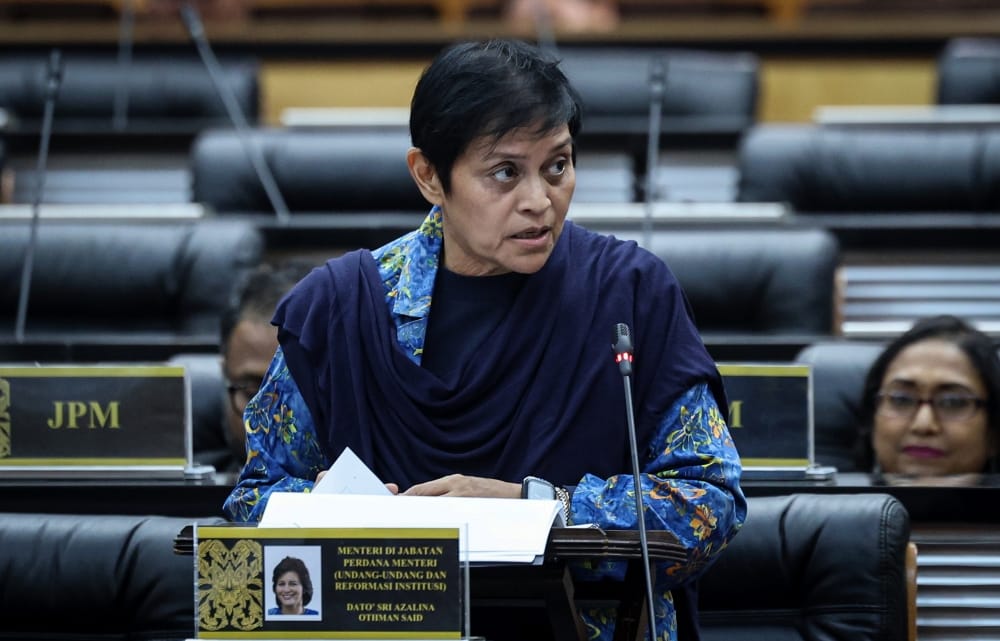
Its information chief, Azalina Othman Said, has asked the AG to explain when these legal concerns were first identified and why they surfaced only after the payment and the High Court order. She has also pointed out that Najib's residence had already been gazetted as a prison. https://www.freemalaysiatoday.com/category/nation/2026/11/06/when-raise-house-arrest-questions-only-now-umno-asks-agc
When a party that has gone to the trouble of raising RM50 million to facilitate its former president's house arrest begins asking questions about the legal process, perhaps the government should pay attention.
This is not merely a disagreement between Najib's lawyers and the AG. It has become an institutional credibility issue.
And let us not forget the people who contributed to that RM50 million. UMNO launched a solidarity fund, appealing to members and supporters to help settle the fine. Some were enthusiastic. Others were less impressed.
Even within UMNO, there were members who questioned the wisdom of collecting such a substantial sum for one individual when ordinary Malaysians were struggling with the cost of living. One party veteran reportedly wondered whether the money could have been better spent helping the rakyat.
That is a rather uncomfortable question for a political party supposedly representing the interests of the people.
Fifty million ringgit is not pocket change. It could fund scholarships, help small businesses, improve rural facilities or support thousands of families. Instead, it became the centrepiece of a political exercise involving the fortunes of one former prime minister.
Of course, supporters will argue that Najib is entitled to the benefit of a royal pardon and that the conditions attached should be honoured. That is a legitimate argument. But the public is equally entitled to question the political optics of an entire party mobilising resources to secure a more comfortable form of detention for its former leader.
And then there is Melaka. What a coincidence of timing!
The Melaka state election is on November 14. UMNO and Barisan Nasional are campaigning at a time when the party needs to demonstrate unity, political relevance and a credible future.
Najib remains a powerful emotional symbol for a section of UMNO's membership. Bringing Bossku home could energise that constituency. But it could also remind undecided voters of the very corruption controversies that contributed to UMNO's electoral decline.
The party is caught between nostalgia and political reality.
Its leadership wants to reclaim its supporters. Its grassroots want their former president treated fairly. But the wider electorate may be asking whether UMNO has learned anything from the events that brought it down in the first place.
There is another irony. UMNO's payment of the fine was supposed to demonstrate loyalty and solidarity. Instead, it has opened another political wound, with members questioning the fundraising exercise and now demanding explanations from the Attorney-General.
PAS and PN have also seized the opportunity to demand explanations from the government, arguing that the conditions should be implemented once fulfilled. Even Transport Minister Anthony Loke's earlier declaration that he would resign if Najib went home has become another political complication.
The Najib issue is no longer confined to the courtroom. It has become a test of political consistency for practically everyone involved.
But perhaps there are questions we have not asked loudly enough.
Who exactly contributed the RM50 million? What was the source of the funds? What level of transparency can the public expect from a political fundraising exercise of this magnitude? Will the accounts be independently examined?
These are reasonable questions, particularly when the money was collected in the name of political solidarity and used to settle a court-imposed financial penalty.
And what happens if the eventual legal interpretation differs from the expectations that prompted the fundraising? Will anyone explain the consequences to the contributors?
There is also a much bigger question about public confidence in our institutions.
The monarchy has a constitutional power of pardon. The courts have their judicial responsibilities. The Attorney-General has constitutional duties. The government has its executive responsibilities. None should be treated as a convenient instrument of political expediency.
If the AG believes clarification is necessary, let the appropriate legal process determine the matter. But the public deserves transparency about the grounds for the intervention, the timing and the legal authority behind it.
We cannot have one institution appearing to move forward while another suddenly puts the brakes on, leaving the country wondering who is actually in charge of implementing what has already been decided.
At the end of the day, I am merely Mihar Dias, a layman looking in from the outside. I do not pretend to understand every legal nuance. But I understand timing, human behaviour and political incentives.
And the timing here is fascinating.
First, a pardon. Then a fundraising campaign. Then RM50 million. Then a court order. Then an apparent release. Then a legal interpretation. Then a suspension. And all this just eight days before Melakans go to the polls.
Perhaps it is all perfectly innocent. Perhaps it is simply an unfortunate sequence of administrative and legal events.
But Malaysian politics has taught us that coincidences sometimes deserve closer examination.
I have one final question.
If the legal complications were always there, why did it take RM50 million to bring them into focus?
Or, to put it in language even a cynical columnist can understand:
The money was ready, the court order was issued, the house was ready, the police were waiting. Only the law appeared to need more time to make up its mind.
Welcome to Malaysian politics. The show must go on. The only uncertainty is who gets to write the next act.
Mihar Dias (mihardias@gmail.com) is a content creator under the Newswav Creator programme, where you get to express yourself, be a citizen journalist, and at the same time monetize your content & reach millions of users on Newswav. Log in to creator.newswav.com and become a Newswav Creator now!
The User Content (as defined on Newswav Terms of Use) above including the views expressed and media (pictures, videos, citations etc) were submitted & posted by the author. Newswav is solely an aggregation platform that hosts the User Content. If you have any questions about the content, copyright or other issues of the work, please contact creator@newswav.com.