.jpg)
By Mihar Dias February 2026
There was a time when visiting the sick meant whispering, not posing. You lowered your voice, held a hand gently, said a quiet prayer, and slipped away before your presence became a burden. Today, apparently, you adjust the lighting.
A dear friend of mine, now 80, lies immobilised in Putrajaya Hospital after a terrible fall. His neck and spine are fractured. There is a blood clot in his brain. He cannot move for fear that a wrong shift might paralyse him permanently. It is the kind of situation that should make visitors tread softly — emotionally and physically.
Instead, it has turned into something resembling a reunion tour… with a camera crew.
It began innocently. His daughter asked for prayers, and I shared the message in our old classmates’ group chat. What followed was an avalanche of goodwill — which, in itself, was touching. People came from as far as Alor Setar. That part speaks well of loyalty and friendship.
But then came the ritual.
The daily hospital selfie.
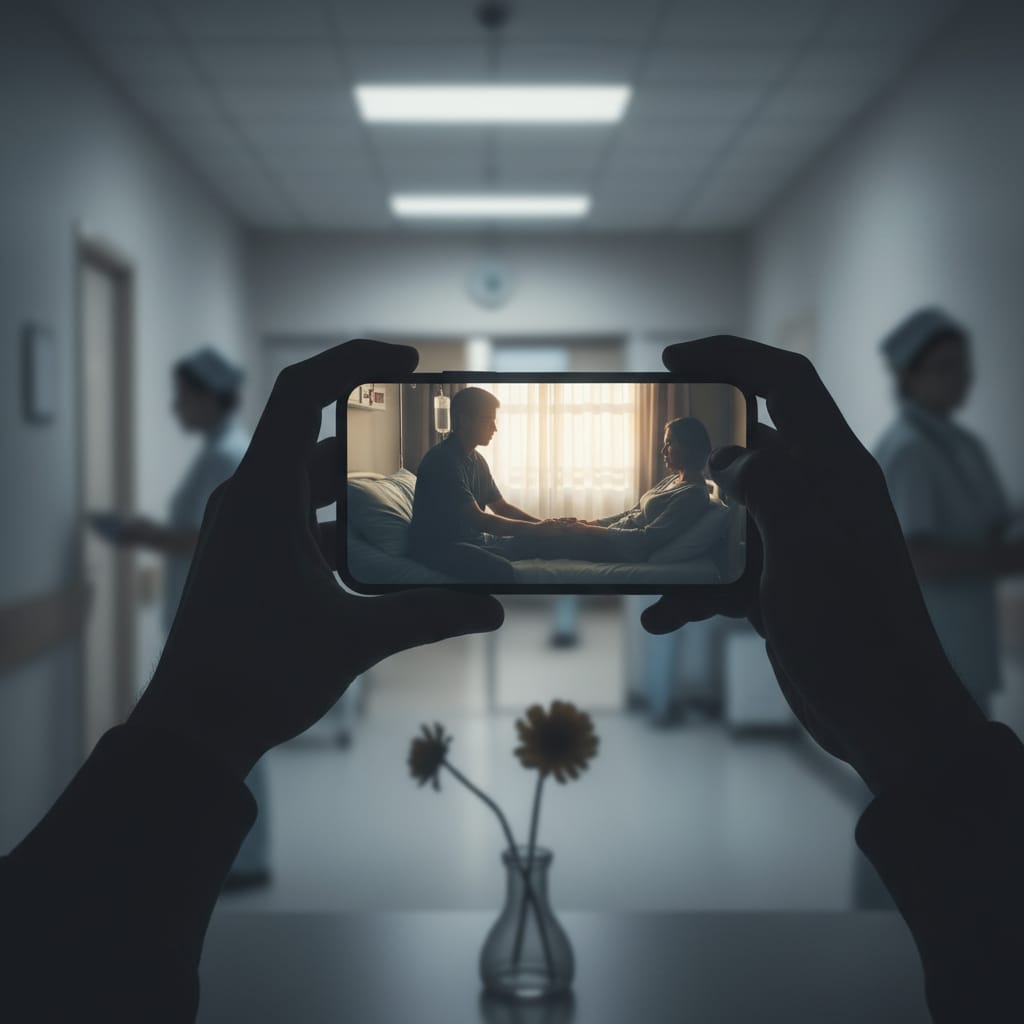
Each visitor — or group of visitors — would line up carefully around the bed, ensuring everyone’s face was visible, including distant cousins who likely hadn’t spoken to him in years. Someone would hold up a phone. Click. Smile. Upload. Caption: “Visiting our dear friend. Stay strong!”
And thus the performance was complete.
It struck me how surreal it all felt. Here was a man who could barely move, trapped in braces, facing the frightening possibility of paralysis — and around him swirled a choreography not of care, but of documentation. The visit, it seemed, was not fully real until it appeared in the chat group or on Facebook.
Compassion, in the age of social media, increasingly requires proof of attendance.
We see the same phenomenon elsewhere. Influencers flying into disaster zones not to help quietly, but to record themselves handing out a single food pack — carefully framed so the giver’s face dominates the shot while the recipient becomes a blurred prop. Charitable visits to orphanages where the photo session lasts longer than the interaction. Volunteers who distribute five blankets and upload fifty photos.
Online, this behaviour has acquired a name: “performative compassion.”
The web is full of criticism of such acts — especially when influencers are exposed for staging generosity. There are infamous examples: YouTubers filming themselves giving money to homeless people while ensuring the camera captures their own emotional reactions; travel influencers posing beside malnourished children in developing countries as though they were tourist attractions; celebrities turning charity events into red-carpet opportunities.
The backlash is fierce because people instinctively recognise the imbalance. When suffering becomes a backdrop, empathy begins to look like exploitation.
Psychologists say this is driven by a modern phenomenon — the merging of identity and visibility. In a world where social worth is measured by likes and shares, even kindness becomes currency. A visit without a photo feels incomplete, almost wasted.
But there is a moral cost.
True compassion centres the suffering person. Performative compassion centres the visitor.
One is quiet. The other is noisy.
One asks, “How can I help you?”
The other asks, “How do I look helping you?”
Of course, not everyone who takes a photo means harm. Many genuinely care. Social media, after all, is now how people share life events. But the line is crossed when the documentation overshadows the dignity of the person being visited.
A hospital bed should not become a stage.
Nor should illness become content.
In the past, we spoke of “getting well soon.” Today, it sometimes feels like we are saying, “Get well soon — but first, hold still for the picture.”
Perhaps what we need is a revival of an old-fashioned idea: that some acts of kindness should remain unseen. That the most sincere compassion is often the quietest — the visitor who sits silently for ten minutes, whispers a prayer, and leaves without ever reaching for a phone.
Because in the end, compassion is not about proving we were there.
It is about making sure the person who suffers never feels alone — even when no one else is watching.
Mihar Dias (mihardias@gmail.com) is a content creator under the Newswav Creator programme, where you get to express yourself, be a citizen journalist, and at the same time monetize your content & reach millions of users on Newswav. Log in to creator.newswav.com and become a Newswav Creator now!
The User Content (as defined on Newswav Terms of Use) above including the views expressed and media (pictures, videos, citations etc) were submitted & posted by the author. Newswav is solely an aggregation platform that hosts the User Content. If you have any questions about the content, copyright or other issues of the work, please contact creator@newswav.com.