.jpg)

By Mihar Dias (C) Copyright March 2023
There is an ongoing debate between Tun Mahathir and Dr. Ramasamy of Penang on racism. It's all over social media. Many have joined in and expressed their views, some siding Tun Mahathir while others support his nemesis, Ramasamy.
I am reluctant to participate in the ongoing debate but would only like to add to what Tun Mahathir said in his latest statement where he commented on multiracialism that does not seem to benefit most Malays.
According to Tun Mahathir, "Multiracialism in Malaysia means everything goes to the most capable, the most financially strong and (the people) with the most wide business network, the best trained and experienced. Only non-Malays qualify. Malays get nothing from multiracialism."
To a great extent, Tun is somewhat right, when he said everything goes to the most capable, the most financially strong and (the people) with the most wide business network, the best trained and experienced. There's no way one could succeed without financial strength, wide business network, training and experience. Even amongst Malays themselves.
My life is a classic case study to support what Tun Mahathir said. I am a kampung boy from Alor Setar who was fortunate enough to get a better education through the British policy of Special Malay School system in 1950s where a handful of Malay children were made to switch from Malay to English medium when they were in Primary Four.
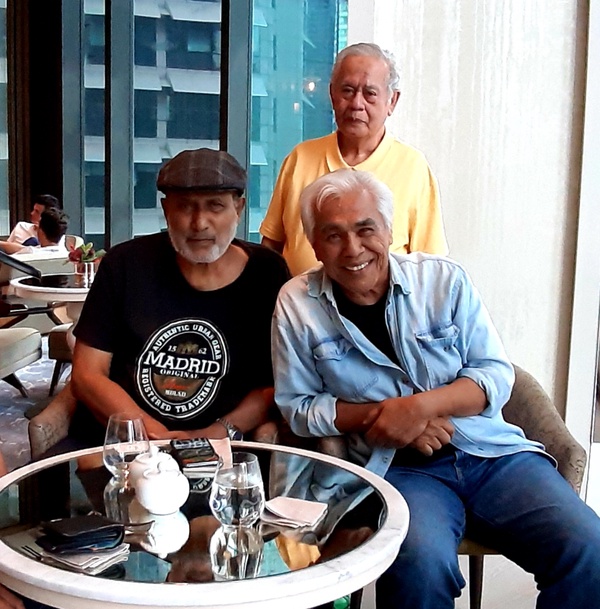
In those days, Malay school education ended at Standard Six and there was nowhere else you could go to pursue higher education, largely because without English access to institutes of higher learning overseas or University of Malaya in Singapore was almost negligible, in fact non-existent.
But for the non-Malays there was an all Chinese university, the Nanyang in Singapore, which the community built by themselves without British colonial government funding.
Or for those with financial means overseas education in the UK or elsewhere was possible if they had attended English medium schools. For the Chinese medium students, universities in Taiwan was another route to higher education. For the Indians, there were colleges in India where they could pursue higher education then.
One route to being a professional then was entering the Inns of Court with only a form five qualification. After 18 months you could be back in Malaya do your chambering and be admitted to the Bar as a practising lawyer. But access to the Inns would depend on financial ability. Not many Malays had the means to do so then except for a few pirivileged individuals. That partly explains why one particular ethnic group for decades dominated the legal profession in Malaysia.
On the other hand, in the Special Malay School system, a Malay child selected for the programme would have to repeat standard four, once in Malay and later in English. If he was successful he would continue to sixth form and perhaps the university.
As a result of the uniqueness of the programme, my classmates and I were able to attend college, acquired skills that gave us better jobs and were able to build useful networking with others, locally and overseas to be reasonably successful.
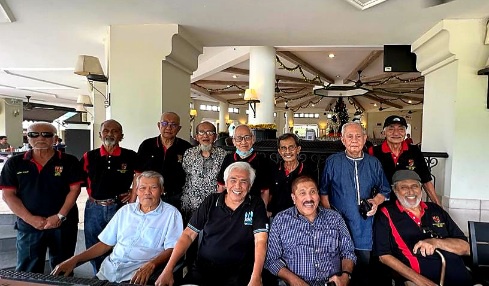
Tun Daim Zainuddin incidentally has a similar experience via the Special Malay School system. Later, when he first arrived in KL to try his luck in business he was told to go back to his kampung because he would never succeed in the city.
Anyway, he persisted found a disused mining pool and turned it into a housing estate and the rest they say is history.
But for every Daim or every alumnus of the Special Malay School system, thousands other Malays never made it.
Perhaps those are the ones that Tun Mahathir is talking about because the ordinary Malay seldom gets access to all of the above compared to their non Malay counterparts, particularly in the urban areas.
He must have been talking in probabilities. Tun Daim is a chance in a million. But not so for those amongst non Malays. Their chance of being successful in multiracial Malaysia is probably better when compared to Malays. In terms of opportunities, access to markets, financial resources and networking the Chinese are supreme not only in Malaysia but throughout the Pacific Rim.
The success of the overseas Chinese is well chronicled in a book Lords of the Pacific Rim by Sterling Seagrave which is described as "a rich, engrossing, superbly researched, and spectacularly told account of who the Overseas Chinese are and how they became so powerful."
Robert Kuok is probably one of the better known Malaysian born Chinese who made a name for himself in the Asia Pacific region.
Statistically speaking, there are more successful Malaysian of Chinese origins who have made it in business and all economic activities including science and technology mostly because they had the means and access to networking and other resources.
The Special Malay School system initiated by the British was an affirmative action plan to address the shortcomings in the earlier education policy which was only aimed at making the son of a farmer a better farmer and the son of a fishermen a better fisherman.
It was not a racist policy by any means. It was meant to help Malays gain access to English secondary schools and eventually institutions of higher learning. But later in the 1960s the Special Malay School system was discontinued.
Anway, despite this special programme the Malays in the rural areas are still largely left behind educationally and otherwise by successive Malay led governments.
By adopting Bahasa Malaysia as the official language, the government deprived Malays of an English language based education thus explaining why most Malays in general do not have proficiency in the language. This deficiency accounts for the Malays own inability to be competitive in business, more so for the rural Malays just like the time when they were under the British.
So they remain incapable, financially weak, without any business networking abilty, poorly trained and the least experienced among all major ethnic groups in the country. But you cannot just blame multiracialism for all their shortcomings.
Mihar Dias is a content creator under the Newswav Creator programme, where you get to express yourself, be a citizen journalist, and at the same time monetize your content & reach millions of users on Newswav. Log in to creator.newswav.com and become a Newswav Creator now!
The User Content (as defined on Newswav Terms of Use) above including the views expressed and media (pictures, videos, citations etc) were submitted & posted by the author. Newswav is solely an aggregation platform that hosts the User Content. If you have any questions about the content, copyright or other issues of the work, please contact Newswav.
