.png)
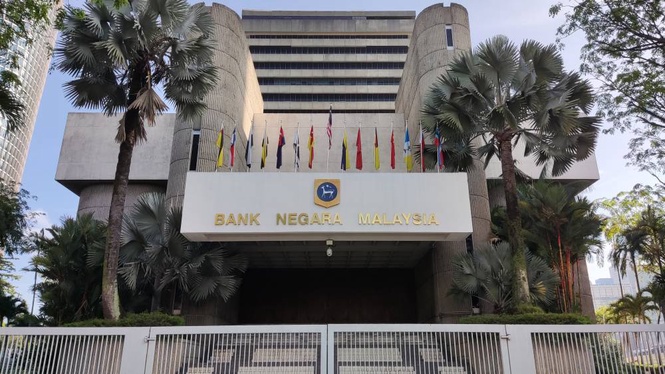
AHEAD of Bank Negara Malaysia's (BNM) Monetary Policy Committee meeting next week, attention has once again turned to an economic term closely tied to the everyday lives of Malaysians, the Overnight Policy Rate (OPR).
“When the OPR rises, so do housing instalments”
This is the assumption that often surfaces whenever BNM announces its decision on the OPR. In fact, some even believe that if the OPR remains unchanged, nothing of significance has taken place.
In reality, whether the OPR is raised, lowered or held steady, every decision is made only after careful assessment of the country's economic conditions and outlook.
More importantly, that decision can influence financial conditions, including the cost of financing, returns on savings, household spending and business investment, which ultimately affects economic activity and price levels.
As such, understanding the OPR is not simply about knowing whether loan installments will change, but about understanding how monetary policy helps support price stability and sustainable economic growth over the long term.
Economist and iCATS University College deputy vice-chancellor Professor Datuk Dr Shazali Abu Mansor said the OPR is the key monetary policy instrument determined by the Monetary Policy Committee to influence monetary and financial conditions in support of price stability and sustainable economic growth.
He said any change to the OPR is transmitted through the financial system and can affect financing rates as well as overall financial conditions.
"For example, if the assessment shows that inflationary pressures are expected to rise in the future, the Monetary Policy Committee may consider adjusting the OPR to help ensure inflation remains under control over the medium term.
"Conversely, if economic growth prospects appear to be slowing, the OPR can be adjusted to support economic activity through more conducive financing costs," he told Sinar Bisnes.
Like driving a car
Shazali likened the implementation of monetary policy to driving a car towards a destination.
Pressing the accelerator allows the car to move faster, but a safe journey does not depend on speed alone.
The driver must also control the steering, apply the brakes at the right moment and constantly watch the road ahead.
Monetary policy works much the same way. Decisions on the OPR are not based solely on current economic conditions, but also take into account assessments of expected economic and inflation developments going forward.
If the assessment shows the economy risks growing too rapidly, thereby raising inflationary pressures, the Monetary Policy Committee may consider adjusting the OPR to keep growth sustainable.
Conversely, if the economic outlook is expected to moderate, an OPR adjustment can help create financial conditions that are more supportive of economic activity.
When the OPR changes, its effects are not felt instantly.
The change takes time to filter through financing and deposit rates before it influences the decisions of consumers and businesses, including spending and investment.
The overall impact of an OPR change on the economy also typically takes time to be fully felt.
It is through this mechanism that monetary policy helps shape overall economic activity and price levels, thereby supporting long-term price stability.
OPR adjusted before problems emerge
Shazali explained that decisions on the OPR are not made spontaneously, let alone based on political sentiment or pressure from any party.
Instead, such decisions are made by the Monetary Policy Committee, which carries out its responsibilities independently, based on a comprehensive assessment of economic conditions and outlook.
The Monetary Policy Committee meets six times a year to evaluate various economic indicators before deciding whether the OPR should be raised, lowered or maintained.
In fact, a decision to maintain the OPR is itself an active monetary policy decision, based on an assessment of current economic conditions and future prospects.
Among the factors examined are inflation, economic growth, labour market conditions, household spending patterns, business performance, financial system conditions, as well as global economic developments such as commodity prices, international interest rates and currency exchange rate movements.
All this information is analysed comprehensively to assess not only the current state of the economy, but also its outlook over the next 12 to 18 months.
"The OPR is not meant to burden the people. Rather, it is part of efforts to ensure inflation remains under control, economic growth is more sustainable and rising prices do not continuously erode the public's purchasing power," he said.
He said this approach shows that BNM does not wait until the economy runs into trouble before acting.
Instead, the Monetary Policy Committee evaluates early indicators and potential future risks before making monetary policy decisions, bearing in mind that changes to the OPR take time to work through the economy.
Plan finances wisely
For the public, the OPR may seem like a complex economic term. Yet its effects are, in fact, closely tied to everyday life.
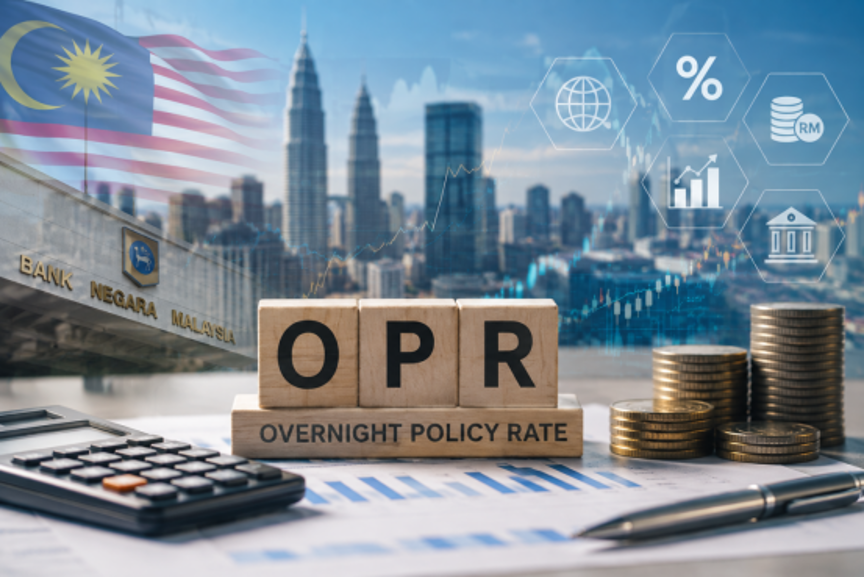
The OPR is the policy rate that serves as a reference for borrowing costs between financial institutions, thereby influencing the financing and savings rates offered by banks to consumers.
When the OPR changes and its effects are transmitted through the financial system, it can influence rates for housing loans, vehicle financing, business financing, credit cards, as well as returns on certain savings and deposit products.
For this reason, changes to the OPR can affect household financial planning, although the impact is not necessarily felt immediately or to the same extent by all borrowers and savers.
As such, the public is advised to plan their finances more prudently by managing loan commitments, strengthening savings, and making financial decisions based on sound information rather than speculation.
Changes to the OPR should also not be viewed solely in terms of whether loan instalments rise or fall.
Instead, they should be understood as part of BNM's broader effort to use its monetary policy tools to keep inflation under control, maintain a stable financial system and ensure the economy continues to grow sustainably for the benefit of the people.
INFO
How the OPR affects the economy and the people
WHEN THE OPR RISES
- Borrowing costs tend to increase — Floating-rate loans, such as housing loans, may become more expensive.
- Spending and investment may moderate — Consumers and businesses may become more cautious with spending and investment.
- Returns on some savings may rise — Products such as fixed deposits and savings accounts may offer higher returns.
- Inflationary pressure may ease — More moderate demand can help reduce upward pressure on prices.
WHEN THE OPR FALLS
- Financing costs tend to decrease — The cost of financing homes, vehicles and businesses may become lower.
- Spending and investment may increase — Lower financing costs can encourage spending, investment and business activity.
- Economic activity may pick up — More supportive financial conditions can help stimulate economic activity.
- Inflationary pressure may increase — Higher demand can raise price pressures if demand growth outpaces supply.