.png)
SHAH ALAM — For the Orang Asli, land is more than a title or a boundary on a map. It is home, livelihood, history and identity. Yet across Peninsular Malaysia, the question of how that relationship with land translates into legal protection remains unresolved.
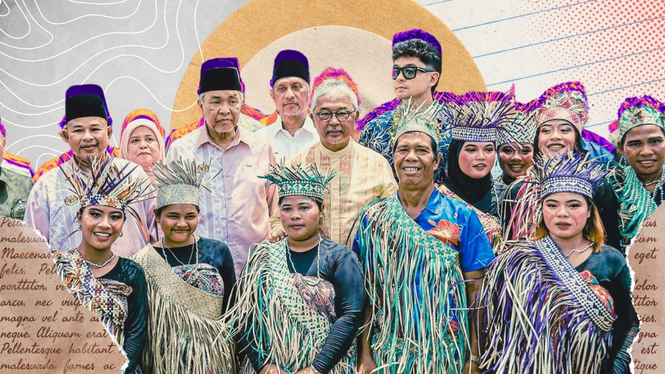
That tension was brought into sharp focus by Pahang Sultan Al-Sultan Abdullah Ri’ayatuddin Al-Mustafa Billah Shah in his royal address in conjunction with Orang Asli Day on Aug 18.
While cautioning against the arbitrary use of the term tanah adat, Al-Sultan Abdullah called for the measurement, demarcation and gazettement of Orang Asli areas to be expedited, stressing that their rights and welfare must be protected under the Constitution and the law.
His remarks have implications beyond Pahang because they touch on a longstanding national question: how should Malaysia reconcile the statutory framework governing Orang Asli land with communities' generations-old relationship with the land they occupy and depend on?
Under the Aboriginal Peoples Act 1954 (Act 134), the law provides for “Orang Asli Areas” and “Orang Asli Reserves”, rather than a separate statutory category called tanah adat.
But the legal framework does not by itself resolve the wider issue.
Across Peninsular Malaysia, Orang Asli communities continue to live on and use land that has been traditionally occupied, cultivated, hunted or otherwise depended upon, but which may not have received formal statutory protection.
That becomes particularly significant when such land is subsequently considered for development, plantation expansion or other competing uses.
Environmental groups have argued that consultation with affected communities must therefore take place before development decisions are made, rather than after plans have already been finalised.
Meaningful consultation should begin when land is identified for development and continue through environmental assessments and approval processes, particularly where projects could affect forests, water sources, settlements, burial grounds, hunting areas and other places traditionally used by Orang Asli communities.
But consultation alone cannot resolve questions of land status.
A community may be consulted about a project while still lacking certainty over the legal status of the land on which it lives. At the same time, formal gazettement does not remove the need for communities to be meaningfully involved in decisions affecting their land and resources.
This is why the debate over tanah adat is about more than terminology.
Orang Asli representatives and civil society groups have argued that customary relationships with land are rooted in generations of occupation, use and inheritance, and form part of their communities' identity and way of life.
Such claims have also featured in Malaysia's legal history, including court decisions involving Orang Asli communities that have recognised interests arising from traditional occupation and use.
The challenge for policymakers is therefore to ensure that the process of identifying, measuring, demarcating and gazetting land provides communities with meaningful protection rather than leaving them vulnerable while development decisions move ahead.
It is also a question of certainty for the state and developers.
Resolving land status before development could reduce disputes, provide greater clarity for investment and prevent communities from being confronted with projects on land whose status remains contested.
The plantation debate has made the issue more urgent.
Environmental groups have called for greater use of existing plantation areas and higher productivity rather than continued pressure to open new land, particularly where expansion could affect forests or areas traditionally used by Orang Asli communities.
The larger question, however, is not whether Malaysia should choose development over indigenous rights, or conservation over economic growth.
It is whether all three can be reconciled before decisions become irreversible.
Al-Sultan Abdullah's address provides a timely reminder that protecting Orang Asli land requires more than words on paper. It requires clear legal status, proper boundaries, meaningful consultation and protection for the communities whose lives are tied to the land.