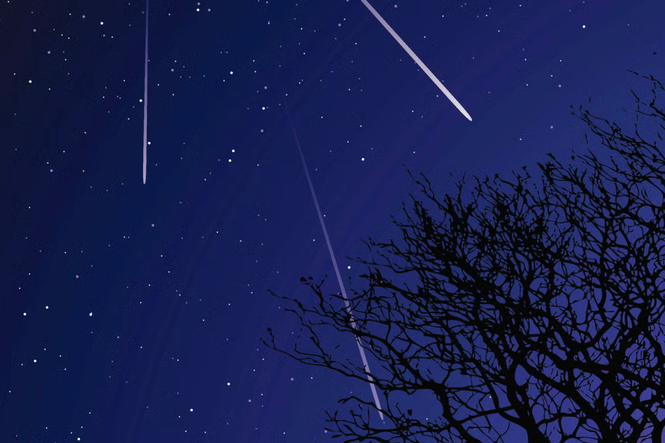
The world is about to be treated to one of the best meteor showers of the year: the Orionids.
From the night of 2 October, all the way through to 7 November, steaks of light will be visible in the night sky from the Orionid meteor shower. It reaches its maximum on 21 October – but should be easily visible around that date.
Seeing the Orionids, like any other meteor shower, is relatively simple. All you have to do is go outside – preferably somewhere with as little light as possible – and look up, let your eyes adjust to the night sky, and see if you can spot anything.
This year, however, that might be a little more difficult than usual. The Moon will be waxing gibbous, or on its way to a full Moon, on the night of the 21 October peak, meaning that light from the bright Moon could make it harder to see any dimmer meteors.
The Orionid meteor shower is known as a particularly reliable meteor shower – its peak lasts for about a week, making it relatively convenient to watch. But it is also special because the meteors are pieces of Halley, the comet that has been visiting us for thousands of years and caused a stir when it last passed in 1986.
The ”shooting stars” that we see, as with other meteor showers, are actually pieces left behind that comet as it travels through space. As the Earth moves through that field, the debris collides with our atmosphere and vaporises, leaving behind the visible streak of light.
The Orionids get their name from the fact that they seem to come out of the constellation Orion. But they should be visible right across the night sky.
They are not the only meteor shower that result from Halley’s Comet, which is officially known as 1P/Halley. Debris from that object are also responsible for the Eta Aquariids, which arrive in May.
Read MoreSpaceX’s Starship dramatically explodes after first orbital trip