The moon is next in line to pull a vanishing act.
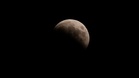
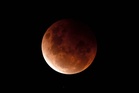
Having missed out on this month’s total solar eclipse, skywatchers across the Americas will enjoy the best vantage point when the shadow of Earth briefly covers the moon. From Thursday night, Aug. 27, into Friday, Aug. 28, roughly 96% of the lunar surface will be shrouded, creating an exceptionally deep partial eclipse.
Nearly 1 billion people in North, Central, and South America will have a complete view of the event. In total, more than 3 billion people—44% of the global population—are positioned to see at least part of it.
The lunar body is already commanding attention. NASA sent the Artemis II crew on a record-setting lunar flyby in April, serving as a prelude to landing humans on the surface and constructing a human and robotic base over the next several years.
"This is a great time to be part of the space program, right? We’re not slowing down," NASA astronaut Jack Hathaway told The Associated Press from the International Space Station last week.
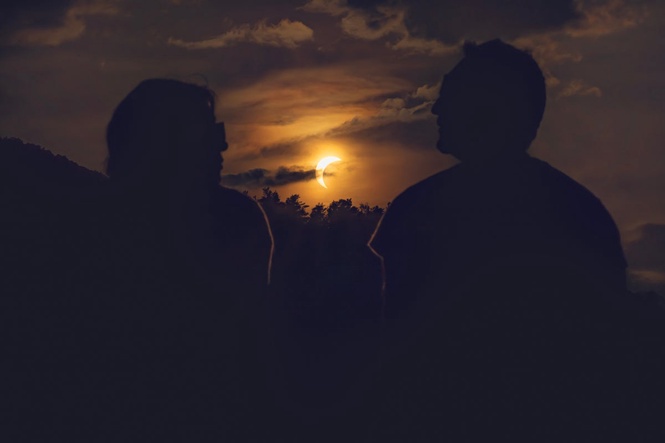
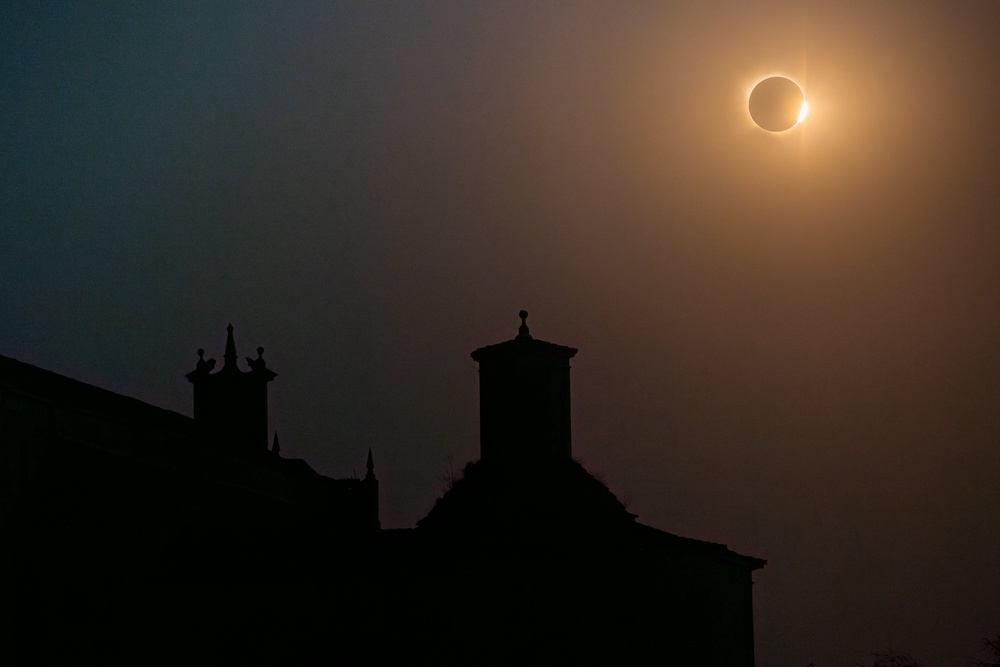
It forms the second act of a celestial show, coming two weeks after a total solar eclipse swept across Greenland, Iceland, and Spain.
Eclipses occur in pairs because the sun, moon, and Earth align so precisely that one masks the other. The moon is 400 times smaller than the sun and 400 times closer to Earth, making them appear identical in size—a rare cosmic coincidence.
Unfolding more gradually, the lunar eclipse will reach a much wider audience than Europe’s solar display. Billions across North and South America, Europe, Africa, and the Middle East will be able to watch, provided skies remain clear.
The sight may also be visible to Hathaway and nine other people currently living in orbit—seven astronauts aboard the International Space Station and three on China’s orbital facility.
Space offers a "unique perspective" for viewing cosmic events like eclipses and auroras, noted space station commander Jessica Meir.
During the event, Earth will align between the sun and moon, casting a reddish-orange shadow across our nearest neighbor. Since this alignment is partial rather than perfect, it will not produce a full blood moon. The partial stage will last more than three hours, while the entire eclipse—from the moment the moon enters Earth’s faintest outer shadow to its exit—will span 5 ½ hours.
Maximum coverage will occur shortly after midnight EDT.
The moon will set during the eclipse for viewers in Europe, Africa, and the Middle East, curtailing the experience. It will rise over Hawaii, giving the eastern Pacific along with northwestern regions of the U.S. and Canada a later start.
This is the second lunar eclipse of the year and the fourth eclipse overall, following a total lunar eclipse seen over the Americas, Australia, and eastern Asia in March.
The next total lunar eclipse will not occur until New Year’s Eve 2028, with Asia and Australia in prime position. Skywatchers across North and South America will have to wait until 2029 for their next full lunar blackout.
Read MoreChina to launch a Moon mission that is unlike anything NASA has done
Breathtaking ‘blood moon’ lunar eclipse will be visible in US and Canada next week
What scientists have learnt from the solar eclipse
Nasa telescope is plunging to earth after space agency failed to save it
Satellite surge threatens astronomers’ view of space and ability to study the cosmos