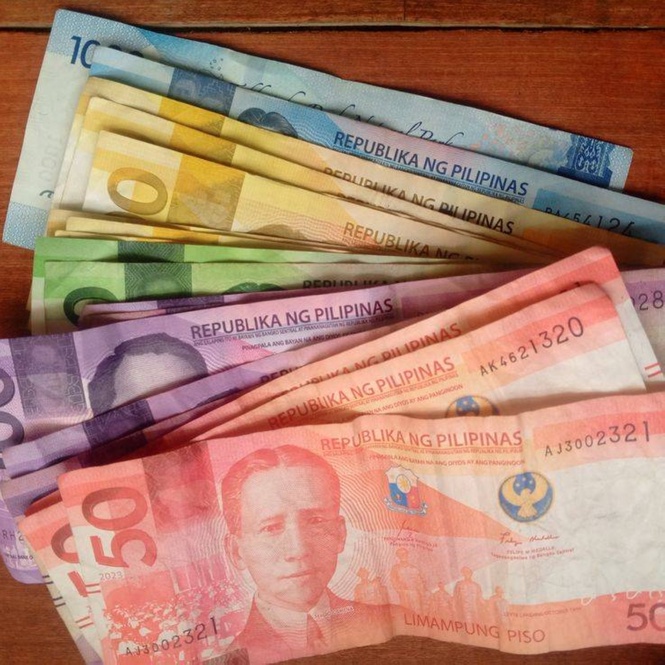
SLOWER inflation helped buoy the stock market but failed to lift the peso, which on Friday closed at a new record low of P62.59 to the dollar.
The currency weakened to as low as P62.65 during the session and analysts said it remained vulnerable to external factors including elevated US Treasury yields, a strong dollar, higher commodity prices and geopolitical uncertainty.
The benchmark Philippine Stock Exchange index, meanwhile, added 21.18 points, or 0.35 percent, to end the week at 6,090.60. The broader All Shares index also rose by 7.63 points, or 0.23 percent, to 3,377.44.
Investors were said to have taken some comfort from the latest inflation data, which showed that consumer price growth had eased to 6.1 percent in August from 6.2 percent a month earlier.
It marked a fourth consecutive monthly slowdown and eased concerns over continued monetary tightening by the Bangko Sentral ng Pilipinas (BSP), which last week raised key interest rates by another 25 basis points to keep inflation expectations anchored.
The headline rate, however, remains well over the central bank’s 2.0- to 4.0-percent target.
“The BSP will continue to closely monitor the impact of recent developments in the Middle East and weather-related disturbances,” the central bank said on Friday.
“Going forward, the BSP will remain guided by incoming data and its assessment of risks to the inflation outlook,” it added.
DragonFi Securities co-founder and CEO Jon Carlo Lim said rising US Treasury yields, weaker domestic growth prospects and commodity-led inflation continued to pressure the peso.
Relief, he added, could come from a resolution of the war in the Middle East, stabilization in global yields and a reacceleration of domestic economic growth.
Meanwhile, Regina Capital Development Corp. head of sales Luis Limlingan said the softer inflation reading had prompted some buying activity in the stock market.
“However, investors remained cautious amid expectations surrounding the BSP’s policy direction and ongoing peso weakness,” he added.
Socioeconomic Planning Secretary Arsenio Balisacan has said the peso’s depreciation was being driven by a combination of external pressures and longer-term structural weaknesses in the economy.
“The origin of the depreciation of the peso is complex. Number one, there is also an external factor,” he told reporters on Thursday.
He pointed to the renewed war between the United States and Iran, which has pushed global oil prices high er and added pressure on the Philippines because of its heavy dependence on imported oil.
“But the bigger and longer-term issue is our structural [weakness] in our economy that we are fixing now. That is that the rate of growth of our imports is higher than our exports,” Balisacan said.
“That is why our approach, which the president said is right, is that we need to tighten our fiscal policy.”
Malacañang on Thursday said the government would be more deliberate with regard to spending following the peso’s plunge against the dollar.
This does not mean that fiscal consolidation will be pursued at the expense of growth, Balisacan said.
As for the peso, he said that monetary and fiscal authorities needed to coordinate their responses.
“The exchange rate issue is both monetary and fiscal,” Baliscan said, adding that, “If we need to tighten [monetary policy], we will tighten.”