LAST week, the Department of Energy (DOE) hosted the Philippine Nuclear Regulatory Framework Workshop, another step in the country’s slow shuffle toward its ambition to deploy nuclear energy. The workshop covered a great deal of discussion about technical and bureaucratic matters that would make the average person’s entire brain glaze over, but the most interesting outcome — and the key takeaway that was reported to the public — was the conclusion that the DOE’s aspiration of adding 1,200 megawatts (MW) of nuclear power to the country’s energy mix by 2032 is hopelessly unrealistic.
This judgment came from William D. Magwood IV, director-general of the Nuclear Energy Agency (NEA), an office of the Organization for Economic Cooperation and Development (OECD). “Well, I don’t think you’re going to have the first reactor operating in six years (i.e., by 2032),” Magwood was quoted as saying. “It simply takes longer than that. You might have a decision in six years.”
“This is very complicated. There’s a lot of discussions that have to be had between governments, utility, vendors. These take years to go through and the regulator is still very nascent. It’s getting started. So no, it won’t happen in five years or six years, but it will certainly happen within the foreseeable future,” he added.
Magwood did not suggest when that foreseeable future might be, but that is something not too difficult to work, given that there is about 70 years’ worth of global experience with commercial nuclear power.
The regulator he is referring to, of course, is the Philippine Atomic Energy Regulatory Authority (PhilATOM), which was formally established, at least on paper, by Republic Act (RA) 12305, or the Philippine National Nuclear Energy Safety Act, signed into law on Sept. 18, 2025. On Oct. 2, 2025, the DOE issued Department Circular DC2025-10-0019, “Framework for the integration of nuclear energy into the country’s generation mix to implement the clean energy scenario under the Philippine Energy Plan 2023–2050.”
Under that plan, the DOE aspires to have 1,200 MW of nuclear power by 2032, and 4,800 MW by 2050, which would be hopelessly optimistic, even in a country with a fully developed, existing nuclear sector, and is frankly ridiculous here, given that the Philippines really has not even gotten off square one yet. I am glad Magwood said the quiet part out loud, albeit politely.
The fundamental hang-up at this point is that while PhilATOM has been legally established, it has yet to be established in fact. In spite of RA 12305 going into effect more than a year ago, the DOE is still waiting for the Office of the President to appoint the PhilATOM Council, a director-general, and four deputy directors-general so that the agency can be staffed, organized, and actually begin working. A draft of the implementing rules and regulations (IRR) has already been prepared and circulated, and the Philippine Nuclear Research Institute (PNRI) and the Food and Drug Administration (FDA) have drafted the agency’s table of organization, but that is stalled until the PhilATOM Council is appointed.
Likewise, the DOE’s plan codified in DC2025-10-0019 fundamentally relies on PhilATOM being up and running before anything else can proceed. As my good friend Myrna Velasco pointed out in her own column in the Manila Bulletin yesterday (Nov. 9), even though the DOE can go through the motions of preparing for the implementation of nuclear power, its efforts are essentially pointless until the regulator is in place. No investor will even look twice at the Philippines until that happens, for one thing, and perhaps more importantly, it will be PhilATOM, and not the DOE, that will take the lead in determining what gets built and who builds it.
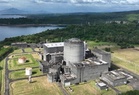
So, if there will not be 1,200 MW, or really, any MW at all of nuclear power operating in the Philippines by 2032, when might that happen? For that, the DOE should look to my favorite example of a nuclear project that “kind of worked out OK,” and one whose broader circumstances are similar enough that there is a lot that the Philippines can emulate. That is the Rooppur Nuclear Power Plant project in Bangladesh, which is currently undergoing testing on its first two reactors for integration with the country’s grid, possibly as early as this month.
The Rooppur plant is planned to be a 4,800-MW facility — four 1,200-MW Russian-built VVER-1200 reactors — and two reactors have been completed so far. The reason I put it in the “kind of worked out OK” category is that those two were built and brought to the point where they will soon start supplying electricity with below-average cost and construction timeline overruns, only about $2 billion and three years, respectively.
Bangladesh established a nuclear regulatory authority all the way back in 1961, when the country was still part of Pakistan; the Bangladesh Atomic Energy Commission was revamped and relaunched after independence, and marks its founding from February 1973. The Rooppur plant was first proposed in pre-independence days in 1963, and the post-independence government took up the initiative again in 1977. There were a number of attempts that went nowhere, so those can be discounted, but the project that did stick and resulted in the current facility began in 2010, following parliamentary authorization to proceed with a nuclear plant in cooperation with the Russians.
Bangladesh and Russia signed the first financial and feasibility agreements in 2013, and the $12.65-billion general contract for the construction of the Rooppur plant was signed on Christmas Day in 2015. It took almost two more years, until November 2017, for the formal permit for the first of the two units that have been built to be issued, although some preparatory construction had already been carried out; the first reactor was loaded over the summer and switched on last month.
So, in essence, a country with a well-established nuclear regulator took 16 years from first approval, and 13 years from acceptance of the design, to deployment for its first nuclear plant, relying entirely on the technical expertise and equipment supplied by Russia’s Rosatom. Thus, if this experience was transposed to the Philippines — and it very well could be, because the political, technical, and economic circumstances are similar enough — we could, if PhilATOM was put together and operationalized before the end of this year, see a functioning nuclear plant by 2042, a full 10 years beyond the DOE’s optimistic target date. With PhilATOM not yet organized, and unlikely to be so until the latter half of next year at best, that pushes the timeline to 2043, 2044 or beyond, depending on how fast the country can attract a vendor and the financing needed. And that is a best-case scenario that assumes the project can be kept free of delays caused by red tape and corruption, and is not seriously hampered by social resistance, none of which can be definitely counted upon. Maybe if the DOE would make promises to the public based on what is actually possible rather than what would sound good in a political campaign, we might actually make some progress.
ben.kritz@manilatimes.net
Bluesky: @benkritz.bsky.social
Website: www.badmannersgunclub.com