Philippines' existing and upcoming railway infrastructure projects are poised to deliver substantial annual reductions in carbon emissions from private vehicles, paving the way for a more sustainable, environmentally conscious transportation system, according to the Department of Transportation (DOTr).
This projected dramatic drop in carbon output could mitigate the accelerating impacts of climate change, reduce public health risks, and alleviate severe traffic congestion, said DOTr Secretary Giovanni Lopez on Tuesday as he cited data from the United Kingdom’s Greener Travel and a study for Metro Manila made by the ASEAN Climate Change and Energy Project.
According to National Rail UK's Greener Travel data, car travel generates 167 grams of carbon dioxide (CO₂) per kilometer -- a figure drastically higher than rail travel, which emits only 35 grams of CO₂ per passenger per kilometer.
Even assuming an average of two passengers per private vehicle, car travel still produces roughly 83.5 grams of CO₂ per passenger per kilometer, more than double the emissions of rail travel, it said.
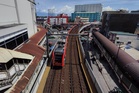
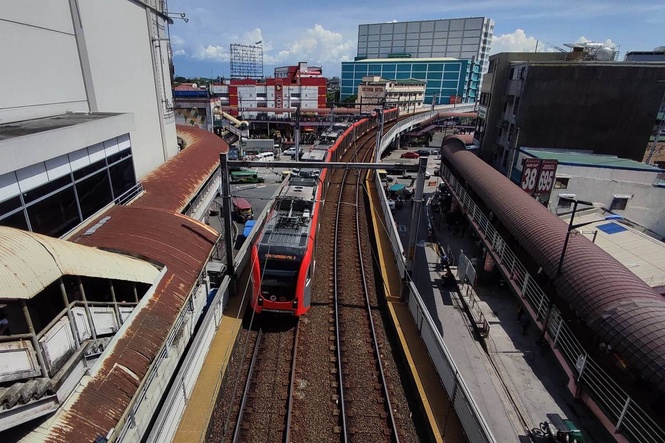
Using private car travel as the baseline, the country's existing train lines—including Metro Railway Transit (MRT)-3, Light Railway Transit (LRT)-1, LRT-2, and the Philippine National Railways (PNR)—could collectively achieve a significant net reduction of 74,781 tons of CO₂ emissions annually, equivalent to an average decrease of 50 percent, it added.
Meanwhile, the upcoming North-South Commuter Railway (NSCR) is projected to slash CO₂ emissions by over 150,000 tons per year – more than double the reductions delivered by the four existing lines combined.
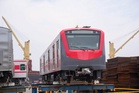
The MRT-7, scheduled to open in the second quarter of 2027, is expected to post a net reduction of approximately 58 percent, or over 60,000 tons, compared to more than 105,000 tons of annual CO₂ emissions from cars, according to DOTr.
For the Metro Manila Subway Project (MMSP), the shift to rail-based transport is likewise forecast to significantly lower CO₂ emissions, with potential annual reductions of up to 63 percent, equivalent to more than 70,000 tons of CO₂.
A case study of Metro Manila by the ASEAN Climate Change and Energy Project noted that "private car carbon emissions in the Philippines significantly worsen urban air quality, accelerate climate change, and pose severe public health risks, particularly in congested metropolitan areas like Metro Manila."
Lopez emphasized that the DOTr has been actively advancing sustainability initiatives across existing rail lines.
"The instruction of President Ferdinand Marcos Jr. is clear: we must make our transportation sustainable. At the DOTr, we are championing what we call commuter-centric transport—such as trains, which carry far more passengers. The more people choose trains over private cars, the greater the reduction in carbon emissions on our roads," Lopez said.
This concern resonates with former seafarer ‘Matt,’ who owns a private vehicle but prefers traveling by train.
"I spent many years at sea, so all of us there are fully aware of environmental systems. When you use fuel, of course, it impacts the environment—it adds to heat and costs more. But when you take the LRT, it's faster and more convenient," Matt explained.
On the economic front, the country loses an estimated P3.5 billion per day due to traffic, based on a study by the Japan International Cooperation Agency (JICA). Without government intervention, that figure could balloon to as much as P5.4 billion per day by 2035, JICA added.
For senior citizen ‘Chona,’ the traffic crisis could be eased if more people opted for trains over private cars.
"If only everyone rode trains, like in other countries, there would be less carbon dioxide emitted and fewer vehicles on the road," Chona added.