.png)
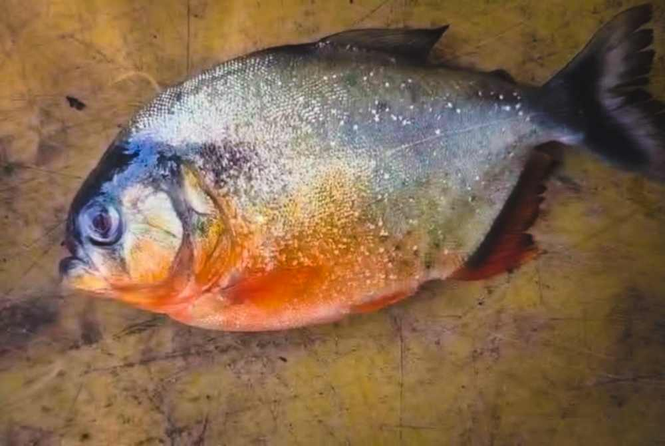
SHAH ALAM – A fish caught at Klau Dam in Raub, Pahang has been found to have morphological characteristics consistent with the Pygocentrus genus, a group that includes piranhas.
The finding has raised concerns over whether the foreign fish species could have entered Malaysian waters and potentially affected the local aquatic ecosystem.
However, the Fisheries Department (DOF) has stressed that there is currently no evidence showing that a piranha population has become established and bred at Klau Dam.
So, what exactly happened and what do we know about the suspected piranha?
The first suspected piranha
The issue began after a fisherman reportedly caught a fish at Klau Dam on Aug 26.
Photographs and video of the fish circulated online, prompting the Pahang Fisheries Department to investigate the claim.
The material was subsequently referred to the Fisheries Research Institute (FRI) Glami Lemi, Negeri Sembilan, for technical assessment.
Based on the photographs and video, FRI found that the visible morphological characteristics of the fish were consistent with the Pygocentrus genus, which includes several piranha species.
However, the fish could not be conclusively identified at species level.
This was because there was no physical specimen available for further examination. The fish was reported to have died and was discarded by the person who caught it before the investigation was carried out.

Fisheries Department director-general Datuk Adnan Hussain said only one such fish had been officially reported caught in the area at that point.
He said field investigations and monitoring by the Pahang Fisheries Department up to Sept 15 had not recorded any additional catches or related safety incidents in the area.
“Based on the data and evidence obtained so far, there is no evidence indicating the existence of an established and breeding piranha population at Klau Dam.
“The public need not panic, but the department will continue targeted monitoring to ensure any new developments can be identified and appropriate action taken,” he said.
But a second fish was reportedly found
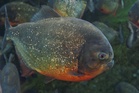
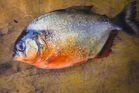
The situation later took another turn when Jejak Air Tawar reported that a second fish believed to be a red-bellied piranha (Pygocentrus nattereri) had been caught by a fisherman in Sungai Klau.
The group said the second specimen was found under the RTP bridge, before the area enters the Klau Dam catchment and that photographs and videos had been obtained from the fisherman.
Based on its own assessment of the footage, Jejak Air Tawar said the second fish appeared to be the same species as the first.
The group also suggested that the fish could have been released in a group, although the number of fish allegedly released and the location of any release have not been established.
The Pahang Fisheries Department said it was aware of the reported second discovery and was attempting to contact both the Facebook page operator and the fisherman to assist its investigation.
For now, this second specimen should therefore be treated as a reported or suspected second catch, rather than confirmation that a piranha population exists in the area.
So, is there a piranha population at Klau Dam?
Based on DOF's latest confirmed findings, there is no evidence yet of an established and breeding piranha population at Klau Dam.
The distinction is important.
The first fish had characteristics consistent with the Pygocentrus genus, but the absence of a physical specimen meant authorities could not confirm the species.
The reported second fish is also yet to be confirmed by DOF.
This is why authorities continue to monitor the dam and surrounding waterways rather than declaring that piranhas have established a population there.
Why is DOF concerned?
Piranhas are not native to Malaysia and are foreign freshwater fish associated with South America.
The concern is not simply about whether the fish could attack people. The bigger issue for fisheries authorities is the possible ecological impact if a non-native predatory species becomes established in local waters.
DOF has warned that releasing foreign fish species with invasive potential into public waters could disrupt inland aquatic ecosystems, affect local fish populations and threaten aquatic biodiversity.
Adnan stressed that continuous monitoring and enforcement were important to prevent prohibited fish species from entering, being kept or being released into public waters without control.
Malaysia is already monitoring prohibited fish
The suspected piranha case comes as DOF continues enforcement against prohibited fish species across the country.
Adnan said as of August this year, DOF had conducted 121 inspections and verification actions at premises, aquarium shops and fish farms nationwide.
The operations involved 24 enforcement bases, state Fisheries Department offices and the Fisheries Department headquarters.
He said 17 cases had been recorded and investigated under the Fisheries (Prohibition of Import, etc., for Fish) Regulations 1990, under the Fisheries Act 1985.
A total of 377 prohibited fish were seized, with an estimated total value of RM16,180 based on current market prices.
Importantly, no piranha species were detected or seized in those 17 cases, according to Adnan.
DOF also monitors the sale of prohibited fish species on online platforms to identify possible violations and take appropriate action.
What should anglers do if they catch one?
This is where the authorities' advice is straightforward.
If an angler catches a fish that looks like a piranha or another unfamiliar foreign species, do not release it back into the water.
Instead, the specimen should be kept if it is still in suitable condition and reported to the nearest Fisheries Department office for examination and identification.
This is particularly important because a physical specimen allows authorities to conduct more detailed examinations, including DNA testing when necessary.
What happens next?
DOF is now taking the identification process further.
The department is collaborating with Aquaworks and Aquaria KLCC to identify the suspected fish using DNA or environmental DNA (eDNA) analysis. Aquaria KLCC has live piranha specimens and related DNA information that can be used as reference material for comparison.
The use of eDNA could also help authorities look for genetic traces of a species in the environment, while a physical fish specimen would provide much stronger material for direct identification.
Until that work provides clearer evidence, the most accurate picture is this: a fish caught at Klau Dam has morphological characteristics consistent with the Pygocentrus genus, but a piranha population has not been confirmed at the dam.
With authorities continuing their monitoring and investigating the reported second catch, anglers and members of the public are being urged not to release suspected foreign or prohibited fish into Malaysian waters.
Anyone with information on the sale, possession or release of prohibited fish species can report it to the nearest state DOF office or through its official channels.