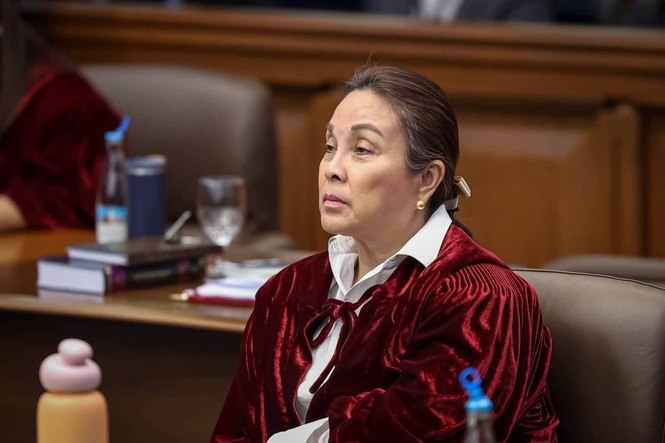
SEN. Loren Legarda said the signing of a law amending the Universal Access to Quality Tertiary Education Act (UAQTE) is a major step forward in her continuing push to make college education within reach of all Filipinos regardless of income.
President Ferdinand Marcos Jr. signed on Friday Republic Act (RA) 12325, or an Act Enhancing the UAQTE.
In a statement, Legarda said the new law strengthens the UAQTE by improving the Tertiary Education Subsidy (TES), directing assistance more deliberately toward the poorest students and recognizing that the cost of education goes far beyond tuition.
“Free tuition is not enough if students cannot afford transportation to school, do not have money to buy books, struggle to afford food or are forced to drop out to help support their families,” Legarda said.
“Free college must mean that students have a real chance not only to enroll, but also to stay in school and graduate,” she said.
Legarda principally sponsored and authored Senate Bill 1894, which strengthened RA 10931 by making student assistance more responsive to the actual financial burden of pursuing college or technical-vocational education.
Among its key reforms is focusing TES toward students who need government assistance most.
Senior high school graduates from Pantawid Pamilyang Pilipino Program (4Ps) households will be prioritized for TES once admitted to higher education or technical-vocational institutions.
The reform addresses a significant gap identified by the Second Congressional Commission on Education.
The share of TES beneficiaries coming from the poorest households fell from 70.73 percent in 2018 to 22.89 percent in 2022.
Of 384,388 senior high school graduates from 4Ps households, only 4,746, or 1.23 percent, received TES as first-year beneficiaries during the 2024–2025 school year.
“The data made one thing clear: many young people who should be among the first to receive support are not benefiting from it. That is why we strengthened the system to ensure that more families struggling financially are given the opportunity to help their children finish their education,” Legarda said.
CATHERINE VALENTE
The law also provides for regular reviews of TES amounts so that government assistance can respond to changes in the actual cost of education.
To make tertiary education more inclusive, state universities and colleges, local universities and colleges, and state-run technical-vocational institutions must adopt Equity and Inclusion Plans aimed at removing barriers faced by persons with disabilities, students from geographically isolated and disadvantaged areas, Indigenous peoples and learners from other disadvantaged backgrounds.
The strengthened law further establishes the Private Education Assistance Program, which extends support to qualified students in private higher education institutions and technical-vocational schools, expanding the educational options available to learners who require financial assistance.
Legarda, who currently serves as an EdCom 2 commissioner and chairman of the Senate Committee on Higher, Technical and Vocational Education, said the law advances a principle she has consistently pushed in education policy: that government must look beyond how many students enter school and focus on whether they are actually able to finish.