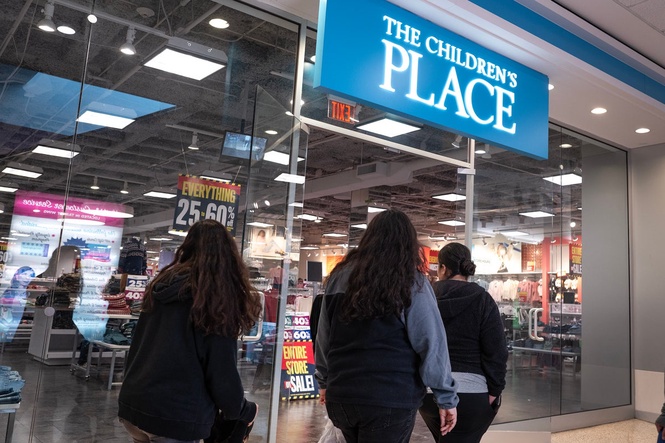
A popular children’s clothing store has hit financial rock-bottom.
The Children’s Place, which has more than 450 stores in the United States, filed for Chapter 11 bankruptcy Sunday, according to court documents obtained by The Independent. The company has $500 million to $1 billion in debt, court documents revealed.
“We recognize the significance of this development for our employees, customers, vendors, and other partners, and we are committed to conducting an efficient and transparent sale process," the company said in a statement Sunday.
The Children’s Place sells clothing, accessories and footwear in the U.S. and 13 other countries, court documents note. Store closures are on the way but the company did not say how many locations would close or when.
It is the latest children’s clothing brand to face tough decisions after increasing pressure from President Donald Trump’s tariffs and inflation.
The Children’s Place bankruptcy comes after CEO Muhammad Asif Seemab and Chief Strategy Officer Muhammad Umair stepped down earlier this month, CNBCreported Monday.
The company’s most recent earnings were abysmal - year-on-year sales fell 18.9 percent from June to August, according to a September call. Seemab had an optimistic tone despite the slumping numbers.
“Our traffic trends have improved in August relative to July, and we plan to build on these capabilities and continue the momentum into the holiday season,” he said.
Another well-known children’s clothing brand, Carter’s, began the year in the process of closing 150 stores. The closures took place after the company noted Trump’s tariffs increased costs by $200 million to $250 million in 2025, according to an October earnings report. From January to June 2026, Carter’s closed 29 stores, according to The Street.
Trump’s tariffs, which went into effect on a large scale in April 2025, was one of several factors that hampered The Children’s Place revenue growth recently, according to court documents.
“The Company has faced significant headwinds in the last few years, including declining consumer demand in the value-oriented children’s apparel segment, persistent cost inflation, elevated tariffs on imported goods, and intensified competitive and promotional pressure from both traditional retailers and e-commerce entrants,” company executive Rudolph Morando wrote.
Read MoreHow much money does it take to feel financially comfortable in 2026?
Honda plans major expansion after record sales of popular models
Inflation ran hotter than expected last month boosting chance of Fed rate hike