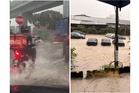
Research on Klang river basin shows how growing urban populations contribute to rubbish buildup in drainage systems, reducing capacity to handle downpours, says expert
PETALING JAYA: Population growth and increasing rubbish accumulation in Klang Valley drainage systems are closely linked, placing additional pressure on existing infrastructure and raising the risk of recurring flash floods, said Universiti Teknologi Malaysia (UTM) civil engineering associate professor Dr Nor Eliza Alias.
She said doctoral research on the Klang River basin showed how growing urban populations could contribute to the accumulation of waste in drainage systems, further reducing their capacity to handle heavy rainfall.
READ MORE: Only 30% of fire, motor policies have flood protection – Insurance association
READ MORE: Kampung Melayu Subang flash floods: Residents recount nerve-racking escape
“Flash floods keep recurring and can occur for two main reasons. Either drainage capacity is blocked by man-made causes or drainage capacity is exceeded because rainfall intensity exceeds the allocated drainage design capacity.”
She said rapid urban development and population growth increased the amount of debris and rubbish carried by rainwater into drains, reducing their effective capacity during downpours.
She cited research by a UTM doctoral student who used data from drainage waste traps in the Klang River basin.
She said the study recorded R² values of 0.93 to 0.95, indicating a strong statistical relationship between population size and waste accumulation, with an estimated 3.2 to 7.1 tonnes of rubbish associated with a population of 250,000.
She added that the findings suggested that more densely populated areas could place greater pressure on drainage networks, as increasing amounts of waste obstructed water flow and raised the risk of flash floods.
“Runoff waste in this context is debris and trash picked up by surface runoff water from excess rain flowing over land and urban surfaces into local drainage.
“Waste in drainage reduces the drainage capacity, thus increasing the chance of drainage overflow, causing urban flash floods.”
Nor Eliza said the problem extended beyond clogged drains, as rubbish could also interfere with pumps deployed by local authorities to remove floodwater.
“Due to trash, the pumps are not able to operate efficiently, burdening the resources of local authorities.”
She said older urban drainage networks could also struggle to cope with present-day rainfall conditions, while extensive paved surfaces in cities caused floodwater to accumulate more rapidly.
“Urban areas such as Kuala Lumpur are increasingly affected by the urban heat island (UHI) effect which can influence local atmospheric convection and rainfall patterns, potentially intensifying short-duration, high-intensity rainfall events.”
On Nov 2, flash floods hit several parts of the Klang Valley, including Bukit Jelutong, Taman Tun Dr Ismail, Seri Kembangan, Bangsar and Petaling Jaya, disrupting traffic and forcing the temporary closure of a stretch of the New Klang Valley Expressway between Shah Alam and Setia Alam.
In Subang, 789 residents from 325 families across 11 areas were affected, while about 92 homes were inundated in Kampung Melayu Subang, where floodwaters reached waist level in several lanes.
Prime Minister Datuk Seri Anwar Ibrahim subsequently ordered nearly RM700 million worth of flood mitigation projects along Sungai Buloh and Sungai Damansara to be expedited. The works were reported to be between 30 and 60 per cent complete.
The Meteorological Department has forecast three to five episodes of continuous heavy rainfall between November and January during the Northeast Monsoon, which began on Oct 27 and is expected to continue until March 2027.
Nor Eliza said engineering upgrades and increased government spending must be accompanied by efforts to keep drainage channels free of rubbish and improve public preparedness.
“Flood mitigation structures may be designed for return periods of 100 to 200 years or higher. However, extreme flood events can exceed these design capacities, making it essential to manage residual flood risks through complementary measures such as flood forecasting and early warning systems, land-use planning, community preparedness, evacuation planning and disaster insurance.
“This approach recognises that flood risk cannot be entirely eliminated through engineering structures alone but can be reduced through coordinated measures that minimise impacts, strengthen resilience and transfer financial risks.”