
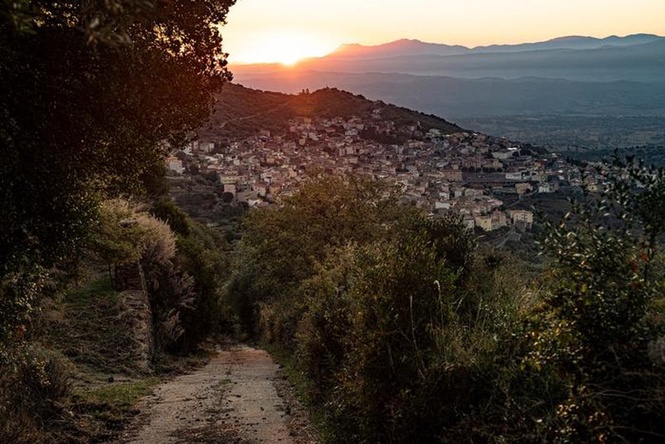
Women in the Italian village of Bolotana are three times more likely to become centenarians once they reach 70 than their American counterparts, according to a new study that may point to the discovery of a new longevity hotspot.
Bolotana is located on the island of Sardinia, which has been known for its exceptional rates of male longevity for around two decades. By contrast, Bolotana has emerged as a standout location for women living unusually long lives.
Such hotspots for longevity are known as “blue zones”, communities whose residents routinely outlive people in the surrounding region. Prominent examples include Okinawa in Japan and the Nicoya Peninsula in Costa Rica.
The term comes from Sardinia itself, where researchers in 2004 started literally drawing blue circles on a map to mark villages with a high concentration of people living past 100 years old.
The mountainous village of Bolotana offers a rare opportunity to uncover the secrets of exceptional longevity, researchers from the University of Illinois Chicago say.
Researchers found that women in the village who reach the age of 70 then have a life expectancy as high as 91. Bolotana’s women rank second only to Hong Kong in life expectancy at age 70, as well as for their probability of surviving to age 100.
“Females almost always live longer than males anywhere in the world, but in Sardinia that was not the case,” said Jay Olshansky, an author of the study published in Frontiers in Aging. “It is one of the things that made it so unusual. We think this is the longest-lived female population in the world or close to it.”
Researchers examined demographic records of about 2,300 villagers and found a pattern of longevity among older adults, particularly women. They documented at least 38 centenarians among the 3,060 people born in Bolotana between 1900 and 1925.
Nearly 14 per cent of Bolotana’s female residents who reach 70 will live to 100, compared with about 3.5 per cent of women in Italy and 3.6 per cent in the US. “What makes Bolotana extraordinary is that it has an incredible historical record that allows us to definitively evaluate ages at birth and death,” said Dr Olshansky.
“The municipal and baptismal records date back centuries and allowed us to independently verify ages.”

It remains unclear why people in the village live unusually long lives. Scientists suspect several factors may be at play such as diet, physical activity, social connection, and genetics.
Residents live in a highly walkable community with steep streets, and most food is grown locally, including olive oil rich in healthy fats. Families also live close together, reducing chances of social isolation.
“You’ve got this close-knit community where people take care of each other. Movement is largely done by walking, not by driving,” Dr Olshansky said.
“If we can identify the characteristics behind this longevity and help people adopt them, the rest of the world can benefit from understanding the values practised by these communities.”
IMF chief urges countries to do more to curb debt and regulate AI
Okinawa governor wants discipline for US military in Japan after murder linked to Marine
US military restricts troops from leaving the base in Okinawa after Marine is arrested in a killing
What is pneumonic plague? A microbiologist explains the risk and how it spreads
What is the Plague? The deadly disease that killed up to 60% of Europe’s population
Metal detectorist unearths two Bronze Age hoards in two years
.jpeg?width=1200&auto=webp&trim=0%2C0%2C0%2C0)