MANILA — Facing constant threats from natural hazards, the Philippine Ports Authority (PPA) has intensified structural upgrades and operational protocols across the country’s sea gateways to ensure that the flow of food, fuel, and medical relief remains uninterrupted during severe disasters.
The Philippines was ranked first in the 2024 WorldRiskIndex, underscoring its extreme vulnerability to earthquakes, typhoons, storm surges, and liquefaction. Because the country relies heavily on inter-island shipping, ports serve as critical lifelines when land-based transportation networks collapse during emergencies.
Recognizing this critical role, the agency is actively retrofitting existing infrastructure, running disaster simulations, and tightening inter-agency coordination to keep facilities operational when disaster strikes.
General Manager Jay Santiago emphasized that ports serve a purpose far beyond standard daily transit. During disasters, they become vital hubs where food, fuel, medical supplies, relief goods, and other essential necessities pass through to reach affected communities. He stressed that physical strength alone is insufficient without trained personnel and responsive operational systems. To ensure total readiness, the PPA continuously conducts drills, tests diverse scenarios, strengthens agency coordination, and upgrades infrastructure so ports remain safe and reliable lifelines for the nation.
To counter the impacts of climate change and seismic activity, the PPA is building disaster-resilient features into new constructions and port expansions. Design parameters align strictly with the National Structural Code of the Philippines to withstand high wind velocity and heavy seismic loads. As part of these structural interventions, standard deck and pavement capacities are being upgraded from 500 pounds per square foot, or approximately 2.4 tons per square meter, to 750 pounds per square foot, or 3.6 tons per square meter.
Major ports operating ship-to-shore cranes are being engineered to handle capacities of up to 1,000 pounds per square foot.
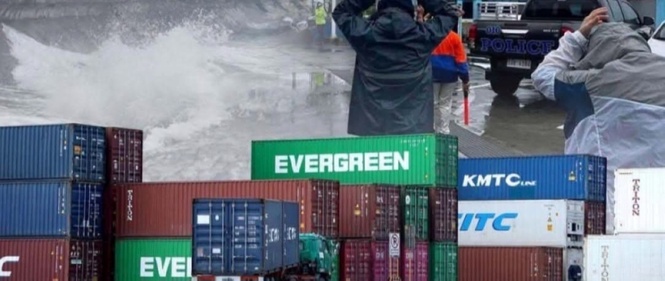
Coastal protection remains another central priority of the agency’s engineering upgrades. Key piers and wharves are being raised from +3.00 meters to +3.50 meters above Mean Lower Low Water to mitigate storm surges and projected sea-level rise. Breakwaters are being constructed or heightened to +3.50 meters in high-risk zones, such as Abra de Ilog and Nasugbu, Batangas, while wave deflector walls are being installed in back-up areas susceptible to wave overtopping, including ports in Virac and Legazpi.
Additionally, wharves are being secured using reinforced concrete piers supported by heavy-duty concrete or steel piles, with rock causeways adapted using gentler slopes tailored to local environmental conditions.
Beyond concrete and steel, the PPA relies on its Disaster Risk Reduction and Management Manual and Public Service Continuity Plan, mandated under Memorandum Circular No. 15-2018, to preserve core operations during crises.
Port Management Offices nationwide maintain local disaster management teams and coordinate closely with the Philippine Coast Guard, local government units, the Department of Social Welfare and Development, and regional Disaster Risk Reduction and Management Offices for immediate passenger assistance and relief management.
Emergency medical readiness and operational protocols also form part of the agency’s comprehensive safety network. Patient Transport Vehicles remain on standby at Port Management Offices to provide immediate transport for passengers, port users, or personnel requiring medical attention.
When severe weather or seismic events pose direct threats to safety, operational restrictions — including temporary suspensions of passenger voyages and cargo loading — are imposed based on official advisories, while affected passengers receive real-time updates and assistance on-site. Through this combination of risk-informed engineering, regular simulations, and continuous planning, the PPA ensures that the nation’s maritime network remains resilient when needed most.