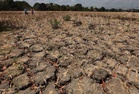
ONE of the most intense El Niños in history is expected to hit in the coming months. It is expected to cause greater global food insecurity and higher prices of agricultural commodities everywhere. It will come on the heels of problems that we are already grappling with: geopolitical conflict, supply-chain disruptions, inflation, and poverty. It is this combination that should worry us. Forecasts cited by the World Food Programme and FAO warn that a strong El Niño can worsen droughts, floods, heat waves, crop losses, and food insecurity, particularly in vulnerable parts of Africa and Asia.
Weather experts have reported that El Niño had caused 10 to 15 percent less rain during the Indian monsoon this summer, a phenomenon that would adversely affect rice production. What does it mean for countries like the Philippines? Our country is especially vulnerable because rice is central to our food security. Many livelihoods depend on agriculture and fisheries. Responses from our Department of Agriculture include irrigation, drought-resistant crops, adjusted planting schedules, and food-supply planning.
Matin Qaim, a professor of Agricultural Economics at the University of Bonn, Germany, has expressed concern for the poorest of the poor, who will have to do with even less with much higher prices. He pointed out that many poor countries in Africa and Asia depend on grain imports for their food security. “In these regions, hunger will likely increase,” he said.
He added that the climate crisis will exacerbate existing supply shortages caused by blocked shipping routes in the Middle East and predicted that prices could rise “over a longer period of time, at least six to 12 months.”
And let us not forget that many Filipinos work at sea and support extended families through remittances.
Seafarers are often the first witnesses to climate disruption. A strong El Niño can affect them through extreme heat while working on deck and in engine spaces; greater risk of dehydration and heat stress; changes in storm patterns and ocean conditions; drought-related reductions in river levels that can affect inland shipping and port operations; disruptions in agricultural exports and imports as harvests rise or fall in different regions; and increased humanitarian shipments of food and relief supplies to affected regions. We think of seafarers as transporting goods, but during climate crises they become part of the global response system. They help keep food, fertilizer, medicine, and humanitarian supplies moving.
Fortunately, the maritime industry is quite adept at dealing with uncertainty.
Adaptation takes various forms: Physical resilience includes better hydration protocols, heat management during work shifts, enhanced weather-routing systems, and stronger medical preparedness onboard.
Operational responses include more flexible shipping routes, better forecasting and voyage planning, and setting aside critical supplies before disruptions worsen.
How can we, ordinary people, adapt?
The response is not panic. It is preparedness.
Resilience often looks surprisingly ordinary: Reducing food waste, keeping emergency food and water reserves, supporting local agriculture where possible, building stronger community networks, conserving water, and staying informed without becoming overwhelmed.
A thought about resilience, as the word has lately gotten bad press.
When reading climate news, resilience can sound like a cold policy term. But historically, resilience has always been a human story.
The Filipino seafarer crossing oceans. The farmer waiting for rain. Families stretching a food budget. The relief worker delivering grain. The ship’s crew keeping supplies moving through difficult conditions.
Resilience does not mean that bad things do not happen. It means people find ways to protect one another despite them. They often demonstrate extraordinary resilience through family networks, local knowledge, adaptation, and mutual aid.
For seafarers in particular, there is a quiet truth: when climate stress threatens food security, every vessel carrying rice, grain, fertilizer, or humanitarian aid becomes part of the world’s response. Their work becomes even more essential.
And perhaps that is the hopeful side of the story. An El Niño may remind us how interconnected we are. A drought in one region, a ship in another, a family thousands of miles away. We are more dependent on one another than we usually realize.
Lawyer and author Greg Kincaid summed it up perfectly when he said “No matter how much falls on us, we keep plowing ahead. That’s the only way to keep the roads clear.”