.png)
By Murray Hunter
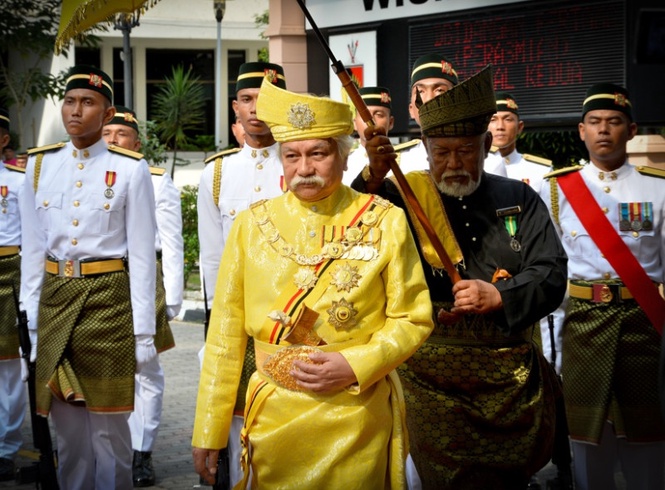
AS of late September 2026, the constitutional and customary crisis surrounding the Yang di-Pertuan Besar of Negeri Sembilan shows no sign of resolution. What began in April with a disputed proclamation by certain undangs purporting to remove Tuanku Muhriz Tuanku Munawir has escalated into a full-blown confrontation involving the palace, the Dewan Keadilan dan Undang (DKU), the state executive council, the menteri besar, the Attorney-General’s Chambers, and competing claims to the throne.
No institution or individual of sufficient stature has stepped forward to mediate effectively. The Council of Rulers has largely stayed out, citing respect for state sovereignty. Courts face questions over their reach into matters of adat and succession. And the prolonged silence and institutional hesitation have created space for open challenges that strike at the heart of royal authority.
This is not merely a local succession dispute under Adat Perpatih. If allowed to fester, it risks normalising the destabilisation of royalty and weakening the broader institution of the Malay monarchy.
The January Speech That Drew a Line
The roots of the political hostility can be traced, at least in part, to Tuanku Muhriz’s birthday address on 14 January 2026 at Istana Besar Seri Menanti. In an unusually direct royal speech, the ruler expressed deep astonishment and disappointment that some continued to support individuals convicted of extremely serious corruption charges “as though such an act were acceptable and forgivable.”
He described corruption as the “foremost enemy of justice, trust and the nation’s future.” Those who backed convicted offenders, he said, showed a failure to understand how graft erodes institutional integrity and the moral foundations of society. He called for self-reflection on faith, principles and values, insisting that any tolerance of corruption was “wholly unacceptable in a nation governed by the rule of law.”
The speech was widely reported as a values-based condemnation rather than a partisan intervention. Yet its timing, months before the state election and amid national debates over high-profile graft cases made it a politically charged speech.
Analyses later linked the stance to alienation among certain political circles, particularly those associated with defending or rehabilitating convicted figures. A growing number of commentators have framed subsequent events as something approaching a political coup against a ruler who refused to normalise corruption.
Whether or not the speech was the decisive trigger, it established Tuanku Muhriz as a public defender of integrity and the rule of law. That stance collided with partisan and factional interests.
State Exco Overreach and Institutional Pushback
The latest flashpoint came in mid-September. Several BN-UMNO state executive councillors (with Perikatan Nasional members notably abstaining from amplifying it) issued a statement claiming Tuanku Muhriz had been removed with immediate effect under Article 10 of the Laws of the Constitution of Negeri Sembilan 1959. They cited the April 19 proclamation signed and sealed by the undangs and recognised Tunku Nadzaruddin Tuanku Ja’afar as the new Yang di-Pertuan Besar.
Sources familiar with the matter, reported across multiple outlets, noted that the state executive council lacks authority to make such a determination. The state legal adviser reportedly viewed the move as invalid. The state secretary refused to gazette it. The DKU reaffirmed that Tuanku Muhriz remains the legitimate ruler, stating that no valid process had vacated the office and that the September announcement had no effect under the Constitution or custom.
Critics, including former NSTP Group Editor-in-Chief Datuk Seri Kalimullah Hassan and former exco member Teo Kok Seong, questioned how an executive council could arrogate to itself the power to remove a ruling monarch, raising the spectre of potential similar moves in other states.
The Attorney-General’s Chambers has affirmed that the menteri besar and exco have no such authority. Tuanku Muhriz later revoked the appointments of the ten exco members (sparing the menteri besar) for breaching their oath of allegiance sworn before him in August. The menteri besar has contested the dismissals, deepening the standoff. These manoeuvres increasingly resemble political games played at the expense of the state constitution and the dignity of the monarchy.
Silence, Weak Enforcement, and the Danger of Behaviour Normalisation
The Council of Rulers’ reluctance to intervene is understandable on grounds of non-interference in state sovereignty. Yet prolonged silence creates a vacuum. In that vacuum, parties willing to challenge the throne through disputed proclamations, hotel ceremonies, and executive statements have gained oxygen. Some observers have described elements of the episode as treasonous or a coup attempt against the institution itself.
The police (PDRM) have been criticised for appearing weak or hesitant in protecting the crown and upholding order around these challenges. When executive councillors, customary claimants, and political actors can publicly contest the legitimacy of a sitting ruler without swift, decisive institutional response, the perception grows that royal authority is negotiable.
This is the real danger. Royal institutions in other Malay states rests on a delicate balance of adat, written constitutions, federal recognition, and public respect. If one state’s monarchy can be subjected to months of contested proclamations, rival installations, and executive overreach without clear resolution, the precedent risks spreading. Destabilising royalty could come to be seen as a viable political tactic rather than an institutional red line.
Tuanku Muhriz’s January speech framed a clear moral position: tolerance of corruption and disregard for the rule of law corrode the foundations of a just society. The September crisis has tested whether that line can be held against partisan pressure. The longer the crisis drags on without mediation, authoritative clarification, or firm defence of constitutional and customary processes, the more visible will the cracks in the monarchical institution will become.
This must be avoided at all costs.
History will judge not only the claimants and the politicians, but also the institutions that chose silence or half-measures when the dignity of the throne was under sustained challenge. The prolonged crisis in Negeri Sembilan is no longer just a state affair. It is a stress test for the monarchy itself. – October 2, 2026

.jpeg)