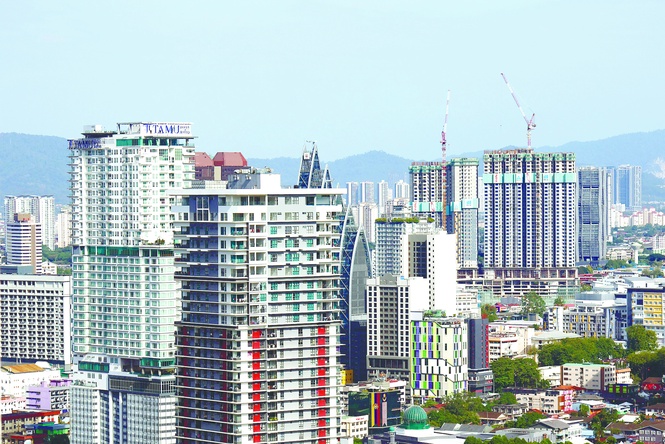
PETALING JAYA: Budget 2027’s expanded stamp duty exemptions and housing financing guarantees will help ease homeownership costs and support property market growth, but more needs to be done to address rising development costs, according to industry players.
Real Estate and Housing Developers’ Association Malaysia (Rehda) president Datuk Zaini Yusoff said the association welcomed the expansion of stamp duty exemptions for first-time homebuyers, including full exemptions for properties priced up to RM500,000 and enhanced relief for homes costing up to RM750,000.
Under the enhanced relief, eligible buyers of properties priced up to RM750,000 will receive a full exemption on the first RM500,000 and a 50% exemption on the remaining amount.
“These measures will help ease the upfront financial burden of aspiring homeowners. We hope the government will continue reviewing the eligibility threshold in line with prevailing house prices and market conditions, including considering an extension of the incentives to properties priced up to RM1 million,” he said in a statement.
Rehda also welcomed the RM20 billion in housing financing guarantees under Syarikat Jaminan Kredit Perumahan (SJKP), which is expected to benefit about 80,000 first-time homebuyers, particularly those with irregular incomes.
The association said improved access to end-financing remained crucial in helping prospective buyers overcome barriers to homeownership.
It also welcomed nearly RM1 billion allocated for affordable housing programmes, including Rumah Mesra Rakyat and Program Residensi Rakyat, as well as initiatives such as affordable housing development by Petronas and Bandar Madani Bukit Jalil.
However, Rehda said rising construction material, labour, and regulatory compliance costs continued to challenge housing affordability.
“More needs to be done to ensure a more holistic change in housing affordability, such as the review of all related charges imposed by the federal and state governments, including infrastructure, utility, statutory, regulatory and compliance charges.
“These costs remain a challenge in developers’ efforts in addressing affordability, and we reaffirm our commitment to engage with the government and all relevant parties to meet this goal,” Zaini said.
Rehda also urged the government to reconsider reviving the Home Ownership Campaign (HOC), particularly to facilitate the sale of completed unsold residential properties while providing more Malaysians with opportunities to own a home.
Meanwhile, CBRE WTW group managing director Tan Ka Leong said the Budget 2027’s measures offered a constructive direction for the property market by addressing housing affordability, stalled developments, infrastructure capacity and new investment-led growth corridors.
He said the partial stamp duty exemption for homes priced up to RM750,000 should reduce upfront acquisition costs for first-time buyers, particularly in major urban markets where entry prices were higher.
The full exemption for qualifying transactions involving the rehabilitation of abandoned housing projects was also important, as it could improve project revival viability, reduce transaction costs and support the government’s target of achieving zero abandoned housing projects by 2030.
Tan said the continued rollout of affordable housing programmes, including Rumah Mesra Rakyat, Program Perumahan Rakyat and other initiatives, would expand housing supply and support construction activity.
In Kuala Lumpur, developments involving Malay Reserve Land, PNB’s 50-acre strategic endowment and at least 2,500 Rumah Madani units in Belfield could help more households live closer to employment centres while supporting the city’s regeneration, he added.
Tan also highlighted the role of infrastructure and connectivity improvements in creating property development opportunities beyond traditional urban centres.
The East Coast Rail Link, Malaysia Vision Valley 2.0 and improved connectivity around Bandar Enstek and Nilai could support residential, commercial, tourism and logistics activity, while transport improvements in Johor Bahru ahead of the opening of the Johor Bahru-Singapore Rapid Transit System Link could strengthen urban mobility and transit-oriented development.
He said investments in industrial and agribusiness hubs, including LuMIC, Chuping Valley and the Northern Corridor Economic Region Agribio Economic Zone, could support demand for industrial land, logistics facilities, worker accommodation and related commercial properties.
In Selangor, the RM25 billion investment commitment by government-linked investment companies, alongside investments in data centres, logistics and semiconductors, could strengthen demand for industrial land and high-specification facilities.
The Johor-Singapore Special Economic Zone could also create opportunities across Kulai, Sedenak and Senai, particularly in industrial, logistics and digital infrastructure, with potential spillovers into housing, retail and supporting commercial demand.
Tan said Tenaga Nasional Bhd’s RM15 billion grid upgrade would be another important enabler, as stronger power capacity and reliability were critical for energy-intensive industries such as data centres.
“Overall, the measures provide a more balanced platform for property market growth by addressing housing affordability, urban regeneration, infrastructure capacity and new investment-led growth nodes,” he said.
The impact would likely be strongest in locations where policy support was matched by infrastructure readiness, connectivity and employment creation, he added.
From a real estate perspective, the measures could widen development opportunities beyond traditional core markets and support a more diversified pattern of growth across residential, industrial, logistics, commercial and hospitality sectors.
Rehda also welcomed the extension of investment tax allowances of up to 100% for qualifying green technology projects and assets until Dec 31, 2030, saying the incentives could encourage wider adoption of sustainable practices, particularly among smaller developers facing higher implementation costs.
The association said it would continue engaging the government and relevant stakeholders to support the delivery of quality, affordable housing in a timely and sustainable manner.