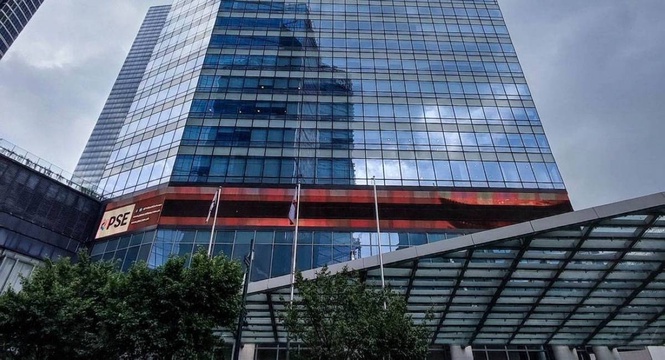
THE Philippine Stock Exchange index (PSEi) fell to a fresh 6.5-year closing low on Thursday, snapping a two-day winning streak as renewed profit-taking and persistent economic concerns kept investors cautious.
The peso, meanwhile, regained strength against the greenback as after the global crude oil prices declined.
The benchmark index shed 33.93 points, or 0.62 percent, to close at 5,477.91, its lowest finish since May 2020, during the height of the Covid-19 pandemic.
Luis Limlingan, head of sales at Regina Capital Development Corp., said investors took profits following the market’s recent recovery, with concerns over inflation, peso depreciation and slowing economic growth continuing to weigh on sentiment.
The market recorded 120 decliners against 66 advancers, while 51 issues were unchanged. Trading turnover reached P6.16 billion, excluding extraordinary block sales.
Michael Ricafort, chief economist at Rizal Commercial Banking Corp., attributed the decline partly to weaker net foreign portfolio investment data and softer earnings from some listed companies, which could signal stagflation risks.
He also cited renewed geopolitical tensions after reports that US President Donald Trump was considering another round of strikes on Iran.
Despite the decline, foreign buying turned positive, with purchases concentrated in Bank of the Philippine Islands (BPI), according to AB Capital Securities Inc.
Excluding Manila Electric Co. (Meralco) and PLDT Inc., net foreign buying increased to P173 million from P54 million a day earlier.
However, underlying turnover remained subdued at P4.07 billion, excluding a large block transaction involving GCash, indicating limited conviction among investors.
AB Capital said the market’s modest recovery toward the close, led by BPI, which gained 1.5 percent, only partially cushioned the day’s losses.
The brokerage also noted continued weakness in International Container Terminal Services Inc. (ICTSI), which fell 1.5 percent following developments related to the Durban ultimatum, although foreign selling in the stock remained relatively modest.
Ricafort said the Philippine government’s credit ratings were also recently affirmed by Japan Credit Rating Agency, Moody’s and Rating and Investment Information, while JPMorgan Chase & Co. is set to include Philippine bonds in its Emerging Market Local Bank Index starting Jan. 29, 2027.
Ricafort identified 5,400 as a major support level for the PSEi, while initial resistance was seen at 5,500 to 5,600.
Renewed strength
The peso strengthened by four and a half centavos to P63.665 from Wednesday’s P63.71:$1.
It opened at P63.65 and traded from P63.64 to P63.8:$1. The volume reached $1.436 billion, up from the previous $1.264 billion.
Ricafort said the peso slightly strengthened after the global crude oil prices declined, which could then “help ease inflationary pressures and lead to a stronger peso against the US dollar.”
Brent crude prices eased to around $91 per barrel from about $93 in the previous trading session, providing some relief from energy cost concerns.
“The world crude oil price is one of the most important leading indicators for the peso exchange rate, and now that oil price has gone down, the peso is still doing relatively better,” Ricafort said.