.jpeg)

In Southeast Asia, August is noteworthy as 3 nations in the region celebrate their Independence Day during this month, namely Singapore (August 9), Indonesia (August 17) and of course, our beloved country, Malaysia (August 31).
Recently, amidst the National Day celebration in Singapore, controversy erupted in the Republic after a video went viral on TikTok, depicting how an HDB flat block in Singapre’s Yishun Central displayed the Malaysian flag alongside a sea of Singaporean flags.

While the displaying of the Jalur Gemilang was allegedly meant to portray a spirit of camaraderie with their neighbours north of the Causeway by the individual who put it there, the reception was divisive, with many Singaporeans pointing out that doing so was actually against the law in the country.
Indeed, displaying a foreign national emblem in public is against Singapore’s Foreign National Emblems (Control of Display) Act 1949 below and could land the individual with a fine of up to SGD500, imprisonment of up to 6 months or both.
With that in mind, did you know that Malaysia actually has a nearly identical law to Singapore’s which also prohibits the public display of foreign flags? Called the National Emblems (Control of Display) Act 1949, here’s everything you need to know about the legislation.
Any flag, banner or other emblems of another country are considered a ‘national emblem’
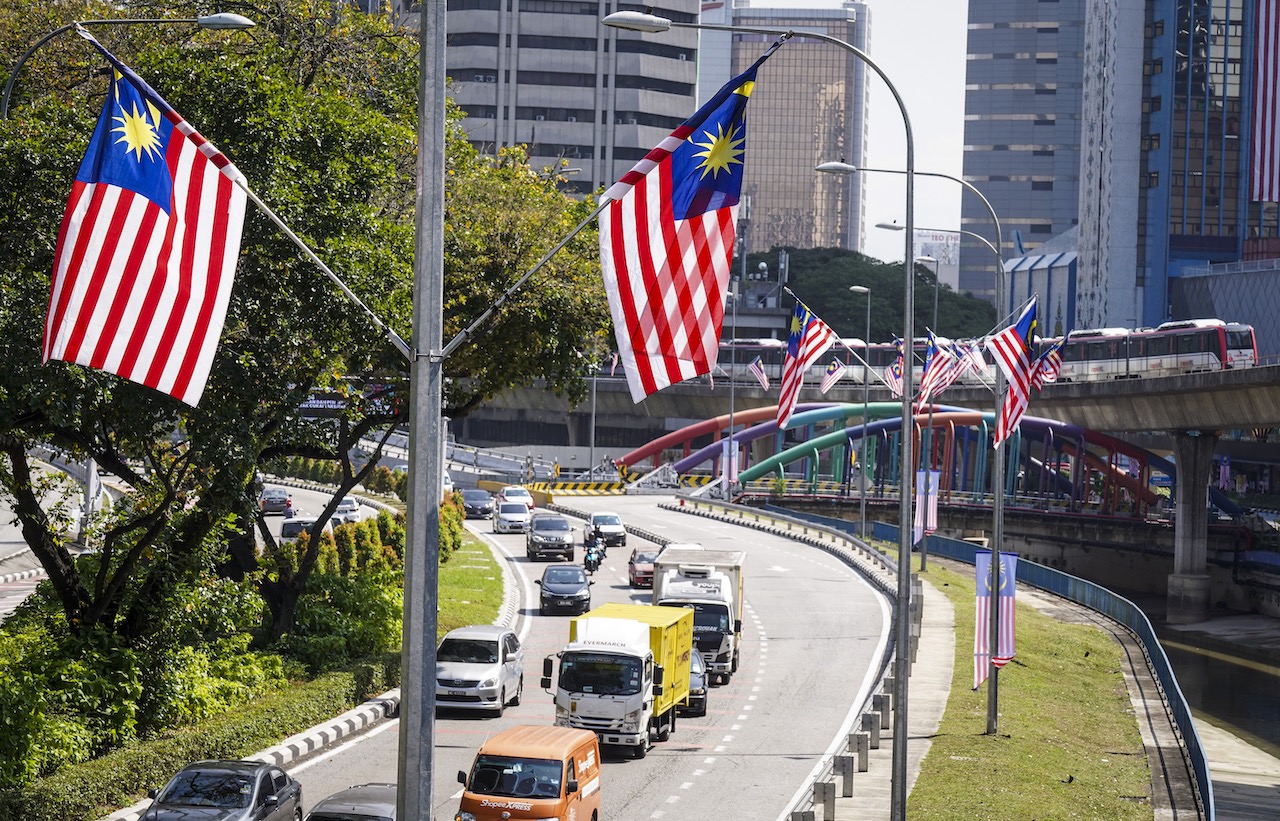
Under Section 2 of the Act, a ‘national emblem’ is defined as any flag, banner or other emblem being or purporting to be the flag, banner or other emblem of any country other than Malaysia and any states included in Malaysia. Moreover, a flag, banner or other emblem of any political organisation claiming to be a national movement in any State is also considered a ‘national emblem’ under the Act.
Not only that, a flag, banner or other emblem that resembles any national leader or former national leaders of any State or the leader or former leader of any such political organisation is also considered as a ‘national emblem’.
Displaying of national emblems in public or schools is prohibited in Malaysia
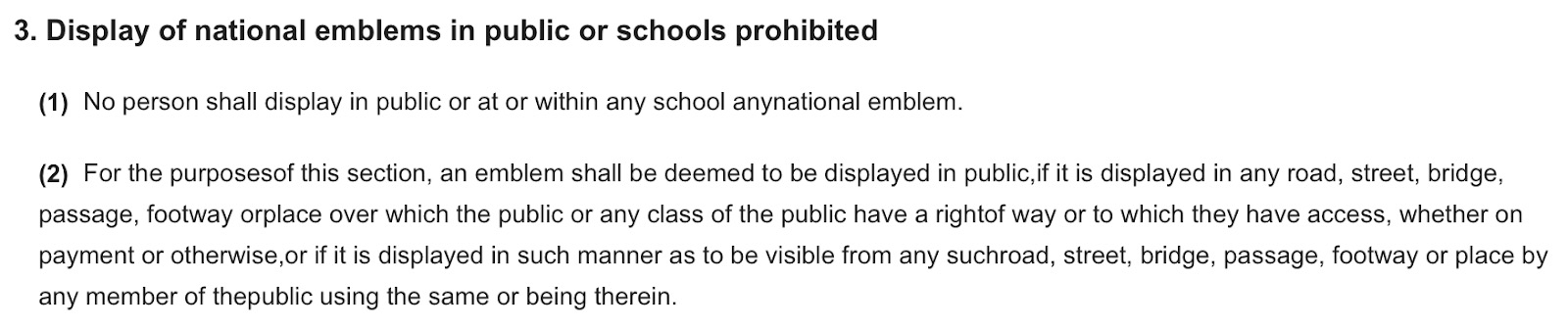
Meanwhile, Section 3(1) of the National Emblems (Control of Display) Act 1949 prescribes that it’s an offence for any person to display in public or at or within any school any national emblem as defined under the aforementioned Section 2.
Furthermore, Section 3(2) of the Act establishes what is considered displaying a national emblem in public, which includes:
- Displaying in any road, street, bridge, passage, footway or place over which the public or any class of the public have right of way or access
- Displaying in such a manner as to be visible from any such road, bridge, passage, footway or place by any member of the public
However, there are a few exceptions in which a national emblem can be publicly displayed by an individual, which is prescribed under Section 4 of the Act below:
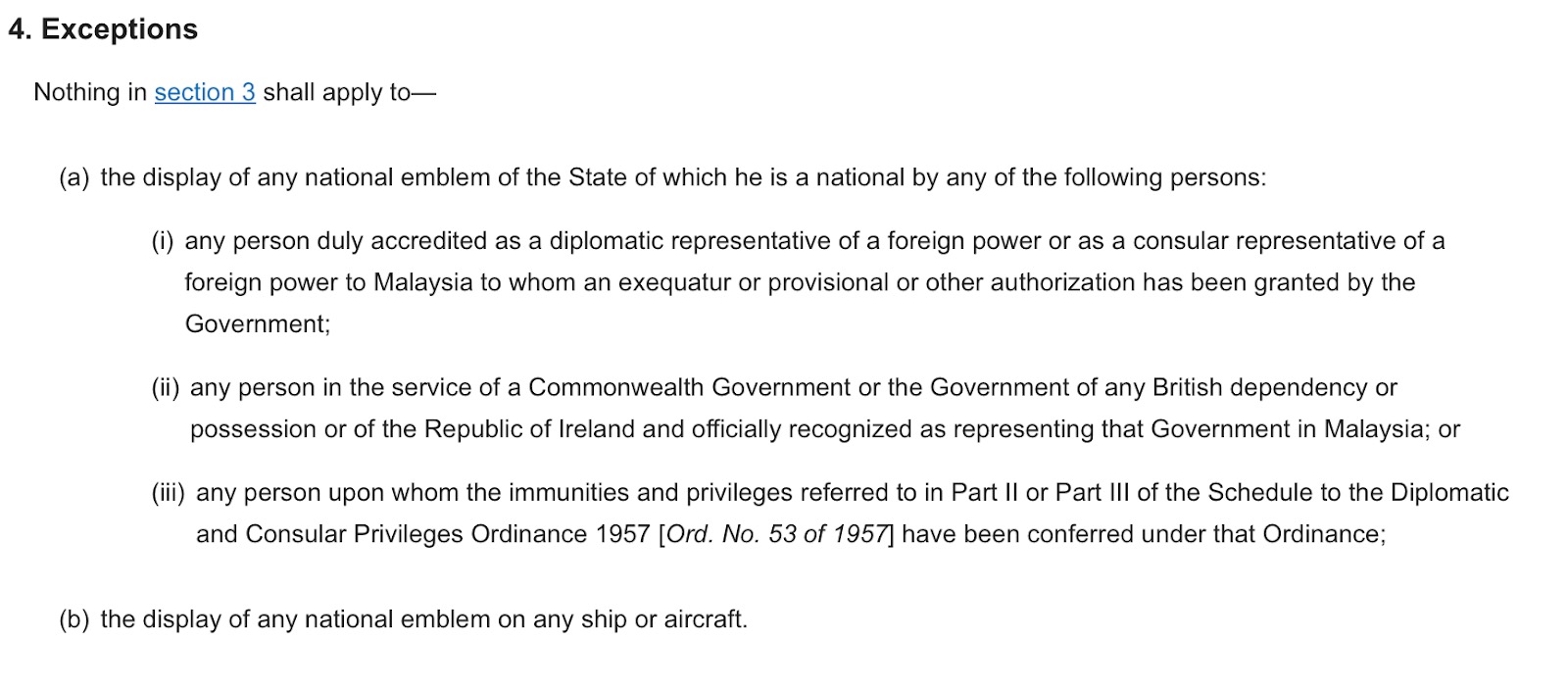
According to the above provision, the public display of a national emblem is allowed if the individual is a national of said country and:
- They are accredited as a diplomatic representative or consular representatives of the country to Malaysia, to whom an exequatur or provisional or other authorisation has been granted by the Malaysian Government
- They are in the service of a Commonwealth Government or the Government of any British dependency or possession or of the Republic of Ireland and officially recognised as representing that Government in Malaysia
- They possess immunities and privileges referred to in Part II or Part III of the Schedule of the Diplomatic and Consular Privileges Ordinance 1957

Furthermore, the display of any national emblem on any ship or aircraft is also allowed. Beyond that, Section 5 of the Act prescribes that the Home Minister may, by order published in the Gazette or by a permit in writing, allow for an individual to display a national emblem in public.

However, the Home Minister may regulate how the national emblem is to be displayed and the period via the order or permit.
Offenders can be arrested without a warrant and face up to 6 months in jail
Accordingly, those who display a national emblem in public without the exceptions and exemptions given in Sections 4 and 5 of the Act may be charged under Section 8 of the Act below:
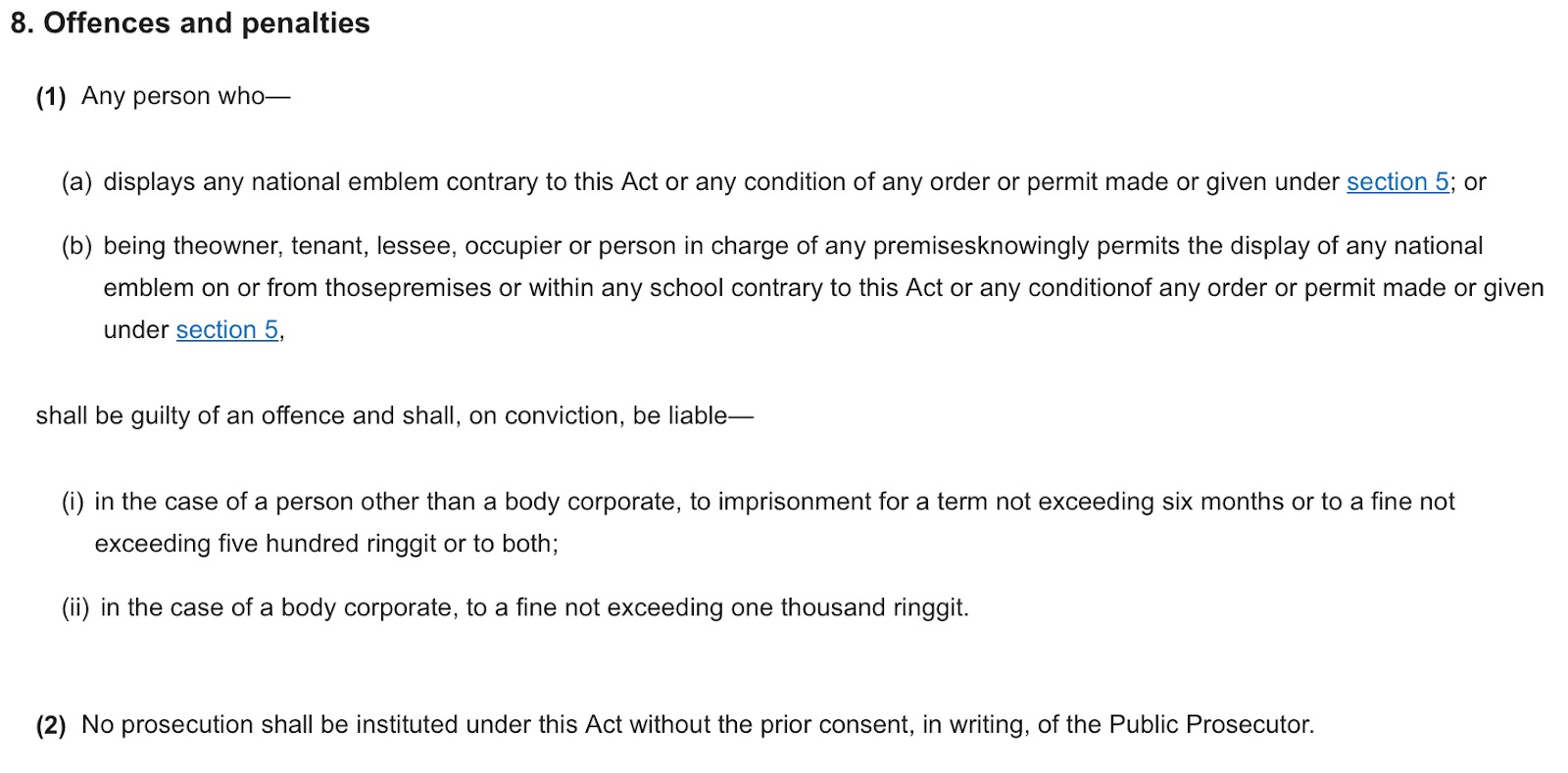
If the offender is an individual, they may face up to 6 months in jail, up to RM500 fine or both if convicted. Should the offender be a body corporate, they may face a fine of up to RM1,000 if convicted.
Furthermore, Section 8(1)(b) of the Act prescribes that the owner, tenant, lessee, occupier or person in charge of any premises can also be charged under the Act for allowing the public display of a national emblem. However, any prosecution under this provision must first get the prior consent, in writing, of the Public Prosecutor.
In addition, Section 6 of the Act below gives the power to the police to arrest without a warrant any person whom they have reasonable cause to believe has committed or is committing an offence under the National Emblems (Control of Display) Act 1949.

Meanwhile, Section 7 below allows the police to enter any premises where any national emblem is displayed against what is prescribed under this Act in which they have reasonable cause to believe that an offence against the Act is being or has been committed. The provision further allows the police to search the premises and seize any article they believe to be evidence of an offence under the Act.

The most recent example of an offence committed under the National Emblems (Control of Display) Act 1949 was in November last year, when a man in Kampung Padang Lemban, Bukit Payung in Marang, Terengganu was sentenced to 6 months in jail and an RM500 fine for displaying the Israeli flag at a local premise a month prior.

Moving forward, let’s all be mindful of the flags and banners we display in public as from what we elaborated in this article, only the Jalur Gemilang and Malaysian state flags are allowed to be displayed publicly in Malaysia. With that in mind, let’s all proudly raise the Jalur Gemilang this month as we celebrate the 61st anniversary of our beloved country’s formation.
For more insights into the Malaysian legal system such as this, do make sure to follow us on Facebook and Instagram or visit our official website. You can also read our articles on the popular Malaysian news aggregator app Newswav here.
About us

Ahmad Danial Iswatt & Luqman is an esteemed law firm that delivers best-in-class legal solutions to individuals, businesses and legal entities in Malaysia and beyond. We offer ease of mind to our wide range of clients by dismantling complex legal challenges with novel solutions through exceptional legal advisory and representation.
Our distinguished partners of diverse backgrounds and expertise have achieved significantly favourable results in all levels of courts in Malaysia, from high-profile civil and criminal litigation proceedings to complex cases in which the outcomes have become binding precedents for the laws of the country. Backed by a growing team of exceptional lawyers and capable support staff, we aspire to be at the forefront of the legal sphere to satisfy our clients’ dynamic demands and ever-increasing complexity.

Submit any #MalaysiaKita related content and stand a chance to win prizes up to RM6,950, including a 3D2N luxurious stay at The Prestige Hotel! Find out how you can participate here.
ADIL Legal is a content creator under the Newswav Creator programme, where you get to express yourself, be a citizen journalist, and at the same time monetize your content & reach millions of users on Newswav. Log in to creator.newswav.com and become a Newswav Creator now!
The User Content (as defined on Newswav Terms of Use) above including the views expressed and media (pictures, videos, citations etc) were submitted & posted by the author. Newswav is solely an aggregation platform that hosts the User Content. If you have any questions about the content, copyright or other issues of the work, please contact Newswav.