
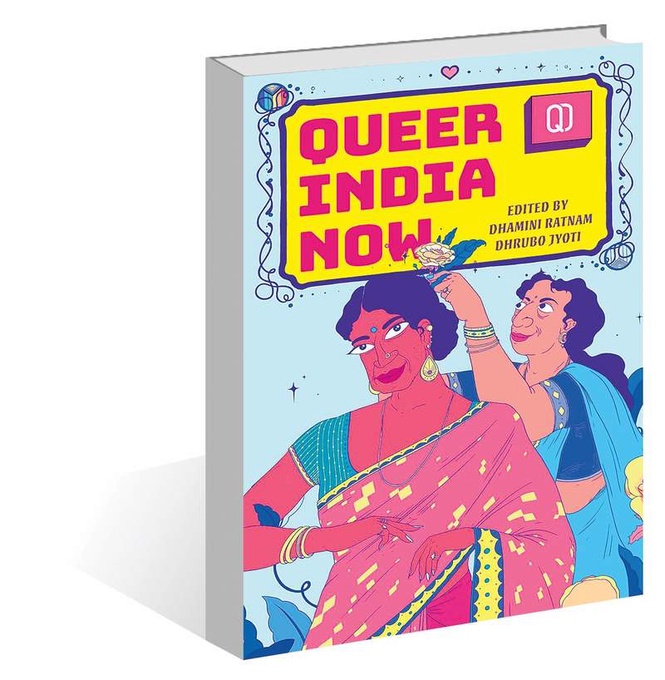
Since the decriminalisation of same-sex relationships, the accounts of queer lives have increasingly appeared on the bookshelves. If earlier it was a trickle mostly consisting of biographies of gay men or a few resilient transgender women, there are more books now about diverse identities and experiences, which earlier remained unnamed and unrecognised.
So what does queerness look like in 2026? Unshrouded, assertive, and yet aware of the dangers that can undo decades of hard work, even as it seeks to be at home in a nation defined by caste, class, geographical location, religion, and ethnicity. This is what the anthology ‘Queer India Now’ captures through a mix of personal stories, academic essays, poems, and illustrations. It is as much about the vibrant today as it is about the work done and unapologetic lives lived by those before us.
The Queer Directions imprint, a collaboration of Godrej DEI Lab and Westland Books, thus debuts with a book that can not only be an eye-opener for a society, which mostly looks at LGBTI+ people through a lens of sexual deviancy rather than a human experience, but also bridges gaps within the queer community by giving voice to individual journeys and conjuring collective hope.
While the LGBTI+ people across the world have done well to reclaim the term ‘queer’ to define themselves, this book is well aware of its limitations in the Indian context. It makes a self-deprecating joke through a character from a small town wondering what the term even means.
The anthology goes beyond the usual subjects and writers to spotlight traditions and modernity in equal measure. Here, a piece on the Jogati tradition of South India gets equal, if not more, space than the ruminations on sex and desire in the times of hook-up apps. The pervasiveness of caste in Indian society is reflected in multiple personal accounts. From doctors to models to lawyers, same-sex parents, trans and disability rights activists, queer people living under multiple repressions in Kashmir, and those raised in red light areas, the representation achieved by the editors of this anthology is as diverse as diversity could be.
The personal account of Kiran Nayak, a transgender man bound to a wheelchair since the age of three, who not only fought multiple battles for respect and accessibility, but also established and nurtured several activist organisations, sits with the life and work of Padma Shri awardee Manjamma. Her contribution to the Jogathi tradition is not only an archive in practice, but also a testament to trans lives that thrived through folk religion and performance.
Pieces about children hold special relevance as these are rare and the law recognises an individual’s autonomy only after the age of 18. While most stories of queer persons begin with being aware of their gender and sexuality as a child and being bullied for it, we don’t hear much about queer kids in the present. Hence, the story about a home for gender non-conforming children in Manipur or a young trans man’s interaction with the juvenile justice system, which leave the officials sensitised, lend hope.
The weight of being trans in India — challenges in getting names changed in legal documents, the complexities of medical transition, violence from natal families, and difficulties in getting jobs — gets a voice through personal stories. Vasavi Kulluru’s ode to the bedrooms that have held them all these years offers an intimate glimpse into a queer person’s inner life.
Some contributions bring lightness to the anthology without being fluff. While Vqueeram Aditya Sahai’s poetry imagines being an old woman — the vulnerability, the loneliness, and the attempts to reclaim pride — an essay on Tamil and Kannada movies by Vijeta Kumar dwells on the depiction of masculinity, homosociality and language play.
Vikram Phukan’s piece on queer joy and transgression takes us through the streets, clubs, private homes, islands and ferries, embracing the past and present of parties and the continuation of drag performances.
This book will not only leave you informed but also connected to unique experiences conveyed through universal emotions.
— The reviewer is a freelancer