.png)
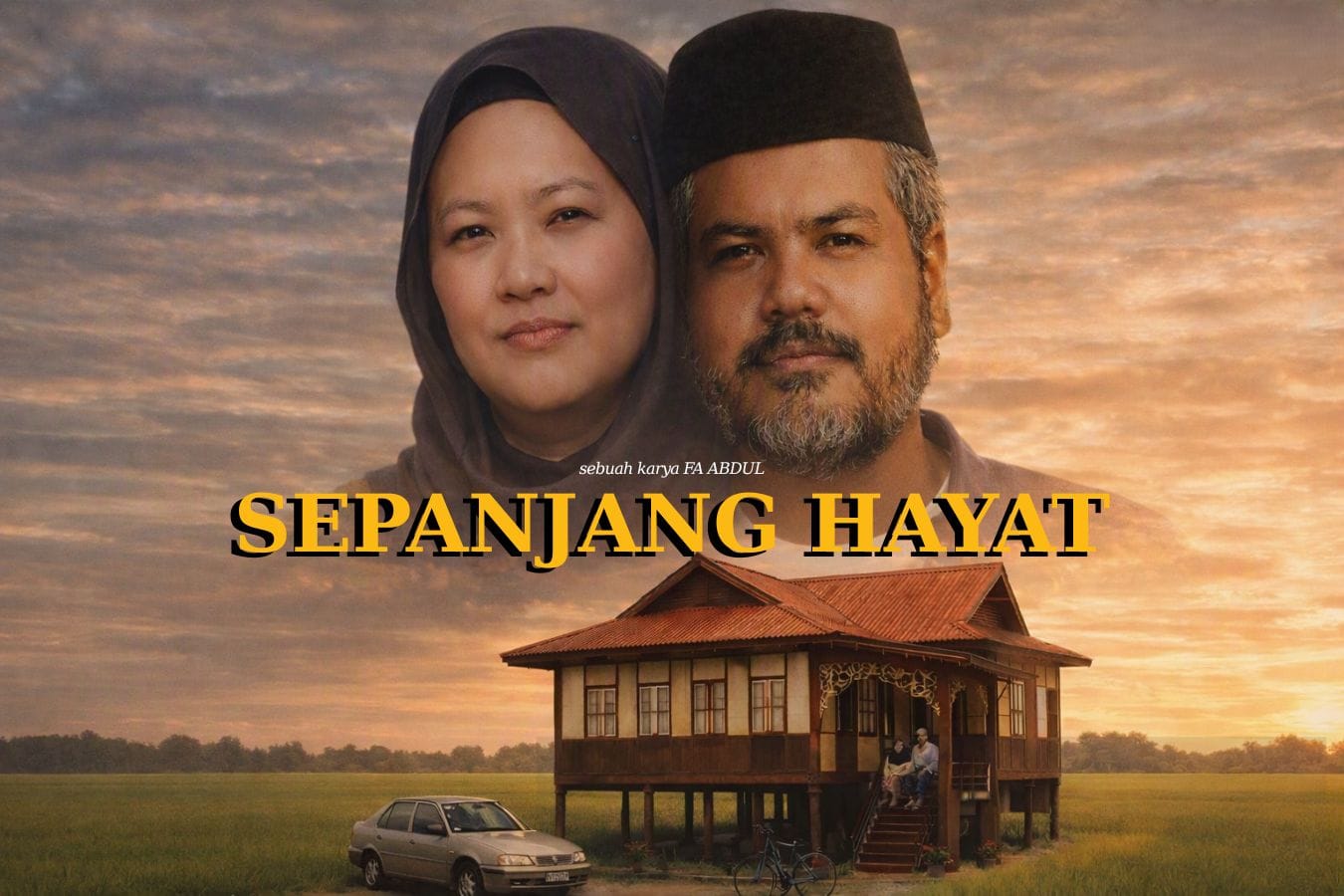
At its surface, ‘Sepanjang Hayat’ is a story about love, race, religion and choice.
But underneath all of that, it is a story about family.
I have always been fascinated by stories about religious conversion.
What makes someone willingly change a part of their identity to embrace something new, simply because they want to share their life and dreams with someone they love?
The easiest answer is love.
We have always been told that love is powerful enough to make people sacrifice anything. Their family. Their beliefs. Their culture. Their identity. Sometimes even the life they had imagined for themselves.
But the more I think about it, the less I believe that love is always the greatest force behind the choices we make.
Sometimes duty is greater.
Sometimes guilt is greater.
Sometimes family is greater.
And sometimes, we make choices because we believe they are the right thing to do - even when those choices hurt the people we love.
That was where Sepanjang Hayat began.
The Story
I initially wanted to tell the story of Amir, a Muslim man caught between love, responsibility and guilt.
Amir is caught in khalwat with Lay Chin, a Chinese colleague. When she discovers that she is pregnant, Amir decides to marry her and take responsibility for his actions. But the decision comes at a price.
His father, Karim, cannot accept Lay Chin or the marriage. He sees his son's actions as a betrayal of the family and everything they stand for. Eventually, Amir leaves home, taking with him the life he has chosen - and leaving the rest of the family to deal with the consequences.
Lay Chin enters this new life knowing that she is already an outsider. She is willing to consider changing her religion and adapting to a culture different from her own because she loves Amir. But she never expects to begin that journey carrying the shame and hostility of a family that sees her as the person responsible for taking their son away.
As I developed the story, something unexpected happened. I became less interested in Amir and Lay Chin.
I became much more interested in the people they left behind.
Because when someone makes a life-changing choice, we tend to look at the person who made it. We talk about their courage. Their mistakes. Their love. Their right to choose.
But what about the people who have to live with that choice?
That question eventually became the heart of Sepanjang Hayat.
The People Left Behind
Amir’s father, Karim, is a respected man in his village. He is outspoken, believes in doing what is right and likes to think of himself as someone who can see beyond the rigid thinking of others.
But when his own son challenges his beliefs, everything changes.
Karim cuts ties with Amir because he believes he is protecting his family. He believes there are principles that must be upheld. He believes that if he gives in once, he will lose something important.
Then there is Amir’s mother, Zubaidah. She is quieter. She spends years keeping the peace, swallowing her words and missing her son in silence. But silence is not the same as acceptance.
Eventually, the quietest person reaches a point where she has to decide whether keeping the peace is worth losing herself.
Then there is Amran, Amir’s younger brother.
Before Amir left, he lived a relatively carefree life, running his small workshop and figuring out his own future.
Suddenly, he becomes the family's new hope and inherits expectations he never asked for. He is now expected to be the dependable son, to build a respectable future and to prove that his family can still have something to be proud of.
His sister Aini carries a different version of that same burden.
After Amir leaves, Karim becomes even more determined not to lose another child. But protection can sometimes feel like a cage.
Aini falls in love with Krishnan, a former classmate who was born and raised in the same village but is still regarded as an outsider by some. She hides their relationship from her family because she already knows what her father is capable of when love challenges his beliefs.
And Krishnan brings another question into the story.
He loves Aini and is willing to make sacrifices for her. But love does not automatically erase differences in how two people see the world.
For Krishnan, religion should give a person room to choose how they want to live. For Aini, loving someone also means wanting them to understand and embrace something that matters deeply to her.
Neither of them can simply wish that difference away.
The Absence of Amir and Lay Chin
But perhaps the most important characters in Sepanjang Hayat are the two people who never appear on stage.
Amir and Lay Chin exist only through the stories other people tell about them.
We never get to hear Amir explain himself. And we never get to hear Lay Chin tell us her side.
We see them through Karim's anger, Bedah's longing, Amran's burden and Aini's fear.
That absence is deliberate.
Because when someone leaves a family, they don't necessarily stop being part of it. Sometimes they become even more present - in the arguments, the memories, the expectations and the wounds they leave behind.
At its surface, Sepanjang Hayat is a story about love, race, religion and choice. But underneath all of that, it is a story about family.
It is about what happens when the people we love make choices we cannot accept.
It is about the price paid by the people who remain - parents who don't know how to forgive; children who don't understand why they have to carry the consequences of someone else's decision; siblings who suddenly have to become someone they were never ready to be; and people who spend years wondering whether holding a family together means holding on, or finally learning to let go.
We often talk about love as though it is the answer to everything. But life is rarely that convenient.
Sometimes love asks us to choose between family and ourselves; between faith and freedom; between what we believe is right and what our heart wants.
And sometimes, between holding on and letting go.
That is what I wanted to explore in Sepanjang Hayat.
Not who is right, not who is wrong, but what our choices leave behind - because some choices last far longer than the moment in which we make them.
Sepanjang Hayat will be staged from 9th to 11th October at Jetty 35, Pengkalan Weld, Penang and features Jay Norhan, Eiyha Abdullah, Yusof Bakar, Izatul Akmal, Arunen T, Dr H. Hadi, Athif Irfan and Didi Aldian.
Tickets are available at bit.ly/sepanjang_hayat.
Sepanjang Hayat is presented by Big Nose Productions and supported by the Penang State Government, Penang Arts Council, Penang Bay Art Society and Still Thinking Production.
Fa Abdul (fa.abdul.penang@gmail.com) is a content creator under the Newswav Creator programme, where you get to express yourself, be a citizen journalist, and at the same time monetize your content & reach millions of users on Newswav. Log in to creator.newswav.com and become a Newswav Creator now!
The User Content (as defined on Newswav Terms of Use) above including the views expressed and media (pictures, videos, citations etc) were submitted & posted by the author. Newswav is solely an aggregation platform that hosts the User Content. If you have any questions about the content, copyright or other issues of the work, please contact creator@newswav.com.