MIGRATION is often described in numbers. We count people leaving their countries, crossing borders, sending remittances and filling labor shortages. Governments celebrate economic contributions, employers discuss workforce needs and policymakers debate immigration controls.
Yet behind these figures are people whose experiences cannot be understood simply through movement from one country to another.
Migration is also about what people leave behind, what they encounter along the way, and how they make lives elsewhere. It is about roots, routes and belonging. At the heart of these experiences is language.
Roots remind us that migrants do not arrive without histories. They carry languages, memories, cultural practices and ways of understanding the world. These are not merely remnants of the past; they sustain connections with families, communities and homelands.
Consider Filipino families raising children in Japan or Singapore. Parents may speak Filipino or another Philippine language at home, while children increasingly use Japanese or English. Children may understand their parents’ language but struggle to speak it. Grandparents may find themselves unable to share stories with grandchildren growing up overseas. What happens when families can no longer tell their stories in the languages in which those stories were lived?
Maintaining roots need not mean rejecting integration. Belonging to a new society should not require abandoning one’s linguistic inheritance. Indeed, societies can support integration while making room for heritage language education and multilingual family life.
Routes remind us that migration is rarely a simple journey between two points. People pass through recruitment agencies, border checkpoints, transit countries and temporary settlements. Some migrate repeatedly; others remain in transit for years.
For Filipino migrant workers, the journey often begins before boarding an airplane: with recruitment advertisements, employment contracts, interviews, language examinations and orientation seminars. At each stage, language can open opportunities or create vulnerabilities. A worker may sign a contract they cannot fully understand. Another may struggle to explain an employment grievance to authorities. A domestic worker may not know how to seek help because information about legal protections is unavailable in a familiar language.
These are not simply communication difficulties. Unequal access to language can become unequal access to rights, protection and justice. When institutions place the entire burden of understanding on migrants, linguistic barriers reinforce inequalities between workers, employers and governments.
Routes are also digital. Migrants sustain family relationships through messaging applications, seek employment through online platforms and participate in transnational communities. But connectivity does not automatically produce equality. Recruitment scams, misinformation and inaccessible digital services create new vulnerabilities.
Belonging raises perhaps migration’s most difficult question: When does a migrant become accepted as a member of society?
Legal residency, employment and even citizenship do not guarantee social acceptance. Migrants may contribute to a country for decades and still be treated as outsiders because of their names, appearances, accents or ways of speaking. Someone who speaks the dominant language competently but with a foreign accent may face unfair judgments about intelligence or professionalism. Children from migrant backgrounds may be evaluated against standards that overlook their multilingual abilities.
There is a contradiction here. Migrants are expected to learn the language of their host society, yet affordable opportunities may be scarce. Workers with long shifts have little time for classes. Should integration be solely the migrant’s responsibility, or must receiving societies also provide conditions for participation?
Language connects roots, routes and belonging because it is never merely a neutral instrument of communication. It is also a resource through which power operates, identities are negotiated and inequalities are challenged or reproduced.
A migrant unable to understand a medical diagnosis, communicate with police, or receive disaster warnings in an accessible language faces risks beyond inconvenience. During floods, earthquakes or forced displacement, comprehensible information can determine whether people obtain shelter, assistance or safety.
Yet migrants are not simply passive victims. They combine languages, translate for one another, negotiate meaning and create networks of mutual assistance. Their practices reveal resilience and agency. They also challenge conventional assumptions about proficiency: someone who performs poorly on a formal language examination may communicate effectively in a multilingual workplace. Whose linguistic competence counts, and who decides?
These questions grow more urgent as armed conflict, economic inequality, political instability and the climate emergency reshape human mobility. People fleeing disasters or persecution seldom have the luxury of preparing linguistically for their journeys. Language nevertheless remains essential to securing necessities and asserting rights.
These concerns animate the 3rd International Conference on Migration Linguistics, taking place in Singapore and Johor Bahru this November. Its featured presentations show how the four themes intersect in real lives.
At the Peranakan Museum in Singapore, Lisa Lim of VinUniversity will examine language, mobility and the changing position of Peranakans. The program also includes a walking ethnography of Singapore’s migrant enclaves. An accompanying Singapore Association for Applied Linguistics Distinguished Lecture, separate from the official conference program, features Hans J. Ladegaard of the Education University of Hong Kong on migrant domestic workers’ storytelling, trauma and the recovery of self.
In Johor Bahru, keynote speaker Lionel Wee of the National University of Singapore will consider migration as discipline and control through technologies of government. Aiden Yeh of Taiwan’s Wenzao Ursuline University of Languages will explore YouTube as an archive of Global South migrant teachers’ journeys in Taiwan. Christiane Meierkord of Germany’s Ruhr University Bochum will foreground neglected voices from vulnerable grassroots communities in South Africa and Uganda. Closing plenary speaker Francesco Goglia of the University of Exeter will discuss multiple migrations, linguistic repertoires and language maintenance among Italian-Indians in the United Kingdom.
The discussions also extend beyond universities. Migrant organizations, educators, translators, employers and policymakers have much to contribute, because linguistic inclusion depends not only on scholarly understanding but also on changes in institutions, workplaces, classrooms and the communities migrants call home.
Together, these presentations invite us to see migration not merely as movement, but as an experience shaped by history, institutions, inequality and human agency. They also remind us why migrants’ own voices must remain central to research and public debate.
Organized by the Singapore Association for Applied Linguistics and Malaysian Association of Applied Linguistics, with international academic partners, the conference begins with activities in Singapore on Nov. 14, 2026. Academic presentations follow in Johor Bahru on Nov. 16–17. The conference is hybrid, so participants who cannot travel can join online. We invite scholars, students, practitioners and community advocates to participate in person or virtually, exchanging ideas across geographical and disciplinary boundaries. Details are available at https://www.migrationlinguistics.info/international-conference-on-migration-linguistics#h.97xxvb4l97o5.
After all, migration is not simply about crossing borders. It is about carrying one’s roots, negotiating one’s routes, finding somewhere to belong and having a voice that deserves to be heard.
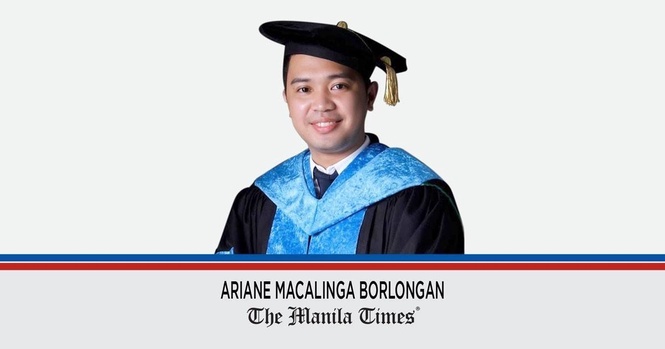
Ariane Macalinga Borlongan is a public intellectual, language scholar and migrant advocate. He is one of the leading researchers on English in the Philippines and one of the pioneers of migration linguistics. He is the youngest to earn a doctorate in linguistics, at age 23, from De La Salle University, and has had several teaching and research positions in Germany, Japan, Malaysia, the Philippines, Poland and Singapore. He is currently associate professor of sociolinguistics at the Tokyo University of Foreign Studies.