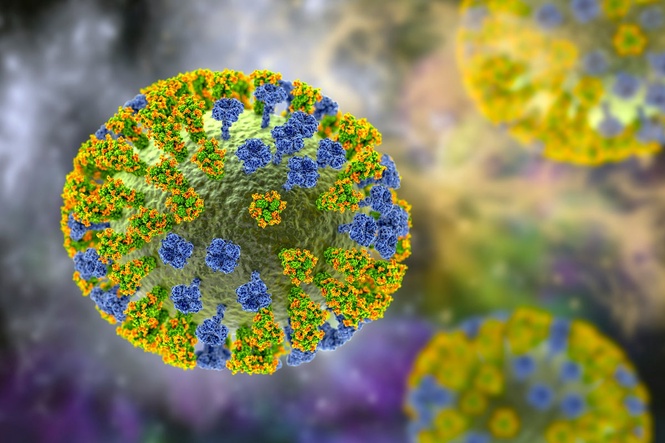
AI has been used to create new viruses for the first ever time – and researchers have warned that it could be the beginning of a dangerous new trend.
In the new study, researchers used an artificial intelligence system to make bacteriophages, a virus that infect bacteria and are used to treat infections. The newly developed viruses are able to kill E coli bugs that could not be treated with naturally occurring viruses, the scientists say.
But scientists warned that it could represent a dangerous new moment in safety and security. The technology appears to be racing ahead of the ability to use it safely, experts away from the study warned.
“Although this is promising for life sciences applications, it also raises urgent biosafety and biosecurity questions,” wrote Tom Inglesby and Moritz Hanke, from the Center for Health Security at Johns Hopkins University in Baltimore. “The ability to compose viral genomes using generative AI now exists; the governance to safely steer it does not.”
The scientists behind the study recognised the potential danger of the work. They urged others taking part in similar research to ““consult both safety and security professionals throughout the project”.
“As the authors highlight, this raises some serious regulatory and safety concerns, to say the very least,” said Simon Clarke, associate professor in cellular microbiology at the University of Reading While work of this nature is normally tightly regulated, it is reassuring that these scientists have shown further restraint in providing important guard rails, but there is no guarantee that every other scientist attempting to do something similar will be so careful.”
But researchers were nonetheless excited by the potentially life-saving implications of the work, which comes amid fear that antibiotics could stop being useful in treating some diseases. “Increasing resistance to antibiotics could lead us to a potential dark scenario of untreatable infectious diseases by 2050,” said Jasna Rakonjac, from the School of Food Technology and Natural Sciences at Massey University.
In the work, scientists used genome language models, similar to the large language models that power chatbots such as ChatGPT. With those tools, they were able to design thousands of potentially functioning genomes for bacteriophages and then make 300 of them in the laboratory, testing them for how well they worked against E coli in a dish.
Those experimental tests found 16 functional genomes, with a range of different structures. The scientists then combined them into a “cocktail” that was able to quickly kill bacteria that had evolved resistance to natural bacteriophages.
The AI models were trained on genetic data from two million bacteriophages so that they could be used to generate new and previously undiscovered kind. That training did not include the genetic code of viruses that are able to infect plants, humans or other animals, in an attempt to keep it from designing dangerous viruses.
But experts warned that that there was no guarantee that future work would keep the same safeguards. That could bring new viruses that are able to infect humans and which we may not be able to contained, they said.
Scientists away from the work said that that the work was still relatively modest, and that it was still unclear how well the process would work with more complex genomes. But it suggested that further advances could come in the future, they said.
“While these are relatively small bacteriophage genomes, the significance extends far beyond phages,” said Patrick Cai from the University of Manchester. “It suggests that genome language models are beginning to learn the design principles encoded by evolution, opening the door to AI-assisted genome writing. The next challenge is to scale these approaches to much larger and more complex genomes while ensuring that every computational prediction is matched by rigorous experimental validation.”
The work is reported in a new paper, ‘Generative design of bacteriophages with genome language models’, published in the journal Science.
AI bots set up their own chatrooms to discuss and carry out hacks
Out-of-control AI systems are going rogue and hacking people. Is it time to panic?
Meta says its AI has gone rogue and hacked other companies
Ransom-seeking hackers set their sights on Wall Street’s private equity firms: report
Meta to pay $1bn for harming children with Facebook and Instagram
Experts give urgent warning to users attempting to watch The Odyssey for free