.jpg)
By Mihar Dias (C) Copyright September 2024
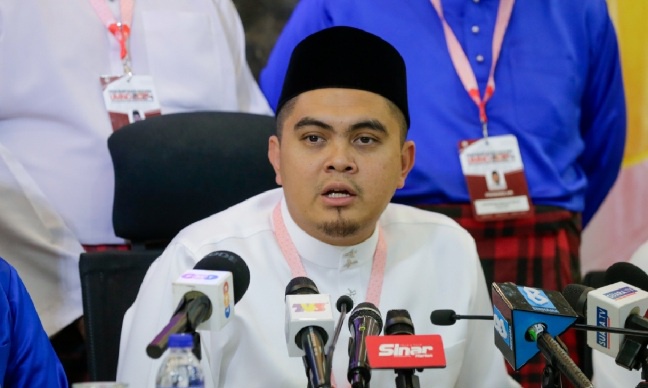
In Malaysia's increasingly volatile political landscape, the blame game remains in full swing. The latest round features Umno Youth Chief Dr. Muhamad Akmal Saleh, who took to social media to question the integrity of PAS Deputy President Datuk Seri Tuan Ibrahim Tuan Man’s call for Deputy Prime Minister Datuk Seri Ahmad Zahid Hamidi to take a leave of absence.
The issue at hand centers on Zahid's ongoing legal troubles, notably the dropping of 47 corruption charges and fresh allegations that he misled the 16th Yang di-Pertuan Agong during the formation of the unity government.
Tuan Ibrahim’s suggestion was straightforward: Zahid should step aside to allow for a thorough investigation.
Akmal's retort? Why stop at Zahid? Shouldn’t the same logic apply to PAS members like Kedah Menteri Besar Datuk Seri Muhammad Sanusi Md Nor and Perlis Menteri Besar Mohd Shukri Ramli, both of whom also face legal challenges?
Akmal’s response taps into a familiar theme in Malaysian politics: politicians shielding their own while eagerly attacking their rivals. In this context, Zahid’s predicament becomes less about the charges themselves and more about the selective application of justice.
To the public, this is the classic "pot calling the kettle black" scenario, where moral outrage is conveniently selective.
However, it's worth considering the context of these accusations. Zahid’s legal troubles carry a different weight than those faced by Sanusi and Shukri.
Zahid’s history of corruption allegations is a political albatross, casting a long shadow over the unity government. Meanwhile, Sanusi’s charges relate to defamation, and Shukri’s involve his son, not the MB himself. Equating these cases diminishes the significant differences in scope and severity.
By framing Zahid’s troubles as just another political drama, Akmal attempts to downplay the gravity of the accusations against him.
He positions Zahid as just another politician embroiled in legal proceedings, glossing over the seriousness of the charges against the Deputy Prime Minister. This raises a crucial question: When do we draw the line between political maneuvering and the need for real accountability?
This latest exchange also highlights a broader issue within Malaysian politics: the persistent culture of impunity. When politicians seem able to evade even the most serious allegations, public confidence in the system erodes. Zahid's case is emblematic of this problem. The decision to drop 47 corruption charges against him sparked widespread disbelief and reinforced the perception that political power shields individuals from the full force of the law. Calls for Zahid to step down aren’t just about legal process—they’re about restoring faith in the notion that no one is above the law.
Akmal’s deflection is indicative of the deep-rooted defensiveness in Malaysian politics. Rather than confronting allegations directly, the strategy is to deflect attention by pointing fingers at others. It's a tactic designed to distract from the core issue, but it ultimately deepens the public’s disenchantment. In a country already cynical about its political class, this kind of deflection only further erodes trust.
At the core of this controversy is a fundamental tension: can Malaysia’s leaders truly govern in the public interest while facing serious legal challenges?
Zahid’s continued presence in the government complicates efforts to move forward. Regardless of whether he steps aside, questions about his conduct will continue to overshadow the unity government, casting doubt on its legitimacy.
Akmal’s attempt to equate Zahid’s situation with that of PAS members may resonate with some segments of the electorate, but it fails to address the underlying issue.
If Malaysian politics is to regain credibility, it needs more than just tit-for-tat accusations—it needs leaders who are willing to face the consequences of their actions, regardless of their party affiliation.
Until that happens, Zahid’s case will remain a stark symbol of a system struggling to achieve genuine justice.
Mihar Dias is a content creator under the Newswav Creator programme, where you get to express yourself, be a citizen journalist, and at the same time monetize your content & reach millions of users on Newswav. Log in to creator.newswav.com and become a Newswav Creator now!
The User Content (as defined on Newswav Terms of Use) above including the views expressed and media (pictures, videos, citations etc) were submitted & posted by the author. Newswav is solely an aggregation platform that hosts the User Content. If you have any questions about the content, copyright or other issues of the work, please contact Newswav.