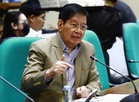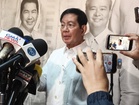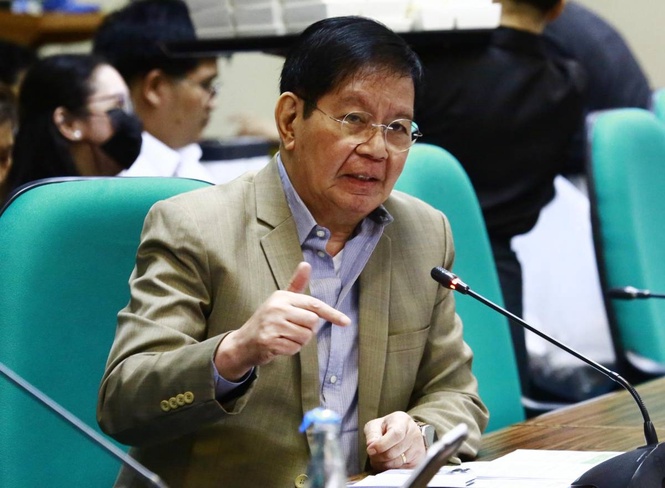
THE Senate majority bloc is united in stripping the proposed P7.2 trillion 2027 national budget of questionable and corruption-prone allocations, including projects inserted by lawmakers without proper vetting, Sen. Panfilo Lacson said.
In a social media post, Lacson said the majority was all for weeding out unwarranted allocations and ensuring transparency at every stage of the budget-making process.
“The majority of senators are rallying behind Senate Finance Committee Chairman JV Ejercito’s efforts to cleanse the 2027 budget of unwarranted, whimsical, and corruption-prone items,” Lacson said.
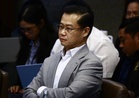
Over the weekend, Ejercito secured a commitment from the Department of Public Works and Highways (DPWH) to strike out infrastructure projects without complete supporting documents from the House-approved budget bill before plenary debates, unless the agency submits the required papers by Nov. 3.
Budget advocacy groups had flagged the lack of supporting documents in the House version of the proposed spending measure.
A Senate review found that the number of DPWH projects had increased from 11,420 in the National Expenditure Program, the executive branch’s original spending proposal, to 16,244 in the House-transmitted General Appropriations Bill.
Of these, 6,271 projects were introduced by lawmakers without prior vetting by the executive branch, raising questions about how the additional infrastructure allocations were selected, evaluated and justified.
Ejercito also said civil society organizations would be invited to observe the bicameral conference committee’s budget deliberations, where the Senate and House of Representatives reconcile their versions of the spending measure.
The proceedings would also be livestreamed to allow the public to monitor discussions and proposed changes.
The transparency measures are part of efforts to prevent the return of questionable budget practices, particularly the insertion of projects and allocations outside the regular planning and evaluation process.
Lacson said the Senate majority had agreed to uphold transparency in the budget process by adopting reforms introduced by former Senate finance committee chairman and now Senate President Sherwin Gatchalian.
The Senate has also been pushing for tighter controls on unprogrammed appropriations — standby funds that may be released only when specific legal conditions are met.
The Supreme Court has previously struck down certain provisions governing such appropriations.
Lacson said senators were taking a “gung-ho” or united approach to scrutinizing questionable allocations in the House version, and that no one would be spared, including lawmakers considered close to President Ferdinand Marcos Jr.
Asked in an interview on One News whether the Senate’s scrutiny would extend to the congressional district of presidential son and Ilocos Norte Rep. Sandro Marcos, who recorded the largest net increase in public works allocations in the House-approved budget, Lacson replied: “Yes, absolutely.”
He said he was not aware of any member of the majority bloc attempting to insert favored projects into the proposed budget.
The Senate will resume plenary sessions on Nov. 9, when debates on the proposed 2027 budget are expected to begin.
It hopes to approve the spending bill in time for President Ferdinand Marcos Jr. to sign the measure by the second week of December.
Ejercito said the Senate aims to submit its committee report on the proposed budget on Nov. 9, with plenary debates scheduled from Nov. 23 to Dec. 1.
He said the impeachment trial of Vice President Sara Duterte, budget deliberations and other official commitments had made the legislative calendar particularly challenging.
Ejercito said he had discussed the budget timeline with his counterparts in the House to find common ground before the bicameral conference committee deliberations.
Among his priorities are restoring funding for foreign-assisted infrastructure projects and the Health Facilities Enhancement Program, which he said had suffered substantial cuts.
Delays in foreign-assisted projects could slow down infrastructure development and job creation, Ejercito said.
He also wants to improve provincial and locally operated hospitals, many of which he said were overcrowded and needed additional support and facilities.
“My advocacy is infrastructure development. We do not want foreign-assisted projects or other nation-building initiatives to be delayed. We are already lagging behind our neighboring countries,” he said.
Ejercito stressed the need for a comprehensive master plan to guide infrastructure spending and ensure that public funds support projects with long-term national benefits.
He said district-level projects should complement national priorities, particularly major infrastructure initiatives involving flood control and road development.
On Monday, Navotas Rep. Toby Tiangco backed Ejercito’s call for complete documentation and justification of 6,271 infrastructure projects added by the House to the proposed 2027 budget.
“I fully support Senator JV Ejercito. Every peso included in the national budget must have a clear justification, complete documentation, and someone who can be held accountable. Projects cannot simply be inserted without sufficient explanation,” Tiangco said in Filipino in a statement.
Tiangco, who voted against the House-approved 2027 budget over transparency and accountability concerns, said Congress must be able to justify every allocation it approves.
“If we cannot explain why a project is needed, why it is a priority, and how it will be implemented, why should we fund it?” he said.
Tiangco has made public the proposed infrastructure projects and corresponding allocations for his city, urging other lawmakers to adopt the same disclosure standard.
He warned that questionable allocations could come at the expense of essential public services, stressing the need for stricter scrutiny of taxpayers’ money.
“Transparency is how we prevent corruption. Accountability is how we make sure it doesn’t happen again. If we are serious about cleaning up the national budget, every project must be explainable and every peso must be accounted for,” Tiangco said.