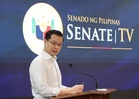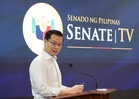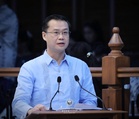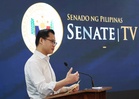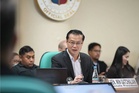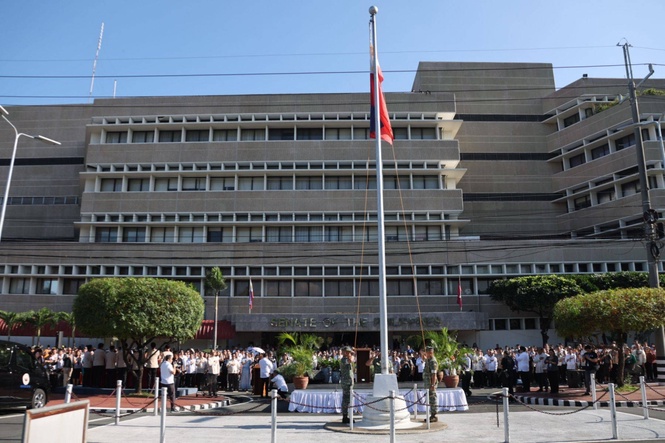
MANILA, Philippines — Senate President Sherwin “Win” Gatchalian on Saturday assured the country’s business sector that the Senate would vet the proposed P7.2 trillion 2027 national budget, promising to strip away all politically driven, technically baseless congressional insertions.
The statement comes in direct response to a joint manifesto issued by major business groups on Oct. 29, 2026, which raised concerns over P180 billion in realignments introduced by the House of Representatives under House Bill 10858. Gatchalian welcomed the private sector’s vigilance and maintained that a clean budget can be delivered without delaying its timely passage.
Senate to purge document-deficient projects
Reassuring investors and the public of the Senate's commitment to fiscal discipline, Gatchalian said that a formal recall of the House-approved General Appropriations Bill was unnecessary. Instead, the Senate will address the discrepancies through its own committee and plenary review processes.
"The Senate Committee on Finance will remove from the General Appropriations Bill all projects lacking supporting documents, such as feasibility studies, programs of work, resolutions from the LGUs, and other required documents," Gatchalian said.
To ensure public oversight, the Senate leader also committed to deep transparency reforms. "We will continue the transparency reforms by uploading all relevant information to the Senate Transparency Portal," he added.
Furthermore, Gatchalian asserted that the upper chamber will actively remove unconstitutional and lump-sum provisions previously flagged by the Supreme Court—specifically tightening safeguards on unprogrammed appropriations—while keeping final spending strictly within the president’s recommended ceiling in the National Expenditure Program (NEP).
Business sector flag 'deeply troubling' realignment
The business community’s joint call exposed a massive realignment by the House Budget Amendments and Review Subcommittee (BARSC), which added over P180 billion to the Department of Public Works and Highways (DPWH) allocation. The adjustments reportedly inflated the DPWH project registry by 6,212 items—bringing the total to 16,270 projects—many of which are classified as vague lump sums for multi-purpose buildings and bypass roads lacking named proponents or published project lists.
Of greater concern to the business sector was the source of the funding. The House reportedly carved out P130 billion from rigorously prepared, foreign-assisted infrastructure projects, P9.5 billion from calamity funds, P4.9 billion from vital healthcare programs, and P1.76 billion from the EDSA Busway project.
"Raiding calamity funds in a country that is exposed to disasters is indefensible," the business groups stated in its manifesto, warning that cutting foreign-assisted projects delays high-impact infrastructure needed to reduce logistics costs and attract capital. The sector noted that past unvetted insertions between 2023 and 2025 resulted in "ghost and substandard flood control projects" that wasted public funds.
A growth budget, not an election fund
In response to fears that the allocations could be weaponized ahead of upcoming political cycles, Gatchalian firmly rejected the label of an "election budget." He emphasized that the final 2027 appropriations would be a growth and resilience budget explicitly mapped out to address inflation, job creation, food security, healthcare, and disaster readiness.