There is an old saying about getting what you pay for.
In basketball, perhaps we should update it: Send a B team, expect B results.
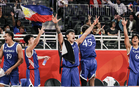
And that, me thinks, pretty much sums up Gilas Pilipinas’ disastrous title defense in the Asian Games.
No disrespect to the players who wore the flag. They competed, they tried, and they did what they could with the roster assembled. But even coach Tim Cone admitted afterward that while Gilas brought good players, it did not bring its best players.
Therein lies the problem.
You cannot leave several of your best weapons at home—or scattered around Japan, Korea, and elsewhere—and then expect the basketball gods to magically turn what remains into Asia’s best team.
Ironically, this was a B team without perhaps the most important “B” in Philippine basketball: Justin Brownlee.
And we all know what Brownlee means when the lights are brightest.
Call him the GOAT of imports, the patron saint of Barangay Ginebra, or simply the guy you want holding the basketball when everything is on the line. Brownlee authored one of Philippine basketball’s greatest comebacks when Gilas stunned China, 77-76, in the 2023 Asian Games semifinals before eventually winning the gold.
This time there was no JB because of the wear and tear exacted by his years of playing with the country’s most popular team as well as represent flag and country.
The result?
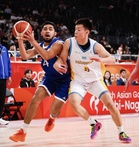
China 105, Philippines 61.
Ouch.
China certainly looked like a team with something to prove. Three years after suffering that painful semifinal collapse on home soil, the Chinese kept their foot on the accelerator and eliminated the defending champions by 44 points.
Yao Ming, then the face of Chinese basketball leadership, had watched painfully as Brownlee and Gilas broke Chinese hearts in Hangzhou.
This time, China returned the favor—and then some.
But before we blame the basketball gods, let’s face another uncomfortable reality: The PBA no longer represents all of the best Philippine basketball has to offer.
That is not an insult. It is geography.
Some of our best players now suit up in Japan’s B.League, Korea’s KBL, and other overseas leagues. Dwight Ramos, AJ Edu, Carl Tamayo, Kevin Quiambao, and Kai Sotto were among the overseas-based Gilas regulars unavailable for the Asian Games. The Philippines consequently went with an all-PBA lineup.
So when Gilas selects exclusively from the PBA, it is no longer necessarily selecting from the entire top shelf of Filipino basketball.
That ship has sailed.
And then there is Kai.
Sotto is technically a free agent after his contract with the Koshigaya Alphas expired following the 2025-26 B.League season. His attempted move into U.S. NCAA basketball reportedly fizzled because of eligibility concerns (he just pulled in too much coin playing in Japan and in the NBL in Australia), leaving his next destination uncertain, with Japan, Korea, Europe, and other possibilities reportedly in the picture.
Which makes his absence even more frustrating.
Against a Chinese team that towered over Gilas and won the rebounding battle, 55-36, having a 7’3” Filipino somewhere in the vicinity of the paint might have been useful.
Just saying.
And whatever happened to Cone’s Miami Heat connection?
After Gilas beat Iran, a hot mic caught Cone telling Sotto that he would talk to Miami. Cone later clarified that it was an off-the-cuff comment and that he does not have the kind of relationship with the Heat where he can simply recommend a player. Still, he said he would love to help because he believes Kai belongs in the NBA.
Fair enough.
But the larger question remains.
Why does Philippine basketball keep finding itself scrambling?
The Asian Games did not suddenly materialize out of thin air. The schedules were known. Overseas commitments were foreseeable. If Player A was unavailable, where was Player B? If Plan B collapsed, where was Plan C?
Instead, we again got the familiar band-aid solution.
I digress.
Gilas has the talent. Philippine basketball has the money, fan support, and players scattered across increasingly competitive leagues overseas.
What it needs is a national-team program that recognizes Philippine basketball no longer begins and ends with The Association.
Scout everyone. Plan early. Build depth. Keep alternatives ready.
Because if you knowingly send a B team to play against Asia’s best, don’t act surprised when you get a B result.
Or, in this case, something considerably worse—haay naku!