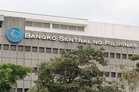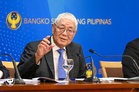
PHILIPPINE equities may extend their decline this week as the Bangko Sentral ng Pilipinas’ (BSP) larger-than-expected interest rate hike, the peso’s record weakness and uncertainty over the US Federal Reserve’s policy decision weigh on investor sentiment.
Philstocks Financials Inc. research manager Japhet Tantiangco said the local market could remain bearish amid an unfavorable macroeconomic environment and a lack of positive catalysts, despite relatively attractive stock valuations.
“From a fundamental standpoint, the local market is currently at a bargain level. However, with no positive catalyst in sight, staging a rally is deemed difficult,” Tantiangco said.
The Philippine Stock Exchange index (PSEi) fell 54 points, or 0.94 percent, last week to close at 5,728.63 on Friday, ending a two-week winning streak.
The decline followed the BSP’s decision to raise its benchmark interest rate by 50 basis points to 5.5 percent on Thursday, double the 25-basis-point increase widely expected by the market.
The central bank also signaled that inflation could return to its target range only by 2028, keeping the possibility of further monetary tightening in December open, according to 2TradeAsia.com.
Tantiangco said the larger rate hike suggested the BSP expected inflationary pressures to remain elevated. Higher interest rates and the prospect of additional tightening could weigh on equities moving forward.
The peso’s continued depreciation adds to the pressure. The currency touched a record low of P63.62 against the US dollar last week, according to Tantiangco, raising concerns about imported inflation and its potential impact on corporate costs and consumer spending.
Meanwhile, global oil prices have resumed rising, adding another potential source of inflationary pressure. Tantiangco said sustained peso weakness and higher oil prices could further drag the local stock market.
Investors will also watch the US Federal Reserve’s policy meeting on Oct. 27 to 28, with the decision expected to provide direction for global markets and foreign fund flows.
The online brokerage said a rate hold was largely priced in, but a more hawkish policy signal could keep the possibility of another US rate increase in December alive. The research firm warned that the prospect of further tightening by both the Fed and the BSP could result in choppy foreign investment flows.
Foreign investors were net sellers of P9.08 billion in Philippine equities last week, compared with net selling of P1.41 billion the previous week, according to 2TradeAsia.
However, the report noted that the outflow was concentrated on Tuesday, when Mynt Inc.’s initial public offering coincided with heavy foreign selling.
Excluding Tuesday, foreign investors were net buyers of P2.31 billion over the remaining four sessions, with buying concentrated in PLDT Inc., Metropolitan Bank & Trust Co. and SM Investments Corp.
The market also faces pressure from the post-listing performance of Mynt, the parent company of GCash. Its shares closed Friday at P6.27, below the P6.60 offer price, prompting investors to monitor whether the stock can stabilize and sustain its valuation.
From a technical standpoint, Tantiangco said the PSEi failed to break through resistance at 5,800 and subsequently fell below its 10-day exponential moving average.
He placed the index’s trading range at 5,600 to 5,800, while 2TradeAsia advised investors to remain defensive and add exposure only after a sustained close above 5,800 following the Fed’s decision.
The research firm also warned that trading volumes could thin ahead of the Halloween long weekend, encouraging investors to reduce risk and favor well-capitalized companies and dividend-paying stocks with foreign investor support.