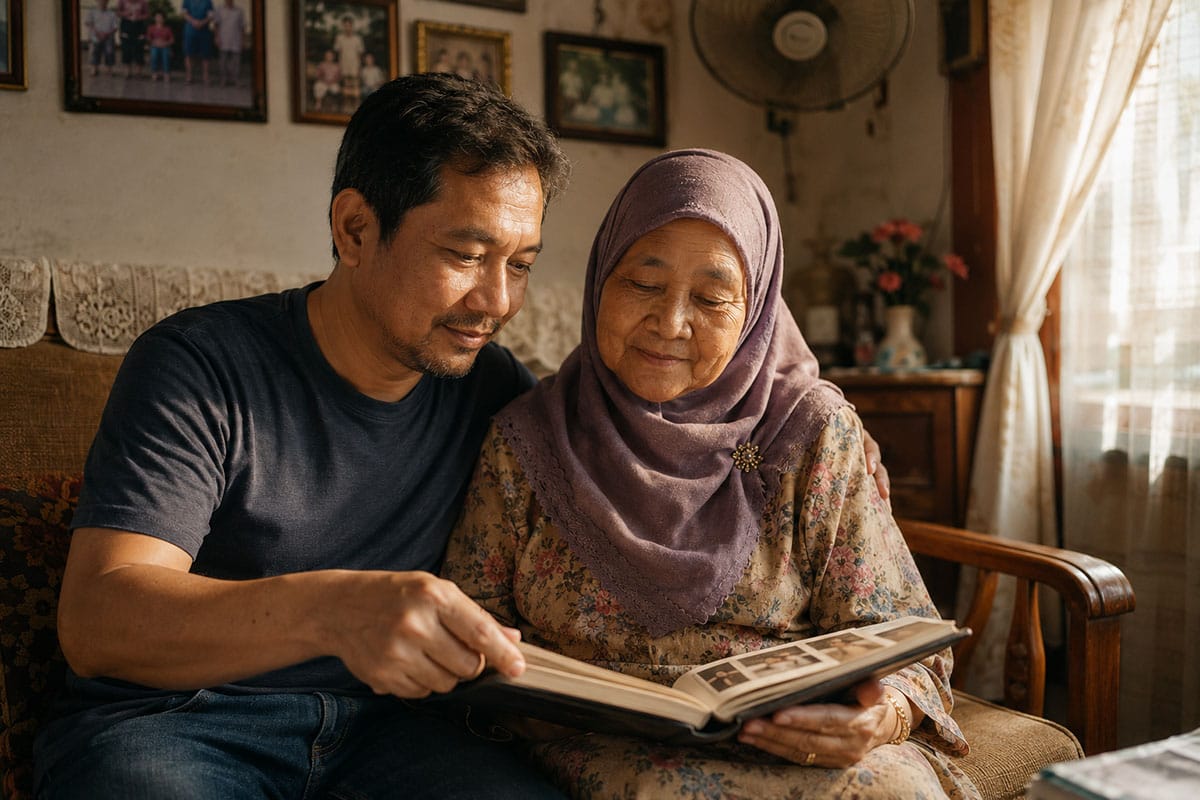
My mother lives with me.
That is not a legal obligation. Nobody compelled me to bring her into my home. There is no act of parliament behind that decision, no fine I was trying to avoid, no tribunal I was trying to stay out of.
The reason is much simpler than any of that. She took care of me when I was growing up. Now it is my turn to take care of her. That is it. That is the whole story.
I tell you this because Malaysia is now seriously considering making parental care a legal requirement. And before we get into the policy details, the statistics, and the international comparisons, I want to sit with that question for a moment. Because it is not a simple one.
If you need a law to make someone care for their parents, what exactly are you legislating? And will it actually work?
What Is Actually Being Proposed
There are currently two separate but related pieces of legislation being developed simultaneously, which has created some confusion in public reporting.
The first is the Senior Citizens Bill, which has been in various stages of drafting since 2023. Women, Family and Community Development Minister Nancy Shukri confirmed last week that the ministry is ready to present it to Parliament within six months. This bill focuses broadly on protecting elderly Malaysians from neglect, abuse, and exploitation, and establishing legal frameworks for their rights, healthcare access, and welfare.
The second is a separate and newer proposal. DPM Ahmad Zahid Hamidi instructed the Ministry of Women, Family and Community Development to draft a dedicated Parental Care Act within six months, specifically aimed at making adult children legally responsible for supporting their elderly parents. The DPM cited rising cases of elderly abandonment, including parents being placed in care homes and left without visits, as the catalyst for the proposal. He said bluntly: "That is a very undesirable abandonment of responsibility."
Malaysia is studying Singapore's Maintenance of Parents Act as a possible model. Under Singapore's system, elderly parents who cannot support themselves have the legal right to seek financial maintenance from their adult children, with disputes handled by a dedicated tribunal rather than the courts. It is civil rather than criminal in nature, designed to be accessible and relatively quick to resolve.
Why This Conversation Is Happening Now
The numbers behind this proposal are genuinely alarming.
Malaysia's Welfare Department reports a 40% surge in elderly abandonment cases since 2020. Welfare aid applications from seniors have doubled between 2020 and 2025. Between 2018 and mid-2022, more than 2,100 senior citizens were abandoned in hospitals nationwide, simply left behind by family members who did not return.
Malaysia currently has approximately 3.5 million citizens aged 60 and above. That figure is expected to reach six million by 2030. By 2048, one in five Malaysians will be aged 60 or above, pushing Malaysia into the category of an aged society. The social infrastructure that exists today to care for this population is nowhere near sufficient. Malaysia has only 19 MOH-licensed nursing homes nationally with approximately 623 licensed beds for a country approaching four million seniors. The maths simply does not work without families absorbing the majority of the care burden.
Malaysia has been discussing a Parental Maintenance Bill since 2003. Singapore passed its equivalent law in 1995. Taiwan legislated in 1980. China in 1996. The Philippines in 2003. India in 2007. Malaysia is significantly behind its peers on this front, and the ageing population is arriving whether the legislation is ready or not.
The Case For the Law
The argument for a Parental Care Act is straightforward and not unreasonable.
When children abandon their parents, someone else has to absorb the cost. Either the government, through welfare assistance and public healthcare, or charitable organisations, through donations and volunteer labour. Ultimately, it is taxpayers who fund these systems. A law that shifts financial responsibility back to capable adult children who are simply choosing not to fulfil it is, in this framing, both morally justified and fiscally sensible.
The proposed law would not apply to all adult children. DPM Zahid indicated the framework would be carefully aligned with local cultural values and social conditions. Parents with sufficient financial resources of their own, EPF savings, pensions, or PERKESO support, may not qualify to make claims. The focus would be on genuine cases of abandonment where parents are unable to support themselves and capable children are refusing to help.
There is also a deterrent argument. The existence of a law, even if rarely enforced, changes social behaviour by signalling clearly what the community considers acceptable. Countries that have implemented filial responsibility laws have generally seen a reduction in the most egregious abandonment cases.
The Case Against
The counter-arguments are also worth hearing seriously.
A law cannot manufacture love. It can compel financial transfers but it cannot compel presence, warmth, or genuine care. A parent who receives a court-ordered monthly payment from a resentful child is financially supported but not genuinely cared for. The loneliness and emotional isolation that drives so much of the elderly crisis in Malaysia is not something legislation can address.
There is also the question of who the law targets. The DPM specifically cited families who place parents in care homes and fail to visit. But as one nursing home operator pointed out, many families who place parents in care homes do so out of genuine necessity, not abandonment. Both spouses working full time. Small urban apartments. Parents with complex medical needs that families are genuinely unequipped to handle. A law that penalises these families while failing to invest in affordable, accessible professional eldercare infrastructure is solving the wrong problem.
And there is a growing population of elderly Malaysians who have no children at all. Never married, estranged families, children living abroad. No filial duty law can reach these seniors. They need a properly funded, properly regulated eldercare system, which Malaysia does not yet have.
My Honest Take
I believe parental care should be a moral and cultural responsibility. Not a legal one.
My mother is with me because she raised me, sacrificed for me, and shaped who I am. The debt I owe her is not financial and it is not legal. It is human. When I look at her I do not think about legislation. I think about the woman who was always there when I needed her. And now I want to be there for her.
That is how it should work. And in most Malaysian families, that is exactly how it does work. The overwhelming majority of Malaysian adult children take care of their parents without being told to, without being threatened with a tribunal, and without needing an act of parliament to remind them of their obligations.
The cases the DPM described, the genuinely abandoned elderly, the hospital walkouts, the care home parents who never receive visitors, represent a failure that goes deeper than the absence of a law. They represent a breakdown in values, in family structures, and in community bonds that legislation alone cannot repair.
What Malaysia actually needs alongside any proposed law is a properly funded public eldercare infrastructure, stronger community support networks, better financial assistance for families who are struggling to care for elderly relatives at home, and a national conversation about ageing that treats elderly Malaysians not as a burden to be managed but as people who built this country and deserve dignity in return.
The law may be coming. I understand why. But I hope it is the last resort, not the first one. Because if we need a court order to make Malaysians take care of their parents, we have already lost something more important than any legislation can restore.
Kamarul Azwan (k.azwan@gmail.com) is a content creator under the Newswav Creator programme, where you get to express yourself, be a citizen journalist, and at the same time monetize your content & reach millions of users on Newswav. Log in to creator.newswav.com and become a Newswav Creator now!
The User Content (as defined on Newswav Terms of Use) above including the views expressed and media (pictures, videos, citations etc) were submitted & posted by the author. Newswav is solely an aggregation platform that hosts the User Content. If you have any questions about the content, copyright or other issues of the work, please contact creator@newswav.com.