Every Chinese New Year, we see Lion Dances being performed at homes, shopping malls, or in the streets but what are Lion Dances? Why is it performed? What's their origin? How many types of Lion Dances are there? Fear not, here is a simple guide to Lion Dances - your family and friends will surely be impressed by how much you know about it by the end of this article.
What is a Lion Dance?
A Lion Dance is performed to bring good luck and ward off evil spirits. You will usually see Lion Dances performed at Chinese New Year parties and parades but they can be performed on any special occasion: birthdays, weddings, business openings and so much more! The Lion Dance is usually a way for kung fu clubs/schools to showcase the quality of the skills of their disciples. Traditionally, only men are allowed to perform Lion Dances but that has changed - now women are allowed to perform it as well. It is the 21st century after all.
Lion Dance's Origin
Mythical Origin
There are many myths on the origin of the lion dance but one myth describes an event where a village was plagued by rats. One day, a lion appeared and ate all of the rats. However, once the rats are all eaten by the lion, it now turns its attention to the villagers to satisfy its appetite. A Buddhist monk in the village is said to have captured the lion and taught it Buddhism. Following a remarkable personality change, the tame lion now protects the village it once terrorized. There is another variation of this story that says that the villagers dressed up in lion costumes and made a lot of noise to scare off the lion - hence the lion dance.
Historical Origin
The exact historical origins of Lion Dance are unclear it can be traced back to two historical possibilities:
- The first possibility - it is related to bands of Persian performers who roamed China. During the Tang Dynasty, the Chinese exchanged cultural influences with other countries and the lion was one act out of many in the Persian 'New Day' festival.
- The second possibility - lion dancing can be traced to the cleaning of the imperial palace annually. Each New Year the palace was cleaned; physically and spiritually. Men dressed as twelve sacred animals made three passes through the palace. The lion was one of these animals. This purification ritual extended to Buddhist practices and there is a close link between Buddhism and the formation of the Chinese martial arts.
Types of Lion Dances
There are two types of lion dances - the Northern lion dance and the Southern lion dance.
Northern lion dance
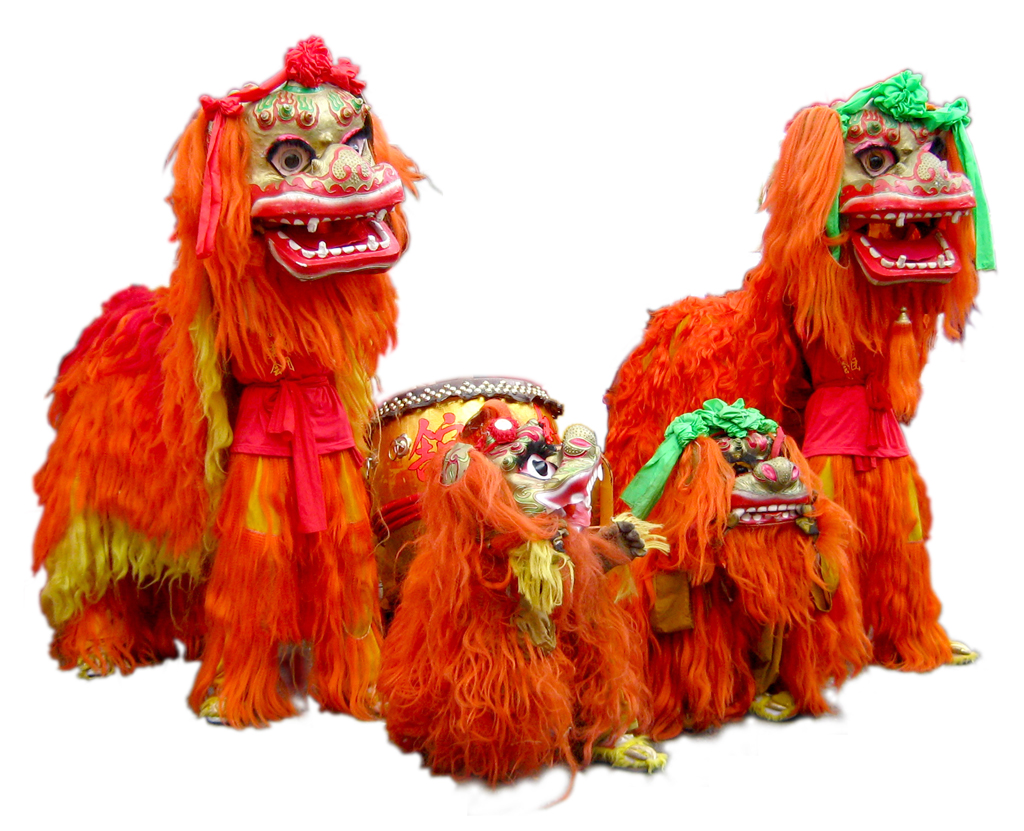
The Northern style is predominantly practiced in Beijing. It is more acrobatic, with the lion balancing on see-saws and balls while being led by a pugilist dressed as a “warrior” into performing stunts such as leaping and prancing. The northern lion usually has golden or red hairy fur.
Southern lion dance
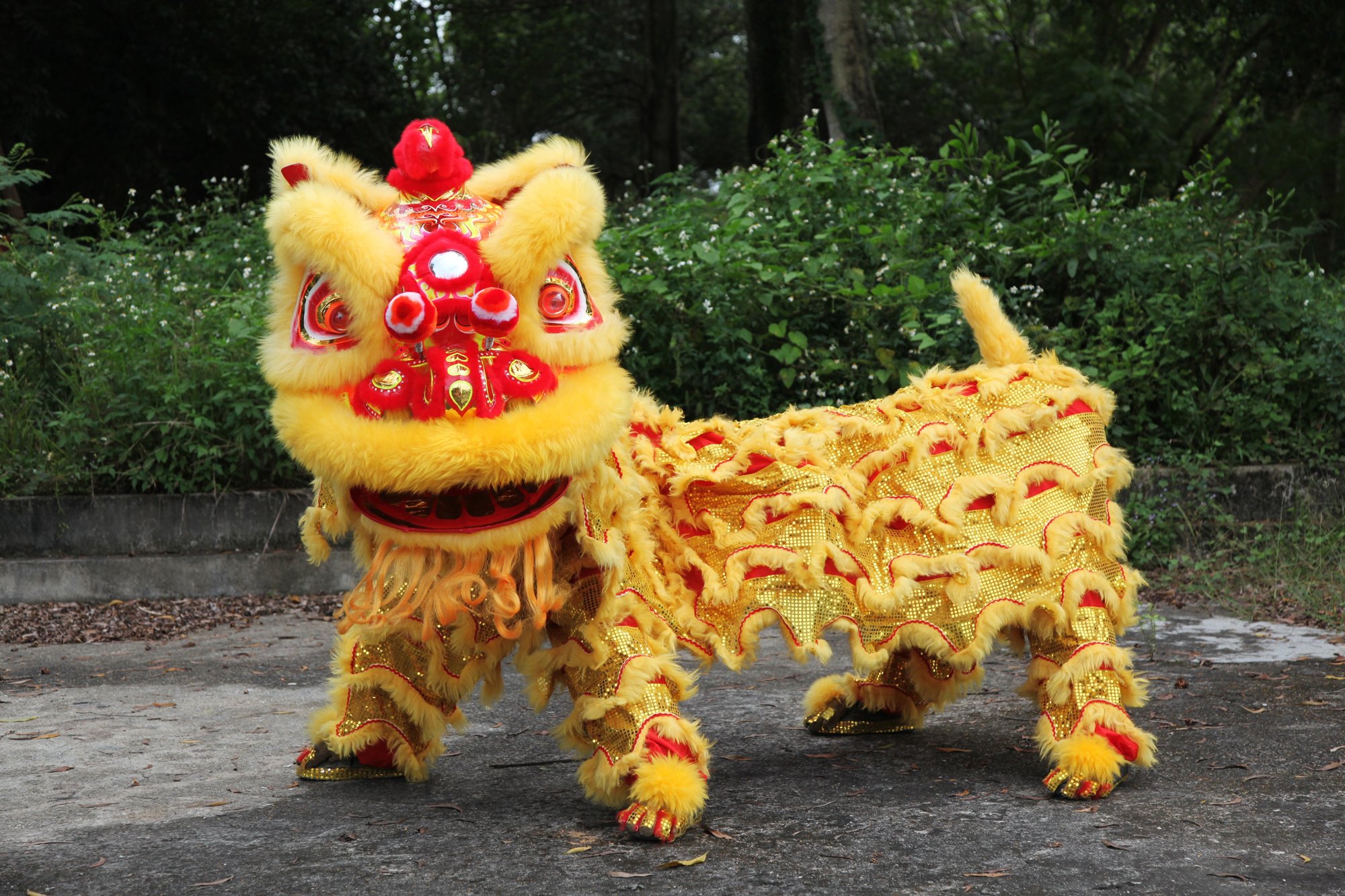
The Southern style is more commonly performed in Malaysia and around the world. It originated in Guangdong, China. It involves a less hairy lion that is taunted by a big-headed clown; it is traditionally performed outdoors. The caiqing (Choy Cheng in Cantonese), literally “plucking the green”, which refers to the acrobatic act of retrieving a sprig of lettuce from as high as three stories, is achieved by using a pole or forming a human pyramid.
Lion Dance Routine
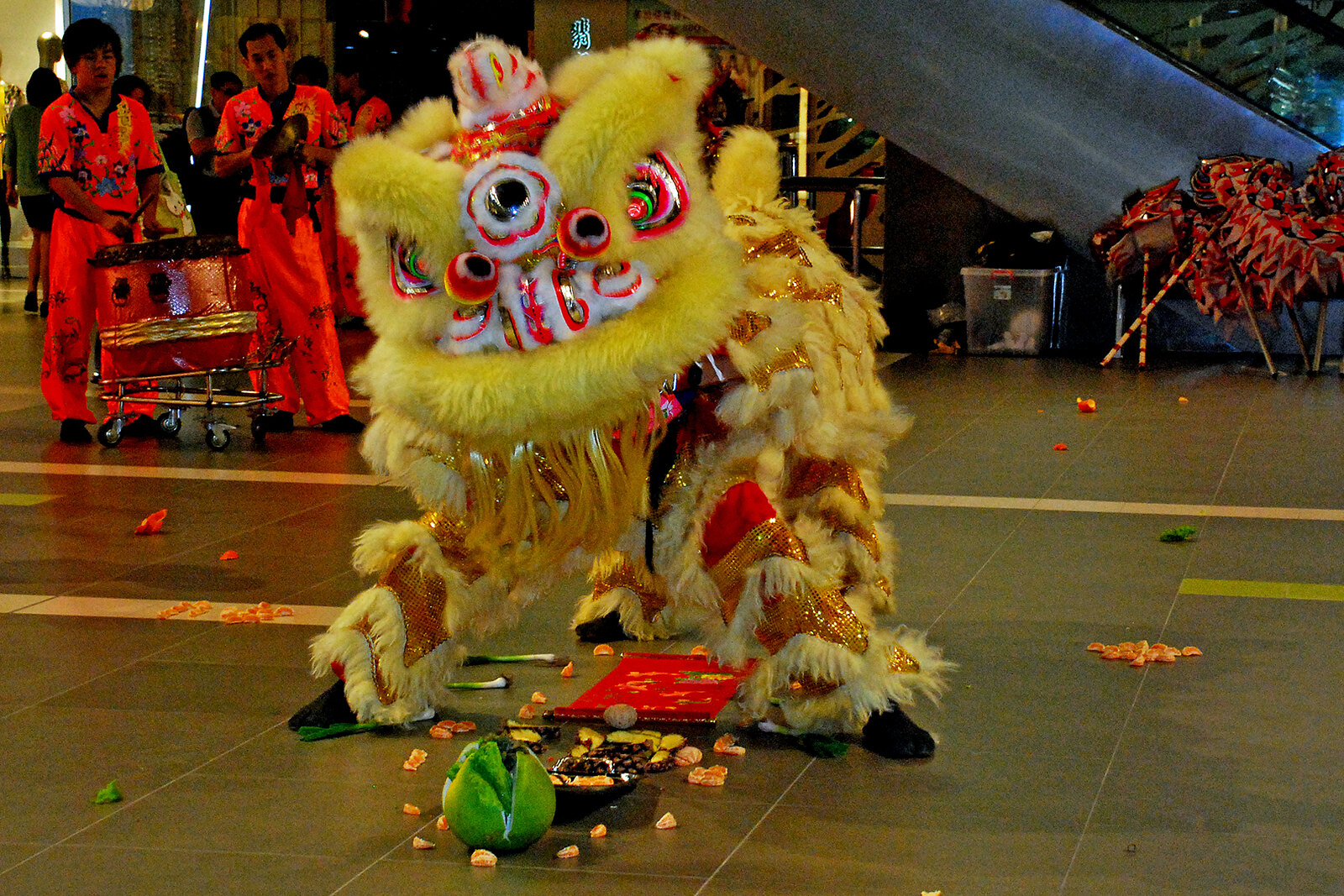
One lion dance routine that we normally see is the Choy Cheng (採青), which means “plucking the greens”. In this dance routine, the team gets its payment through money in a red envelope (Hong Bao in Mandarin Chinese) that’s tied up to a lettuce or Napa cabbage. The lettuce is then hung up at the top of the doorpost, or in other hard-to-reach places. The highlight of the performance is the lion “eating” the lettuce.
After the lion “spots” the lettuce, it performs three inspections on the lettuce. The first time, it carefully touches the lettuce and jumps away, cautious about what it is. The second time, it approaches the lettuce from the other side and sniffs it, retreating once again. Finally, it makes up its mind and comes forward with determination to eat it. If the lettuce is in a hard-to-reach place, this last approach can involve an acrobatic trick such as the lion jumping on benches or the lion’s head jumping on shoulders. There may also be “obstacles” in place that the lion must pass through or neutralize before it can “eat” the lettuce.
Once the lettuce is in the lion’s mouth, it swallows a bit (once on each side) and then spits a small amount toward the audience - this is considered good luck. The lion then turns towards the door and spits out the majority of the lettuce, kicking it while in the air. The lettuce shatters and goes over the doorstop and inside the building - again this is considered good luck.
Lion Dance Taboo
There are some things you should never do when you are interacting with a lion. It is as follows:
- Don't touch the lion's horn or its mirror as they are used to ward off evil.
- Don't give it anything white to eat as white is the colour of death in Chinese culture. This is also why you see Chinese wear white at funerals.
- If you see an unused lion, never jump over its tail as this is seen as putting yourself above the lion.
Oh no! A lion is approaching me. What should I do?
If a lion is not actively stalking food, it may want to play with the audience. The moment it approaches you, don't panic! Gently pet the lion while avoiding the horn and the mirror. Be careful not to spank or touch the lion on its butt as it is also the performer's butt that you are spanking or touching.

Submit any #CNY2024-related content for a chance to win big grand prizes and participate in the lucky draw to win prizes worth up to RM10,888! T&C apply. Find out how you can participate here.
Aaron Colt is a content creator under the Newswav Creator programme, where you get to express yourself, be a citizen journalist, and at the same time monetize your content & reach millions of users on Newswav. Log in to creator.newswav.com and become a Newswav Creator now!
The User Content (as defined on Newswav Terms of Use) above including the views expressed and media (pictures, videos, citations etc) were submitted & posted by the author. Newswav is solely an aggregation platform that hosts the User Content. If you have any questions about the content, copyright or other issues of the work, please contact Newswav.