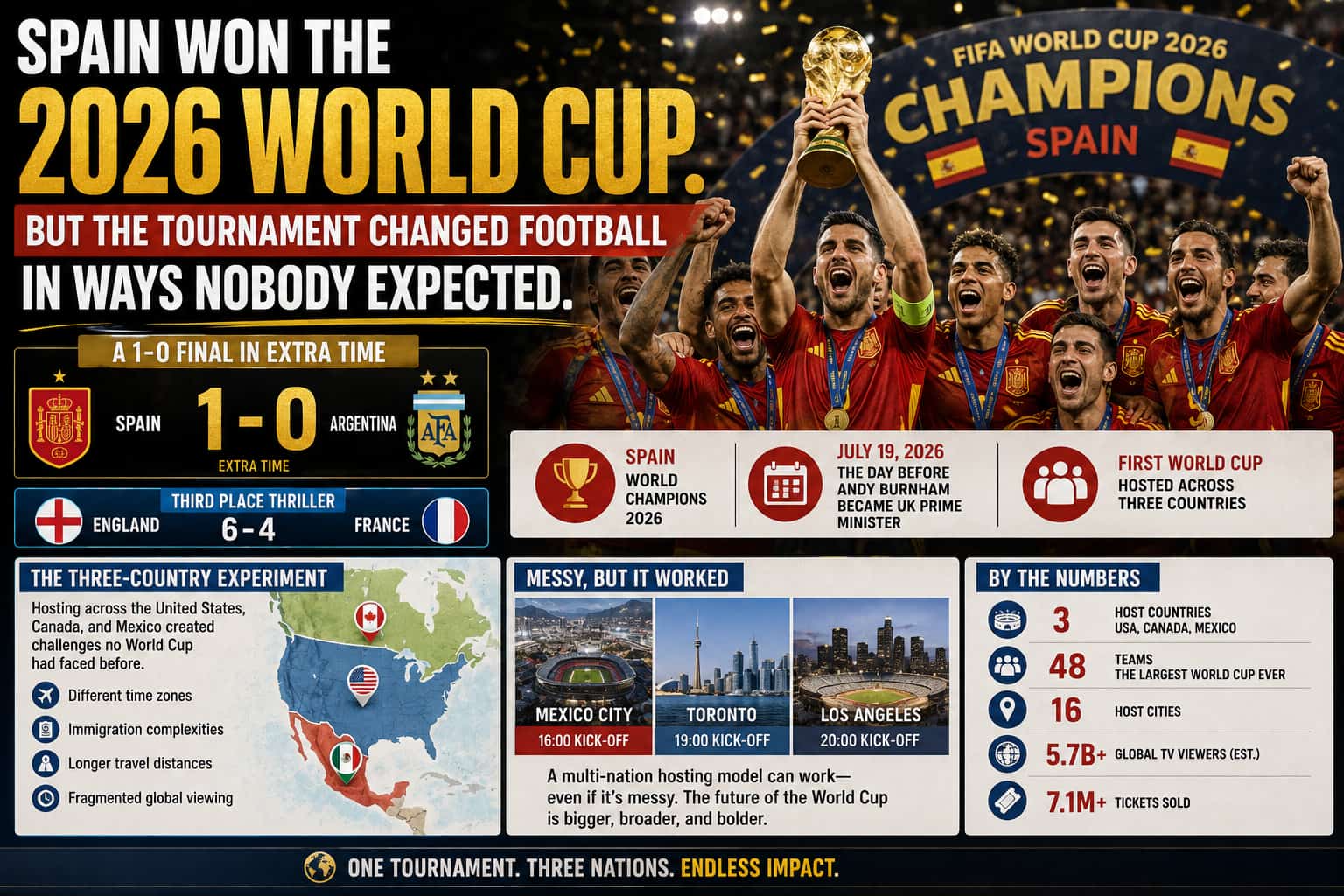
A 1-0 final in extra time
Spain beat Argentina 1-0 in extra time to win the 2026 FIFA World Cup on July 19, the day before Andy Burnham became UK prime minister. England had finished third after beating France 6-4 in a wildly entertaining third-place match. The tournament was hosted across the United States, Canada, and Mexico, the first World Cup spread across three countries.
The three-country experiment
Having three host nations created logistical challenges that previous World Cups never faced. Teams and fans had to navigate different time zones, immigration systems, and travel distances that made the tournament feel more like a continental tour than a single event. Matches in Mexico City kicked off at different times than those in Toronto or Los Angeles, fragmenting the viewing experience for global audiences.
But it also proved something. A multi-nation hosting model can work, even if it is messy. FIFA has been pushing toward larger tournaments with more host countries, and the 2026 edition gave them real data on what that looks like in practice.
How fans watched
The 2026 World Cup was the first where streaming viewership exceeded traditional broadcast in several major markets. Fans consumed the tournament through a mix of official broadcasts, social media clips, and creator commentary that ran alongside matches in real time. The traditional model of sitting down to watch a full 90 minutes on television is not gone, but it is no longer the default for younger audiences.
Short-form highlights on TikTok and Instagram Reels reached billions of views during the tournament. Some of the most-shared moments were not goals or saves but crowd reactions, dugout exchanges, and fan culture clips that captured the atmosphere rather than the action.
What stays and what changes
The expanded 48-team format meant more matches, more groups, and more potential for mismatches in the early rounds. Critics argued that the diluted quality in group stages made the first two weeks less exciting. Supporters said it gave more countries a genuine shot at participating on the biggest stage.
For Malaysian football fans who followed from home, the time zones were not ideal but the coverage was massive. The question now is whether FIFA sticks with multi-nation hosting or treats 2026 as an experiment it does not need to repeat.
Did you watch any of the 2026 World Cup? And if you did, was it on TV, your phone, or through clips on social media?
Ronny M (ronny76netstuff@gmail.com) is a content creator under the Newswav Creator programme, where you get to express yourself, be a citizen journalist, and at the same time monetize your content & reach millions of users on Newswav. Log in to creator.newswav.com and become a Newswav Creator now!
The User Content (as defined on Newswav Terms of Use) above including the views expressed and media (pictures, videos, citations etc) were submitted & posted by the author. Newswav is solely an aggregation platform that hosts the User Content. If you have any questions about the content, copyright or other issues of the work, please contact creator@newswav.com.