
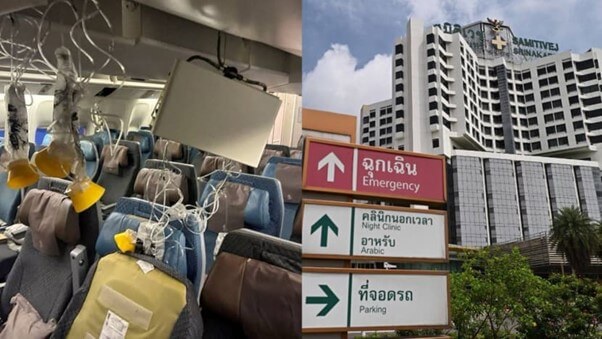
Fig 1: The interior of Singapore Airlines flight SQ321 (left) after turbulence forced an emergency landing in Bangkokxy and (right) the exterior of Samitivej Srinakarin Hospital, where some injured passengers were being treated.
Passengers recounting their terrifying experience
As SQ 321 touched down at Bangkok airport after making an emergency landing, Airports of Thailand (AOT) team was at hand to provide support and services to the passengers and crew and send those injured to 3 hospitals nearby including Samitivej Srinakarin (Fig 1), Samitivej Sukhumvit and Bangkok Hospital.
Passenger from Briton
A Briton, Jerry, 68, was travelling to Australia for his son's wedding. He said there was no warning before the "plane plunged".
"I hit my head on the ceiling, my wife did - some poor people who were walking around ended up doing somersaults," he recalled.
“My son was thrown down on the floor two rows behind me. I heard that there was a guy hitting the roof in the toilet and he was injured quite badly, too,” he said, speaking from a Thai hospital. He added that he and his family were “lucky enough” that none of them had died.
The family had been travelling to Australia for his son's wedding on Friday, but now would not be able to make it, he said."
Passenger from Singapore
When Eva Khoo got a phone call last week saying that the Singapore Airlines flight her family was on had “met with an incident”, she was told not to worry.
But hours after the plane had made an emergency landing in Bangkok, the 47-year-old still could not reach her brother and pregnant sister-in-law who were on board the Singapore-bound flight from London, along with a friend and four others in their family.
When she finally heard from her brother late that night, it was a single phrase: ICU.
“Then we stopped hearing from him. That made me even more anxious,” she told the BBC in a phone interview. She then heard from her sister-in-law, who told her she was in the hospital but did not know where everyone else was.
Tuesday night was “nerve-wracking”, Ms Khoo says. “We had no idea if our loved ones were dead or alive, or how bad their injuries were.”
The next day, she found out all seven were hospitalised in Bangkok. Five of them were in the intensive care unit at the Samitivej Srinakarin Hospital. (Fig 2)
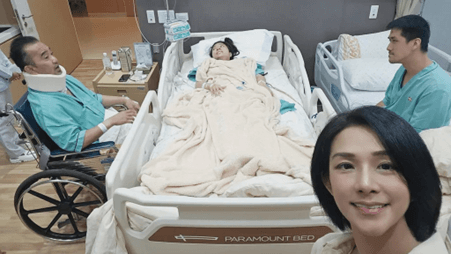
Fig 2: Eva Khoo (bottom right) has five friends and family who ended up in intensive care after the flight
She decided to fly to Thailand from Kuala Lumpur, where she lives. “I was relieved when I finally got to meet them, but it was dreadful to see many of them clad in neck and head braces because of their spinal and back injuries.”.
Khoo Boo Leong and his wife Saw Rong were returning from a two-week trip to Switzerland and London. Singapore was meant to be a transit stop en route to home in Malaysia. The flight - which had 211 passengers and 18 crew on board - was into the tenth hour of its journey, passing over the Irrawaddy Basin in Myanmar when turbulence struck.
Ms Khoo says her brother remembers that the plane started shaking. “He scrambled to find his seatbelt, but before he could do anything he was hoisted to the ceiling. He hit the overhead luggage compartment and then a few seconds later he flopped onto the aisle. Their belongings were strewn all over,” she said
He and his wife were sitting close to the centre of the plane. Ms Saw, who is two months pregnant, was flung out of her seat. The impact resulted in fractures to her back, which required surgery.
Patients - An Overview
As of 1 pm on May 22, 27 patients have been treated and discharged. However, 41 people remain under treatment at Samitivej Srinakarin (Fig 3 and Fig 4), 15 at Samitivej Sukhumvit (Fig 3 and Fig 4), and two at Bangkok Hospital. (Fig 3)
Out of the 58 patients receiving treatment, twenty (20) patients are being treated at the intensive care unit (ICU), (Fig 4) while the other 38 are receiving in-patient care. (Fig 5)
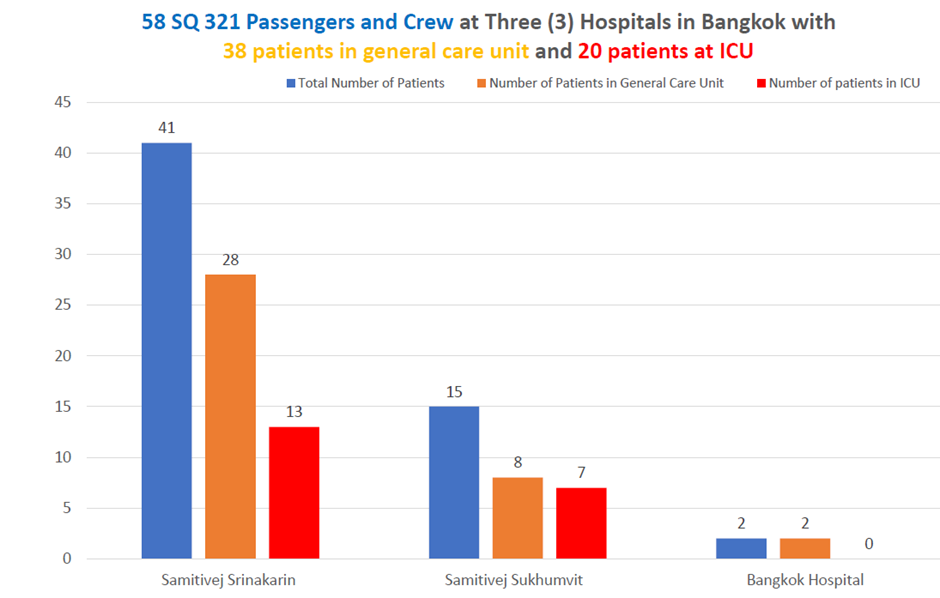
Fig 3: 58 Patients in 3 Hospitals in Bangkok- 38 in General Care Unit and 20 in ICU
Severity of injuries
In the critical care unit, there are currently 20 patients distributed according to nationality as follows: 13 at Samitivej Srinakarin; Australia 3, British 2, Hong Kong 1, Malaysia 5, New Zealand 1, Singapore 1 and 7 at Samitivej Sukhumvit; British 4, Philippines 1, Malaysia 1 and Singapore 1 (Fig 4).
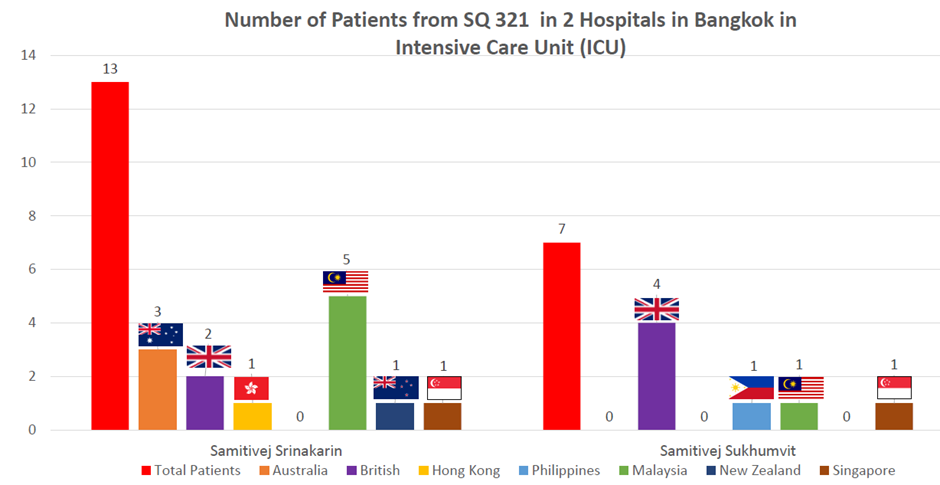
Fig 4: Twenty (20) Patients in 2 Hospitals in Bangkok in ICU
In the general care units, there are a total of 38 patients divided among the hospitals:
28 at Samitivej Srinakarin; Australia 6, Ireland 2, Malaysia 1, Myanmar 1, New Zealand 2, Philippines 5, South Korea 1, Spain 1, United Kingdom 8, United States 1, with 8 at Samitivej Sukhumvit; Australia 3, India 1, Malaysia 2, Singapore 1, United Kingdom 1 and 2 at Bangkok Hospital; Singapore: 2 (Fig 5).
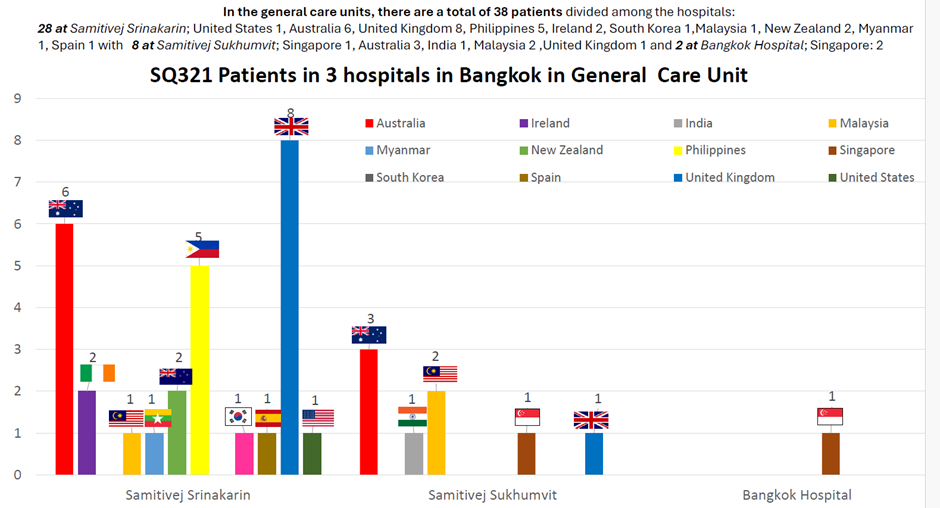
Fig 5: Thirty Eight (38) Patients in 3 Hospitals in Bangkok in General Care Unit
Malaysians Injured
The Embassy of Malaysia in Bangkok is providing assistance to nine injured Malaysians from Singapore Airlines (SIA) flight SQ321, which made an emergency landing at Suvarnabhumi Airport (BKK) Tuesday afternoon.
Malaysian Ambassador to Thailand Datuk Jojie Samuel said the consular officers have met all the injured victims from two separate Hospitals in Bangkok, and they are currently receiving treatment and are in stable condition.
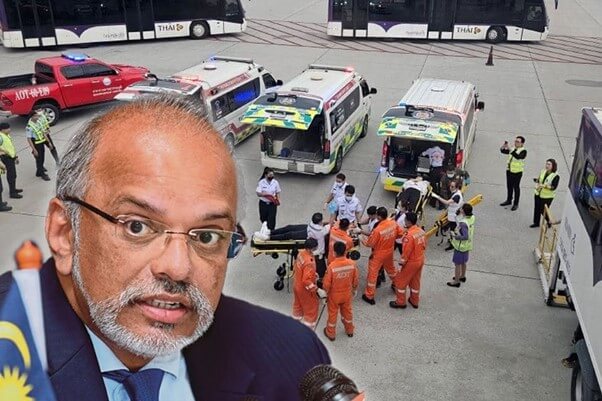
Fig 6: Malaysian Ambassador to Thailand Datuk Jojie Samuel said the consular officers have met all the injured victims from two separate Hospitals in Bangkok, and they are currently receiving treatment and are in stable condition.
It was communicated by Jojie that a 32-year-old Malaysian male cabin crew received two surgeries last night for head, minor spinal, and leg injuries in a hospital here.
The other eight Malaysians, who are suffering from fractured rib, neck pain, dizziness and minor injuries, are currently under surveillance at the normal wards at both hospitals while awaiting medical results," he told Bernama when contacted.
He said according to the consultation with doctors from both hospitals, all individuals have physical and internal injuries, but none are at critical stage.
Jojie confirmed that six Malaysians are being treated at the Samitivej Srinakarin Hospital and three others at the Samitivej Sukhumvit Hospital, with the embassy committed to monitoring their conditions.
Impact of SQ321 flight turbulence on passengers and crews
The Straits Times reported regarding SQ321 flight turbulence impact on passengers and crews.
Experts opined that SQ321 flight turbulence may leave survivors with trauma; and that recovery may take months or years
The incident of extreme turbulence on Singapore Airlines Flight SQ321 – which left one passenger dead from a suspected heart attack and dozens injured – has inflicted psychological scars on those who survived.
One passenger, describing the ordeal as “quite scary”, declared that he may not fly again for a while. Another said he threw up after waking up on the plane floor, following the turbulence, to the sound of people crying and the sight of blood.
As passengers now look towards recovery, The Straits Times spoke to experts to find out the psychological impact that the harrowing experience could have on passengers, cabin crew and even the loved ones of those affected.
Mental impact
Mental health professional Amanda Oh, founder of Budding Space, said a traumatic experience can make it difficult for a person to understand or process a situation, much like “an indigestion in the mind”.
“For such a unique experience as what the passengers had to go through, it would be an extremely overwhelming experience for anybody,” Dr Oh said, adding that this could cause psychological pain and physiological distress.
Those who were on board the flight could experience mental health issues, including acute stress disorder (ASD), post-traumatic stress disorder (PTSD) and anxiety disorders.
Dr Annabelle Chow – the principal clinical psychologist at Annabelle Psychology – said that up to a month after the incident, those affected may experience ASD, which includes symptoms such as recurrent and involuntary flashbacks, appetite and sleep changes, as well as memory gaps.
However, they may be diagnosed with PTSD instead if symptoms persist past the one-month mark. PTSD has been known to affect a person’s social functioning and physical well-being, said Dr Chow.
One may also develop an anxiety disorder, and experience panic attacks and physiological responses like a rapid heartbeat, sweating and nausea.
Dr Oh said the incident could also be “vicariously traumatic” for the loved ones of those on board SQ321, which could see them developing similar reactions even though they were not on the plane.
She said, however, that with adequate support, “trauma’s impact on the brain is reversible”.
What can those affected do?
To increase their feelings of perceived safety, passengers should maintain a healthy lifestyle and take part in activities involving bilateral stimulation like walking and swimming, which will help the mind process the traumatic experience better, said Dr Oh.
“We have to recognise that when something traumatic happens, what gets compromised is a sense of perceived safety,” she said.
“You can be very safe in your room but you may not perceive yourself as being safe because your mind is constantly vigilant and looking out for threats. So you would constantly be reliving that experience.”
Family members can also play their part by being accommodating during this period of time.
“For example, if (the traumatised individuals) want to cry or talk about it, let them do that.
“Let them choose their way to grieve and process the experience in a way that they are comfortable with rather than hurry them along that journey,” said Dr Oh, stressing that a sense of autonomy and control would improve their sense of perceived safety.
Dr Thomas Lee, medical director at Resilienz clinic, recommended eye movement desensitisation and reprocessing (EMDR) – a popular method in trauma therapy.
According to the American Psychological Association, EMDR sessions – which stimulate bilateral brain activity, commonly through side-to-side movement of the eyes – directly target the memory of the traumatic incident as opposed to the resulting emotions and thoughts of the incident.
Dr Lee said that the treatment, done by a trained specialist, can help reduce the impact of the traumatic memory.
Tributes paid to Mr Kitchen, British who had perished in the SQ 321 tragedy
Meanwhile, tributes were paid to Mr Kitchen, who despite the best efforts of passengers and medics, passed away after the incident from a suspected heart attack.
Singapore's President Tharman Shanmugaratnam’s Message
Singapore's President Tharman Shanmugaratnam said he was 'greatly saddened by the loss of a life caused by the severe turbulence on board the SQ321 flight from London earlier today, and the injuries caused to several others,' in a statement shared on his social media.
‘My deepest condolences to the family and loved ones of the deceased. We must hope and pray that the passengers or crew members who were injured are able to recover smoothly.
Sheriffah Dato Syed is a content creator under the Newswav Creator programme, where you get to express yourself, be a citizen journalist, and at the same time monetize your content & reach millions of users on Newswav. Log in to creator.newswav.com and become a Newswav Creator now!
The User Content (as defined on Newswav Terms of Use) above including the views expressed and media (pictures, videos, citations etc) were submitted & posted by the author. Newswav is solely an aggregation platform that hosts the User Content. If you have any questions about the content, copyright or other issues of the work, please contact Newswav.
