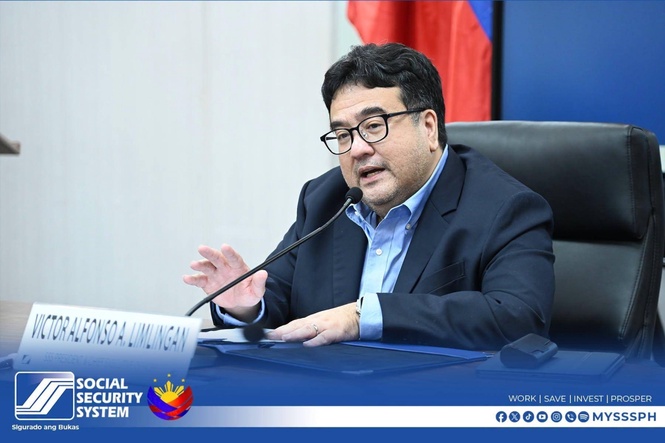
MANILA, Philippines — The Social Security System (SSS) has no plan to increase contribution rates beyond a final 10 percent adjustment scheduled for 2027, as it seeks to ease the financial burden on members amid rising prices and economic uncertainties..
SSS President and CEO Victor Alfonso Limlingan said the agency recognized that higher contributions would further strain workers and employers already dealing with inflation, rising oil prices and the economic effects of the war in Iran.
“The SSS is sensitive to the difficulties faced by members and wants to avoid imposing additional financial burdens on them,” said Limlingan who succeeded Robert Joseph de Claro who was appointed by President Ferdinand Marcos Jr. as Department of Information and Communications Technology chief.
"We're very sensitive that our fellowmen are struggling with inflation, with the war in Iran, with the high price of oil," Limlingan told The Manila Times on the sidelines of the ‘Meet and Greet’ with members of the media.
Instead of relying on higher contributions to strengthen its financial position, the SSS intends to improve the performance of its investments, he said.
The SSS chief executive said the agency's priority was to ensure it could meet its pension obligations while maintaining the affordability of membership.
He explained that the contribution structure of the state pension fund involved payments from both employees and employers, with the highest salary bracket subject to a five-percent employee share and a 10-percent employer share.
“The agency also recognizes that requiring members to set aside money for retirement can be particularly difficult when they are struggling to meet their present needs,” he emphasized.
Limlingan said the SSS wanted members to appreciate the benefits of contributing without adding to their financial difficulties.
He said the agency was also pursuing improvements in its loan products and expanding the benefits of the MySSS Card through partnerships with merchants and service providers to make membership more valuable while members were still working.