Strong international sales helped PepsiCo beat quarterly revenue estimates despite weak domestic demand.
Net revenue rose 5.6 percent to $25.27 billion for the July-to-September period, topping Wall Street projections of $24.95 billion based on FactSet analyst polling.
Based in Purchase, New York, the firm reported a 4 percent increase in global snack food volumes, its fastest expansion rate since 2021. That was largely driven by its international business, which generates 41% of company revenue.
Lay's snacks saw strong demand linked to the World Cup, helping PepsiCo gain market share in key territories like China and Brazil. Snack food volumes climbed 11 percent across the Asia Pacific region.
Fast-growing categories included protein-enhanced snacks as well as items with simpler ingredients, such as Doritos and Gatorade Lower Sugar without artificial colors or flavors, the company reported.
However, results in North America proved weaker, with Frito-Lay snack food volumes flat against the same period last year and beverage volumes down 2%.
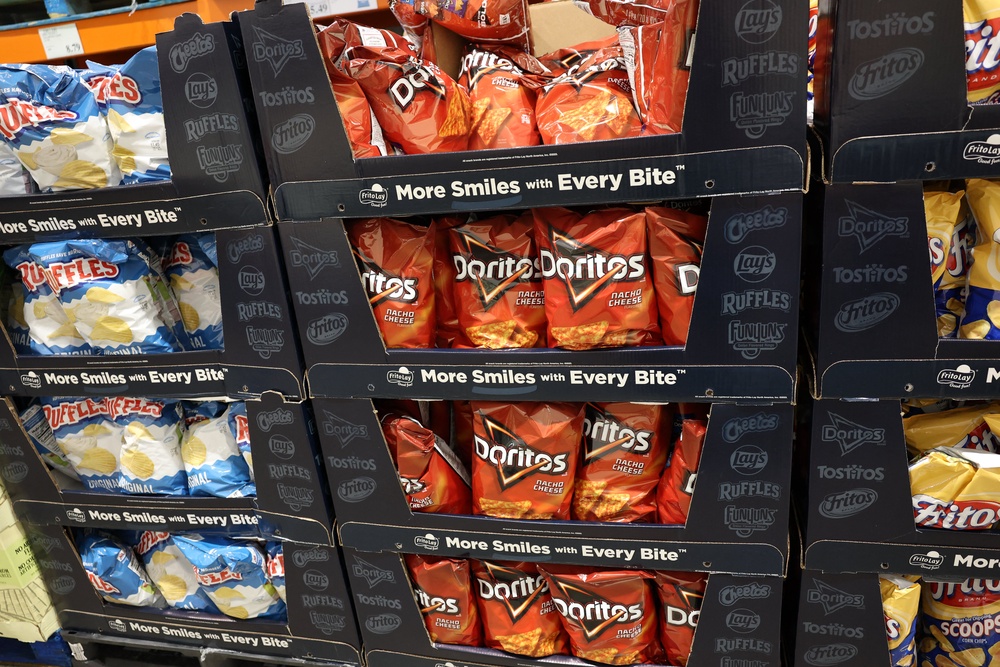
PepsiCo noted that sales growth in U.S. salty snacks was counteracted by sales declines in Canada.
PepsiCo stated it is prioritizing product innovation and more effective marketing campaigns to bolster business across North America.
The company also plans to cut corporate expenses and will launch other strategic initiatives not tied directly to sales growth in coming months.
PepsiCo lowered its full-year earnings outlook, now expecting adjusted per-share growth of 2.5 percent to 3.5 percent.
It previously anticipated expansion between 5 percent and 7 percent. Full-year revenue growth is now projected at 6 percent, hitting the top end of earlier targets ranging from 4 percent to 6 percent.
Net income climbed 17 percent to $3.07 billion in the third quarter. Adjusted for one-time factors, the business earned $2.34 per share, beating the $2.29 per-share profit financial analysts had expected.
Read MoreStarbucks fans lash out as it shutters more coffeehouses: ‘A***** move’