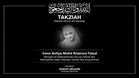
Suhakam urges public to avoid speculation over Irene Sofiya’s death
PETALING JAYA: The Children’s Commissioners at the Human Rights Commission of Malaysia (Suhakam) have expressed their condolences over the recent death of Irene Sofiya in Batu Pahat, Johor, and urged the public to allow investigators to carry out their work.
In a statement today, the commissioners conveyed their sympathies to her family and called on the public, media organisations and social media users to respect the family’s privacy and give them space to grieve.
READ MORE: Autopsy confirms Irene Sofiya died from blunt force head trauma – Police
READ MORE: Sekolah Irene Sofiya ada CCTV namun tidak dipasang di kawasan kejadian – Fadhlina
They also urged restraint, calling on people not to publish intrusive reports, share distressing images or circulate unverified claims.
The commissioners acknowledged the police’s prompt decision to open an investigation and said they would not prejudge the circumstances or motives surrounding the case, including unverified reports of possible bullying.
They also cautioned against speculation, premature accusations online and “trial by media”.
The commissioners said any child involved in the case, whether as a witness, peer or person under investigation, must have their rights, privacy, dignity and presumption of innocence protected under the Convention on the Rights of the Child and the Child Act 2001 (Act 611).
They added that such protection did not lessen the seriousness of the loss or preclude accountability under the law.
The commissioners stressed that the police investigation and a safeguarding review by the Education Ministry (MOE) were distinct but complementary processes.
They said the police investigation was intended to establish the facts, gather evidence and determine criminal responsibility, while the MOE review would examine administrative frameworks, supervision protocols, risk management and physical safety to identify any systemic gaps.
They said raising such questions was part of preventive risk management and should not be construed as a finding of institutional failure in the case.
The commissioners recommended that the MOE consider the following measures:
- Strengthening student accountability, including check-out and handover procedures, as well as clear oversight of students during extra classes, co-curricular activities, sports training and late-afternoon sessions.
- Establishing standard escalation protocols for missing students, covering search parameters, staff responsibilities, notification timelines for parents and administrators, and thresholds for involving the police.
- Conducting risk assessments for after-school activities, taking into account reduced staffing levels, student movement and isolated or poorly supervised areas.
- Conducting nationwide school safeguarding audits that go beyond conventional security checks.
- Introducing immediate nationwide programmes to help students understand their schools’ child protection policies, their right to safety, how to recognise and report bullying, abuse and harassment, and where to seek help.
Suhakam also called on the MOE and state agencies to provide trauma-informed psychosocial support to affected children and educators.
It said interactions with child witnesses should avoid repeated questioning and adopt child-sensitive approaches, while school reporting channels should be accessible, trusted, confidential and child-friendly.
Noting that the International Day of the Girl Child falls on Oct 11, the commissioners said the case served as a reminder that commitments to girls’ rights must translate into meaningful action.
They said they remained ready to work with the MOE, police and civil society organisations to strengthen child protection nationwide.