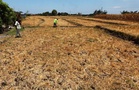
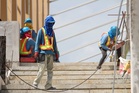
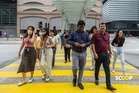
HEAT exposure is unequal. Farmers, construction workers, street vendors and others whose jobs keep them outdoors may have little choice about when or where they work. Heat builds indoors in factories, warehouses and homes with poor ventilation. Informal workers have less access to shade, cooling, or social protection. When work stops, income may stop.
Children, older adults, pregnant people and those with chronic illnesses face heightened health risks. Many people live in poorly ventilated homes without reliable electricity and cooling.
Dr. Atsamon Limsakul’s presentation framed heat as a “socioeconomic risk” that reaches beyond individual discomfort. It cited 2.4 billion workers, nearly two-thirds of the global workforce, as being at risk from extreme heat. In 2024, the estimated loss was 639 billion work hours, with an economic cost of $1.09 trillion; the presentation reported that losses could reach $2.4 trillion by 2030.
Heat stress was estimated to have cost Southeast Asia the equivalent of 3.1 percent of working hours in 2015, or about 6.9 million full-time jobs. By 2030, the presentation projected a rise to 3.7 percent, roughly 13 million full-time jobs. It projected 2030 working-time losses of 7.8 percent in Cambodia, 6.4 percent in Thailand and 5.1 percent in Vietnam. Estimates of GDP losses from reduced labor productivity reached 5.5–6 percent by 2030 in several Southeast Asian countries.
For the Philippines, the presentation cited a projected GDP impact of 5.9 percent or $85 billion, based on cited economic analyses, not a guaranteed outcome. Still, it makes clear that the costs of heat can ripple through household income, business operations and national output.
Heat compounds existing inequalities. The presentation estimates that poor rural households lose 5 percent more income to heat stress than wealthier households. A worker paid by the day may have to choose between resting in dangerous conditions and losing wages needed for food, rent or loan payments. As Dr. Limsakul’s slides put it: “Heat creates an inequality multiplier.”
The response cannot be limited to telling individuals to drink water or stay indoors. Protection requires employers, governments, health services, communities and businesses to plan together.
My presentation used a simple disaster equation: Hazard × Exposure × Vulnerability = Disaster. As I concluded: “We cannot control the climate pattern, but we can reduce avoidable harm by preparing early, sharing information clearly, and supporting the people most at risk.”
Recommended actions
Begin with forecasts that lead to action. Seasonal forecasts describe probabilities such as the chance of above- or below-normal conditions. They are useful when decision-makers agree in advance on what to do if risk rises: review water plans, issue agricultural advisories, prepare health services, etc. Local observations and community knowledge can tailor those steps as the season unfolds.
Workplaces need practical heat protections (work-rest cycles, adjusted shift times, access to cooling, etc.). Dr. Limsakul put the point plainly: “Protecting workers means protecting economic productivity.” Social protection, small-business preparedness and continuity planning can help keep a heat emergency from becoming a household financial crisis.
Cities and communities can reduce exposure through urban greening, cool roofs and heat-resilient infrastructure. Such measures matter in dense neighborhoods where buildings and paved surfaces intensify heat. Water planning must account for the possibility of prolonged dry spells, while recognizing that local water impacts depend on geography, infrastructure and management.
For agriculture, the presentation recommended locally appropriate choices: adapting planting dates, improving water efficiency and diversifying crops or income sources with advice from local agricultural experts.
The stakes are clear for institutions that serve low-income households. My ECLOF Microfinance Philippines presentation connected extreme heat and climate-related disruption with household viability and microfinance portfolios. When heat reduces work hours, crops or earnings, families struggle to meet basic costs and repay loans. Climate resilience is part of protecting livelihoods and financial security.
Southeast Asia cannot avoid heat, but the damage is not predetermined. A warming climate and natural climate swings may push temperatures and rainfall risks in dangerous directions; the scale of harm will depend on decisions made before the hottest days arrive. The task is to make forecasts useful, work safer, cities cooler and protection accessible to the people with the fewest options.
The heat crisis is invisible until a worker falls ill, a crop fails, a water supply dwindles, or a family’s income disappears. Seeing it clearly, through science, local experience and the voices of people at risk, is the first step toward preventing that loss.
Part 1 was published on Nov. 7, 2026
The author is the founder and chief strategic advisor of the Young Environmental Forum and a nonresident fellow of Stratbase Institute. He completed a climate change and development course at the University of East Anglia (UK) and an executive program on sustainability leadership at Yale University (USA). Email him at ludwig.federigan@gmail.com.