SHAH ALAM – Malaysians should remain calm over concerns about a possible “superhaze” affecting the country, as the transition to the northeast monsoon is expected to help shift smoke away from the peninsula.
Universiti Malaya meteorologist Professor Emeritus Datuk Dr Azizan Abu Samah said the country was approaching the end of the transition period between the weakening southwest monsoon and the onset of the northeast monsoon, which is expected in early November.
Azizan said prevailing winds during the transition period had contributed to haze affecting parts of the country, particularly the southern peninsula.
“Once the northeast monsoon sets in, or the wind changes from southerly or southwesterly, the smoke plume from Kalimantan and southern Sumatra would be blown away from the peninsula and Sarawak.
“So, a bit of patience. The haze issue will be gone by November,” he said.
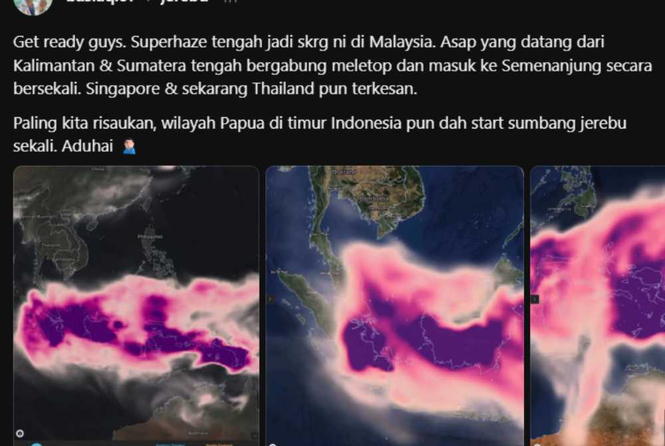
He said his following concerns about a possible worsening of the haze circulate on social media platform Threads, with some users warning that smoke from several parts of Indonesia could combine and affect Malaysia.
Social media user, @basiaq.07, claimed that smoke from Kalimantan and Sumatra was combining and moving towards the peninsula, while also raising concerns about reports of haze affecting Singapore and Thailand.
Meanwhile, @kaklongdisini shared that she was experiencing fever, coughing and a runny nose.
Another user, @aidesyafiq, said they had started experiencing nasal discomfort, while @farihanuzu reported an unusual smell in the air and an itchy throat.
“Yesterday, the air already smelled unusual. Today, it is even worse. My throat has also started feeling itchy,” the user wrote.
Azizan, however, said the situation was approaching its tail end, adding that northern parts of the peninsula were already experiencing clearer skies, while the southern peninsula remained more exposed to haze.
He said the northeast monsoon was already present around southern Vietnam and was gradually moving south, with the El Niño phenomenon potentially delaying its arrival by about a week.
“Once the northeast monsoon sets in, the winds over our region will be easterly to north-easterly. Even if there is a smoke plume, it will be blown from Kalimantan towards Java and from Sumatra towards the Indian Ocean,” he said.
Azizan also compared the current situation with the severe haze episode in 2019, which occurred during an El Niño year and lasted until early October.
He said the public should not expect the Klang Valley to experience the same clear skies as places such as Perlis or Langkawi, noting that traffic and industrial activities contributed to its background Air Pollutant Index (API) of around 50.
“I would bet that once the northeast monsoon sets in, there will be no more transboundary haze,” he said.
Azizan's remarks suggest that changing wind patterns could help ease the current situation, although conditions may vary across different parts of the country.
He urged Malaysians not to panic over speculation circulating online as the country approaches the expected monsoon transition.