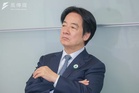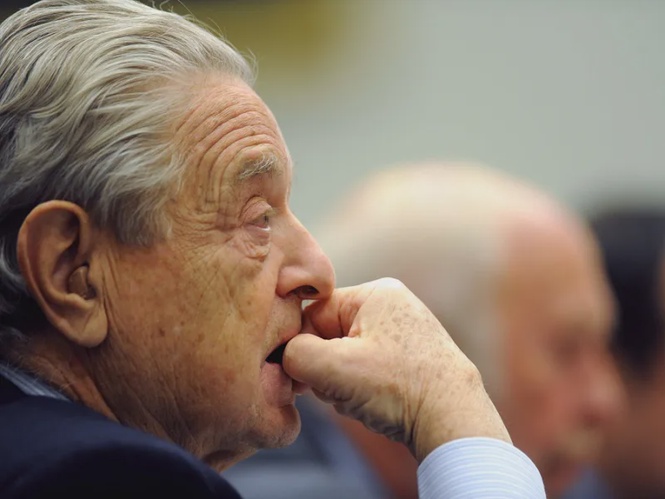
A Taiwanese media scholar has published a list of 11 Taiwan-linked groups that received grants from George Soros's Open Society Foundations (OSF), widening a funding row that has dogged Puma Shen, the ruling Democratic Progressive Party's (DPP) candidate for Taipei mayor, ahead of the 2026 Taiwan local elections on November 28.
The list, posted on Facebook on November 25, 2026, by Du Sheng-tsung, an associate professor in Ming Chuan University's Department of Radio and Television, puts Taiwan's main fact-checking body and several of its best-known human rights and LGBTQ groups alongside Doublethink Lab, the disinformation research group Shen co-founded.
The controversy surfaced in the final week of a Taipei race that has been closely fought. Shen, whose late surge supporters have nicknamed the "Yang Wave" (a play on the last character of his Chinese name, which means ocean), is challenging incumbent Mayor Chiang Wan-an of the opposition Kuomintang (KMT).
Puma Shen Says Not One Cent Reached His Pocket
KMT politicians have in recent days attacked Shen over OSF grants to Doublethink Lab, a nonprofit he helped found that studies Chinese influence operations and disinformation. The billionaire financier, a frequent target of political attacks around the world, set up OSF to fund democracy, human rights, and civil society groups.
Shen addressed the issue again on social media on November 24. He acknowledged that OSF, the foundation people online were linking to him, was created with Soros's donations, but said the money paid for Doublethink Lab's research and operations. As the group's unpaid chairman, he said, not one cent went into his own pocket.
He compared the grants to research funding he had once applied for from the Taipei City Government. "Does that mean I'm the Taipei City Government's man?" he asked. He would never be America's man, he wrote, and was not yet the city government's either, but after November 28, "I will be Taipei mayor."

A Scholar Lists 11 Taiwan Groups Funded By Soros's Foundation
Du said many people had focused on a single organization, so he decided to lay out every Taiwan-linked grantee and amount he could find. Citing the OSF website, he counted at least 11 Taiwan-related recipients that received a combined $3,703,726 between 2016 and 2023, or about NT$120 million. Adding Doublethink Lab brings the total to about $5 million, roughly NT$160 million.
His tally, converted at NT$32 to the US dollar, is as follows:
- Doublethink Lab: $1,349,680 from 2020 to 2023 (about NT$43.19 million)
- Taiwan Tongzhi (LGBTQ+) Hotline Association: $900,000 in four grants (about NT$28.8 million)
- Taiwan Left Turn Culture Association: $505,639 in 2022 and 2023 (about NT$16.18 million)
- Taiwan Association for Human Rights: $440,343 in 2020 and 2022 (about NT$14.09 million)
- Taiwan Gender Equity Education Association: $430,438 in three grants from 2020 to 2023 (about NT$13.77 million)
- Taiwan FactCheck Center: $427,226 in 2022 and 2023 (about NT$13.67 million)
- Taiwan Equality Campaign: $400,000 in 2023, the largest single grant (about NT$12.8 million)
- Awakening Foundation: $275,000 in 2016 and 2018 (about NT$8.8 million)
- Taiwan Alliance to End the Death Penalty: $120,000 in 2021 (about NT$3.84 million)
- Taiwan Innocence Project: $100,080 in 2020 (about NT$3.2 million)
- Environmental Jurists Association: $50,000 in 2019 (about NT$1.6 million)
- Regents of the University of California, Berkeley: about $55,000 for a Taiwan-related grant
Du said he had heard the groups' explanations, that their causes are unpopular, that local fundraising is hard, and that every project is audited, and that he was not accusing any of them of breaking the law. But the sums were not small, he said, and the public could judge for itself what each group has contributed.
Fact Checkers On The List Draw The Sharpest Criticism
For Du, the issue was not who drew a salary but where the money came from. Soros, he argued, profited by betting on other countries' collapse during the Asian financial crisis with one hand while funding human rights, democracy, and gender equality groups around the world with the other. "First destroy, then rebuild," he wrote. "Soros is a two-faced man."
The money's origins, he said, are not laundered just because it is spent on good causes. What left him most stunned, he said, was that the list includes organizations whose job is to scrutinize others: one that rules on whether claims are true, and another that investigates who is paying behind the scenes to sway public opinion. Both, he noted, took the same money.
Neither the Taiwan FactCheck Center nor Doublethink Lab was quoted in Du's post, and his figures have not been independently checked against OSF's grants database.
Why The 1997 Asian Financial Crisis Still Shapes Views Of Soros
Du said his dislike of Soros dates to 1997, when he was a reporter covering the Asian financial crisis. He watched Thailand's markets collapse, then Malaysia's, while Hong Kong barely held on. The fear at the time, he said, was that Taiwan would be next. "If Taiwan's finances collapsed, where would I take my wife and kids?" he recalled thinking.
He listed the episodes that made Soros notorious in Asia. In 1992, Du wrote, Soros shorted the British pound, made about £1 billion, and forced Britain out of the European Exchange Rate Mechanism. In 1997, then Malaysian Prime Minister Mahathir Mohamad accused him of attacking the ringgit, Thailand branded him an "economic war criminal who sucks the people's blood," and hedge funds led by Soros's Quantum Fund shorted both the Hong Kong dollar and Hong Kong stocks.
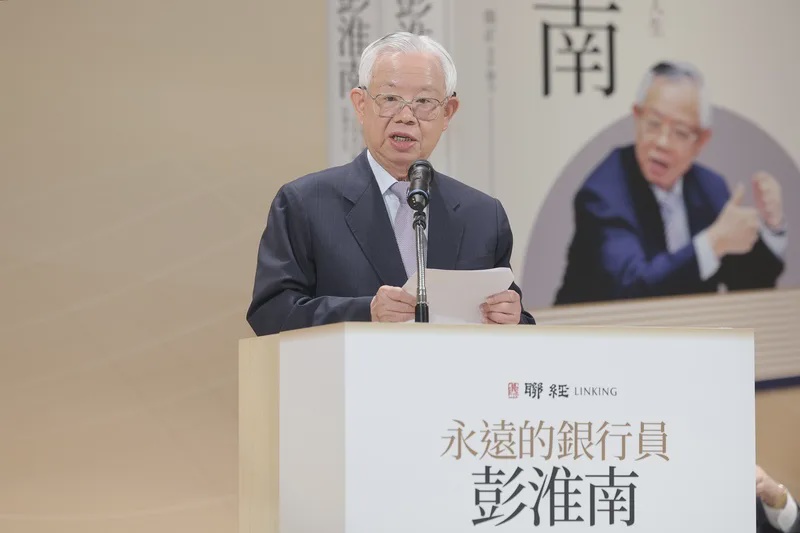
The New Taiwan dollar slid from about 28 to 35 against the US dollar during the turmoil, Du said. In May 1998, central bank governor Perng Fai-nan barred domestic institutions from trading non-deliverable forwards, a move Du credited with stopping currency speculation. That September, Taiwan's Securities and Futures Commission banned the sale of Soros's hedge funds in Taiwan, while the central bank and the Investigation Bureau checked whether foreign investors were channeling Soros money into the market.
"Back then, the Taiwanese government guarded against him like an enemy," Du wrote. "People who lived through that storm should not forget this name."
Taipei Voters Head To The Polls On November 28
Du closed his post with a comparison that is likely to resonate with older voters as the 2026 Taiwan local elections approach. "Back then, Taiwan relied on Perng Fai-nan to hold off the international speculators," he wrote. "Thirty years later, his money has walked through the front door into Taiwan's civil society. For anyone who lived through the Asian financial crisis, it is hard to look at this list and this money trail without shaking your head."
Whether the issue moves votes is unclear. Shen has framed the attacks as guilt by association, while his critics argue that a candidate who built his reputation exposing foreign influence should face the same scrutiny he applies to others. Voters in Taipei and across Taiwan's cities and counties will cast their ballots on November 28.
You've read it. Now join the conversation — follow us on X, Facebook and IG. Editor: Penny Wang