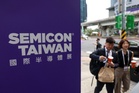
Taiwan's top representative in Singapore told an audience of more than 900 semiconductor executives, officials and researchers on September 24 that Taiwan remains the most trusted manufacturing partner in an industry now expanding faster than almost any forecaster predicted.
Ambassador Tung Chen-Yuan, who heads the Taipei Representative Office in Singapore — the de facto embassy that manages relations in the absence of formal diplomatic ties — delivered the keynote at SSIA Summit 2026, hosted by the Singapore Semiconductor Industry Association at Resorts World Sentosa, according to an account of his remarks posted to Tung's official Facebook page. Organizers said the gathering, built around the theme "Innovate and Scale Beyond Boundaries: From Leadership to Ecosystem Impact," drew its largest crowd ever, with attendees from industry, government, academia and the media.
In his address, titled "Beyond Boundaries: Forging Trusted Ecosystems, Multiplying Impact for Semiconductor Growth," Tung argued that no single country can control every link of the chip supply chain and that Taiwan has become the partner international firms turn to first. He described the current period as an extraordinary one for the sector, echoing earlier remarks from SSIA Executive Director Ang Wee Seng and ZenSemi CEO KC Ang, who had urged the industry to "connect, share, and innovate beyond boundaries."
Ai Spending Pushes Chip Market Past Early Forecasts
The scale of the boom has caught even industry analysts off guard, according to Tung. Projections at the start of the year put the global semiconductor market at roughly $1 trillion; the latest estimates now put 2026 revenue closer to $1.65 trillion, with another 30% of growth expected next year that would push the market past $2.1 trillion.
Artificial intelligence is the main engine behind that surge. Tung cited figures showing the world's nine largest cloud service providers are on pace to spend about $886.7 billion on capital expenditure this year, roughly 90% more than last year, with a further 50% increase projected for next year as those companies race to build out AI infrastructure.
Taiwan Commands Foundry and Packaging Markets
Taiwan's position across chip design, fabrication, and packaging and testing underpins that growth story, Tung said. The island held about 78.6% of the global foundry market and 48.1% of the packaging and testing market in 2025, and the output value of Taiwan's semiconductor industry is projected to climb roughly 40% this year.
TSMC alone controlled 72.5% of the global foundry market in the second quarter of 2026, with a gross margin of 67.7%, and expects to spend between $60 billion and $64 billion on capital expenditure this year. Tung framed those numbers as evidence of a "Taiwan-centered" global expansion strategy — one that helps Taiwanese firms move into new markets while drawing international supply chain partners to invest more heavily on the island itself.
TSMC Keeps Advanced Production and R&D at Home
Addressing persistent concerns that chipmaking capacity is drifting offshore, Tung said TSMC has held to a "three fabs in Taiwan for every fab built overseas" ratio. Thirteen fabs are currently under construction in Taiwan, he said, with the total expected to reach 25 within five years. Citing an assessment from Taiwan's Ministry of Economic Affairs, Tung said as much as 85% of TSMC's production capacity will still be based in Taiwan by 2030, with its most advanced process technology and core research and development remaining anchored there.
Trade With Singapore Nearly Doubles This Year
Tung also pointed to Singapore's own weight in the industry — semiconductors account for roughly a third of the city-state's manufacturing output, and Singapore serves as a regional hub for multinational chipmakers. Taiwan became Singapore's largest trading partner last year, and Tung said bilateral trade has grown 94.1% in 2026, a jump he attributed to deepening links across the AI and semiconductor supply chains.
Envoy Lays Out Three Paths for Deeper Investment
Tung proposed three ways international partners could deepen cooperation with Taiwan: joining Taiwan's established industrial clusters to tap its scale and supplier networks; setting up equipment and materials operations in Taiwan, which he noted has been the world's largest semiconductor materials market for 15 consecutive years; and establishing research and operations centers on the island.
To support that outreach, the Taipei Representative Office in Singapore has published a bimonthly "Taiwan and Global Semiconductor Report" since September 2023, and began co-publishing a "Taiwan and Global AI Report" with the Global Taiwan Technology and Diplomacy Alliance in September 2025. Tung said he has given more than ten talks to think tanks, banks, industry groups and chip companies across Singapore over the past year and plans to continue the outreach.
Social Media Links & Editor Tag - Penny