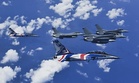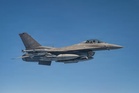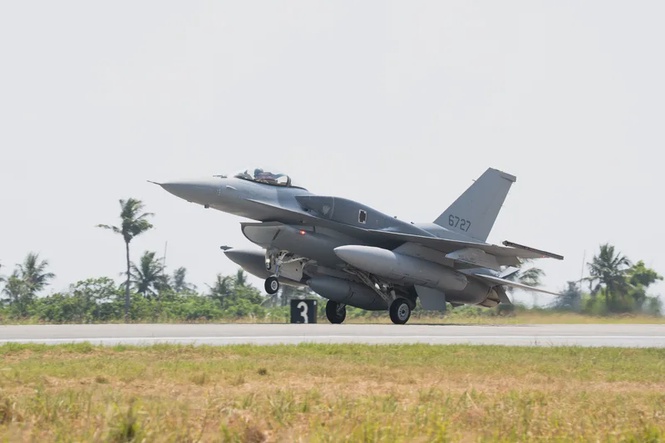
Taiwan's first two new F-16 Block 70 fighters landed on October 2 without a finished electronic warfare system, the Air Force acknowledged to lawmakers on October 12. Its chief of staff, Lt. Gen. Lee Ching-jan, said part of the hardware is installed, but the software is still in development.
The system, called Viper Shield, became the focus of a legislative committee hearing after Kuomintang lawmaker Ma Wen-chun pressed the Air Force to say plainly whether the two jets have it. "You've installed the hardware, but what use is it without software?" she asked, arguing that a suite bearing on pilots' survival should have been delivered with the aircraft. Defense Minister Wellington Koo replied that the system must be integrated with the whole aircraft, that integration testing is scheduled for after delivery, and that testing is on schedule.
Nearly Seven Years Of Delays Preceded The First Jets
The two jets are the first new-build fighters to reach Taiwan since 2001, part of a roughly $8 billion order for 66 aircraft that dates to 2019. Koo had repeatedly said the first jets would arrive by the end of September, a target missed by two days. The War Zone reported that production-line changes, supply-chain problems, software issues, and the pandemic all contributed, and the Defense Ministry acknowledged in late September that development and production of the electronic warfare system was one factor.
The supplier was still ramping up as the jets arrived. Janes reported in September 2024 that L3Harris had begun production of 166 systems for six countries, with first deliveries planned for 2025 and operational flights in 2026. The company cleared a U.S. Air Force production readiness review in November 2025, which allowed low-rate initial production, and said on September 3 that it had finished the first 35 systems and was moving toward full-rate production of 233 on order from eight nations. L3Harris has not named its customers, and the announcement does not mention Taiwan.
Viper Shield Detects Radar Threats And Jams Them
The AN/ALQ-254(V)1 is an all-digital, software-defined suite made by the U.S. defense firm L3Harris. According to the company, a digital radar warning receiver that works with the jet's APG-83 radar detects and identifies threats, while a jammer built on digital radio frequency memory technology counters them. Early flight tests in the United States centered on compatibility with the mission computer and other avionics, and on interoperability with the radar, Aerospace Global News reported.
A podded version, the ALQ-254(V)2, is meant for older F-16s. Taiwan's new jets use the internal (V)1, according to The War Zone.
Taiwan Chose A Different System Than The U.S. Air Force
Taiwan picked the ALQ-254 rather than the ALQ-257 used on U.S. Air Force F-16s, The War Zone reported. Some lawmakers have asked whether it meets requirements tied to the earlier F-16A/B Block 20 upgrade, but Koo has said those requirements applied to that program, not to the Block 70 purchase. Taiwanese officials have defended the choice, citing the fleet's specific needs.
In June, World Journal reported that the U.S. Air Force plans to begin fitting its own F-16s with the ALQ-257 next year, and that Taiwan's Air Force declined, citing classified information, to say whether the system has passed U.S. military tactical testing. The newspaper also reported that a 2022 assessment by Dayton Aerospace, a consultancy hired by the Air Force, found the ALQ-254 the fastest and most economical choice against basic threats but lacking the combat effectiveness to counter high-end ones.
Lawmakers Demand Written Answers From The Defense Ministry
The ministry gave no timetable for finishing the software, completing integration testing, or clarifying what electronic protection the two jets have today. The committee chair ordered a written explanation within two weeks. Koo also declined to promise that all 66 jets will be delivered by the end of 2027.