Taiwan's renewable energy industry put on a visibly thinner show at Energy Taiwan 2026, which opened in Taipei on October 14, as solar and offshore wind companies shrank their presence and industry insiders accused President Lai Ching-te's government of turning its back on green power in favor of a nuclear revival.
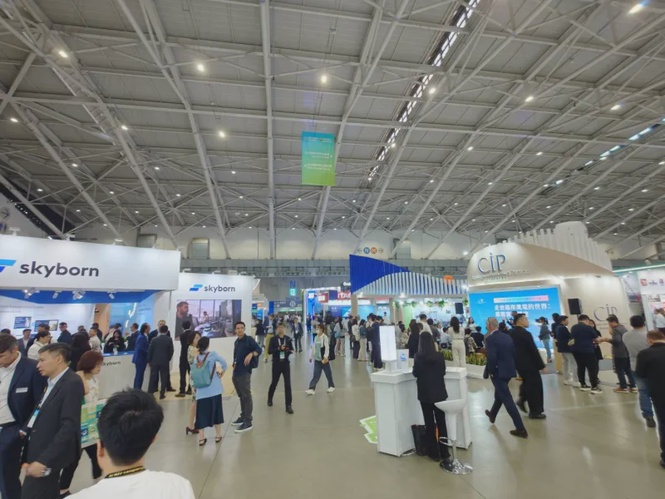
Organizers said the number of exhibitors rose this year. The floor plan at the Taipei Nangang Exhibition Center, Taiwan's largest venue, told a different story: the space used by solar and wind companies kept contracting for a second straight year, and only four offshore wind developers set up booths.
Exhibitors speaking privately to Storm Media said foreign investors have lost confidence in Taiwan's renewable push. In their view, the Lai administration has not embraced the energy transition championed by his predecessor, Tsai Ing-wen, and is focused almost entirely on nuclear power, leaving them unable to commit fresh capital to the island.
Lai Keeps His Distance From Renewable Exhibitors
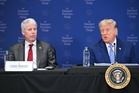
Lai attended this year's opening ceremony after skipping the fair in both 2024 and 2025. Industry participants said his remarks were largely ceremonial and did not address the development of renewable energy or any roadmap for its future. According to Taiwan's Central News Agency, Lai told the audience that the government is strengthening energy resilience to cope with surging electricity demand from artificial intelligence and worsening climate risks.
On the exhibition floor, Lai lingered at the booth of just one solar company and moved quickly past the rest, according to people present. Exhibitors contrasted that with Tsai, who during her presidency routinely toured the halls and chatted with companies until her security detail had to hurry her to the next stop.
The Ministry of Economic Affairs, which oversees energy policy, has also stayed away. Neither former Minister Kuo Jyh-huei nor current Minister Kung Ming-hsin has attended the event during their tenures; both sent Deputy Minister Lai Chien-hsin in their place.
Companies say they need the government to spell out how renewables and nuclear power are supposed to coexist as Taiwan pursues its energy transition. Domestic demand for renewable power remains strong, they argue, yet unclear national policy has pushed many firms, local and foreign alike, into a fight for survival, with the government not only failing to help but speeding up their decline.
Solar Booths Shrink As Energy Storage Moves In
Solar companies have traditionally occupied one floor of the Nangang venue and offshore wind developers another. Since last year, a string of illegal installation cases has rattled Taiwan's solar sector, and many firms have chosen to keep a low profile. The solar section used only three quarters of its usual floor space in 2025 and has now shrunk to about half its former size.
Energy storage companies have filled the gap. Storage vendors told Storm Media that the rapid build-out of AI data centers is generating heavy demand for battery systems, and that nearly every company in the sector is chasing the opportunity this year.
Offshore wind tells a similar story. Six or seven developers used to exhibit their completed projects and future plans at the fair. This year only four did: Ørsted, Copenhagen Infrastructure Partners (CIP), Synera Renewable Energy (SRE), and Skyborn Renewables. Just two of them took part in the government's latest offshore wind auction.
Round 3.3 Auction Draws Only Two Bidders
The Ministry of Economic Affairs closed applications for Round 3.3 of its zonal development program, the third phase of Taiwan's offshore wind auctions, at the end of September. Only Ørsted and CIP submitted bids, and because both chose the same sea area, industry sources expect only one developer to be allocated capacity.
Round 3.3 was meant to deliver wind farms connected to the grid in both 2030 and 2031. With a single winner, insiders say, new capacity will arrive only in 2030, leaving no new offshore wind output for 2031 under the original schedule. Taiwan's plan called for 10.97 gigawatts (GW) of offshore wind by 2030, and the number and size of planned new wind farms now fall well short of that goal.
The ministry intends to launch a tender for floating wind demonstration projects next year and hold Round 3.4 only after those results are announced. Developers estimate the Round 3.4 auction will not open until 2028, with further delays before winners are selected. No developer has publicly committed to the floating wind tender.
Supply chain companies are urging the Energy Administration, the ministry agency in charge of energy policy, to put Round 3.4 first. "Projects have to be awarded first before downstream contractors have any work to take on," one supplier said, warning that a pace of one project a year would starve Taiwan's domestic wind industry.
TSMC Faces A Shortage Of Green Power
The shortfall matters well beyond the wind sector. Global brands increasingly demand low-carbon supply chains, making the RE100 initiative, under which companies pledge to source all their electricity from renewables, a binding constraint for Taiwanese manufacturers. Taiwan Semiconductor Manufacturing Co. (TSMC) reached only 14% renewable power in 2024 and aims for 30% by 2030, according to the figures cited in Storm Media's reporting. With domestic green electricity in short supply, the chipmaker faces the prospect of being unable to buy enough renewable power at any price.
Meanwhile, Taiwan is working through the procedures and safety inspections needed to restart the Maanshan Nuclear Power Plant, also known as Nuclear Power Plant No. 3. The Ministry of Economic Affairs has repeatedly stressed that nuclear power does not count toward RE100, which critics say shows the government is now prioritizing having enough electricity over having green electricity.
Insiders Blame Former Economy Minister Kuo Jyh-huei
Several industry figures said the person most responsible for the offshore wind sector's troubles is Kuo, who served as economy minister before Kung. They said Kuo spoke freely with the semiconductor supply chain, but renewable energy companies found it nearly impossible to get time on his schedule.
Some of the industry's problems needed the ministry's help to "defuse the bomb" at the time, one insider said. Now that the bomb has gone off, only the handful of developers still visible on the show floor have survived.
Social Media Links & Editor Tag - Penny