

Marco Tedeschi had a problem. The Swiss-Italian watchmaker, engineer and founder of his eponymous manufacture needed to create a movement that could fit into a skull-shaped case. “Usually, when I design my watches, I always start with the calibre, so this brief was interesting because it was the opposite,” says Tedeschi. It helped that his collaborator was Japanese artist Takashi Murakami.
The project was Murakami’s first watch under his own brand, Time Objects. And if you’re familiar with his work, a round case would never have been on his radar. Instead, he experimented with skulls – over 600 of them, scribbled, drawn and coloured before he landed on the perfect one that could turn into a case. Nothing was wrong with the previous skulls. “It’s just my process,” says Murakami, smiling.

The Takashi Murakami Skull Flowers Cylindrical Jumping Hours Tourbillon explores the idea of mortality. While the skull might turn heads, closer inspection reveals Murakami’s famous flowers blooming in its eye sockets. A ball-bearing system rotates the flowers when the wearer’s hand moves, creating a playful, almost whimsical display. Murakami is aware that, unlike his art pieces, which are typically admired from a distance, a watch reveals its beauty only up close.
The combination of skulls and flowers also speaks to the fusion of masculinity and femininity, respectively. After all, life is about duality and balance. There can be no light without darkness, or good without evil. One cannot thrive without the other. During his previous projects with Louis Vuitton, Murakami learned a simple truth: the audience doesn’t appreciate a creative work if it’s “too feminine or masculine.”
But when you “fuse the two worlds together, you create a universal language that resonates with everyone,” he says.
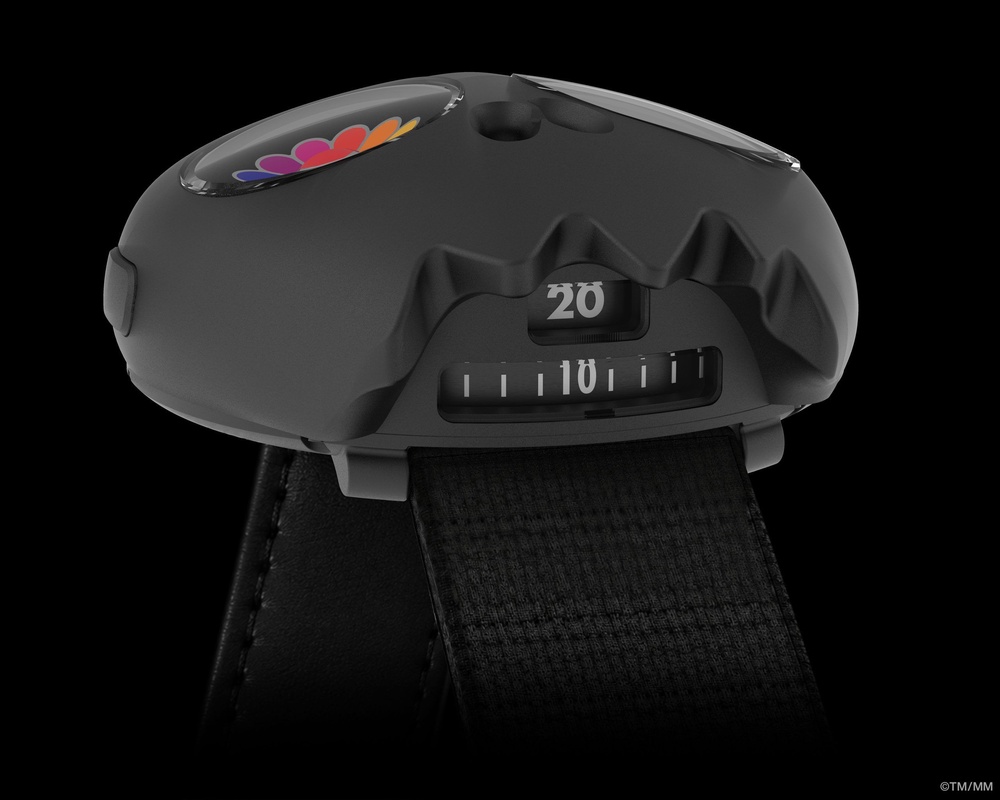
Telling the time, too, is a unique experience. There is neither a crown nor hands for the minutes and seconds. Instead, Murakami and Tedeschi worked on the world’s first cylindrical jumping-hours display, visible through a lateral aperture at six o’clock. To read the time, the wearer needs to tilt the watch inwards and upwards. The hour is read on a rotating display, which jumps with each new hour while the minutes progress continuously on a trailing disc.
Tedeschi reveals that wasn’t always the plan. The eye sockets of the skull would have been the most instinctive spots to put the hours and minutes, but when the two of them discussed it further, “the best way was to put it in the mouth.” So they “flipped the movement 180 degrees” to have the tourbillon at its current position of 12 o’clock. They also agreed to have a 24-hour display instead of the typical 12-hour format to make reading the time quick and easy.
Murakami is no stranger to watchmaking, having collaborated with Hublot on several pieces. But, in working with Tedeschi, he found freedom in expression – and newfound respect for watchmaking. “I never want to challenge convention, whether in the watch industry or any other fields I’ve collaborated in. I always want to learn from them because they are the experts. From those lessons, then I can create something new,” he says.
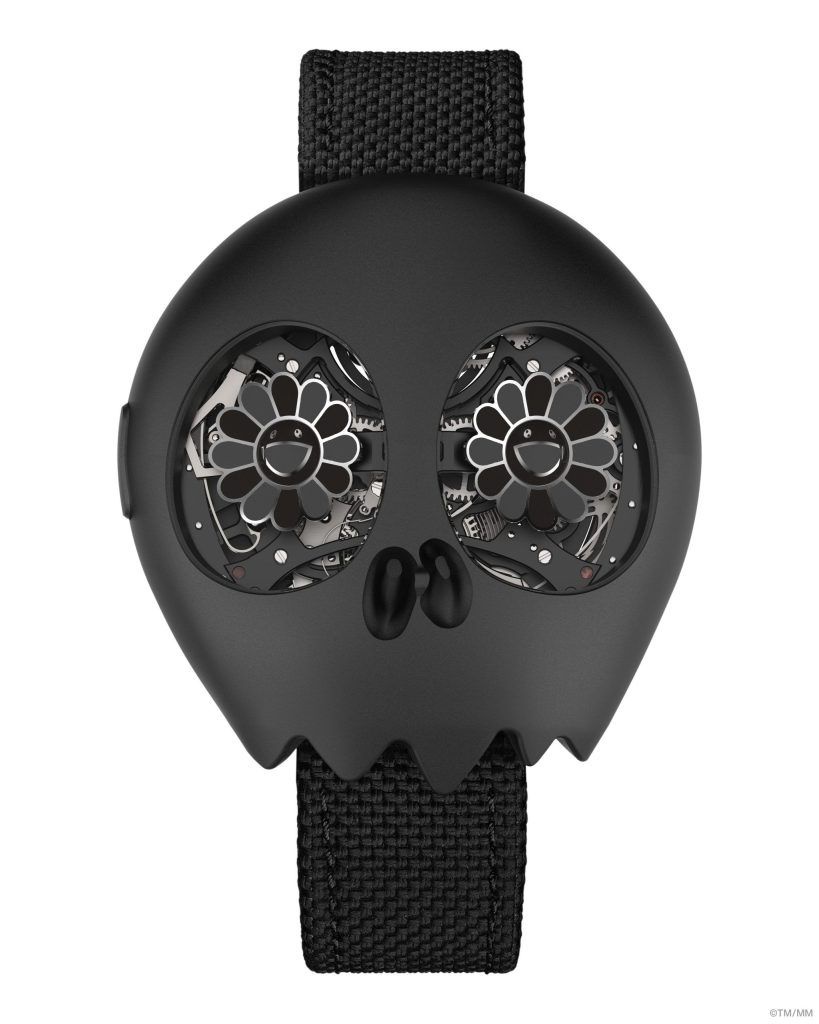
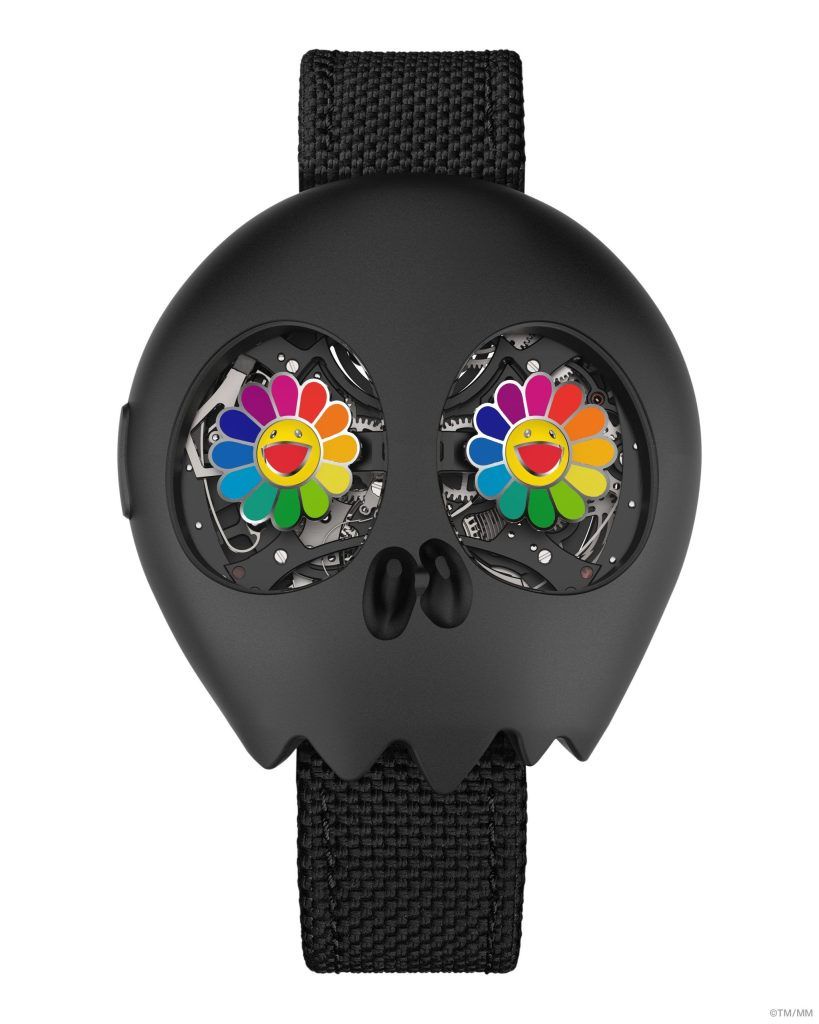
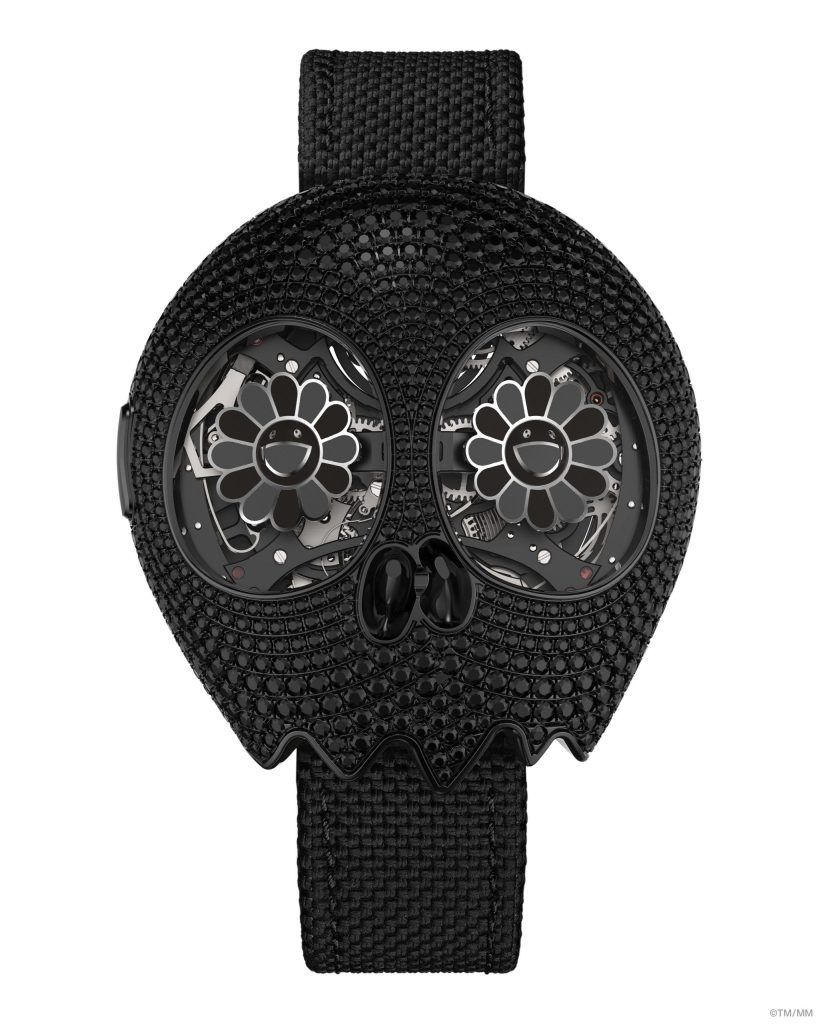
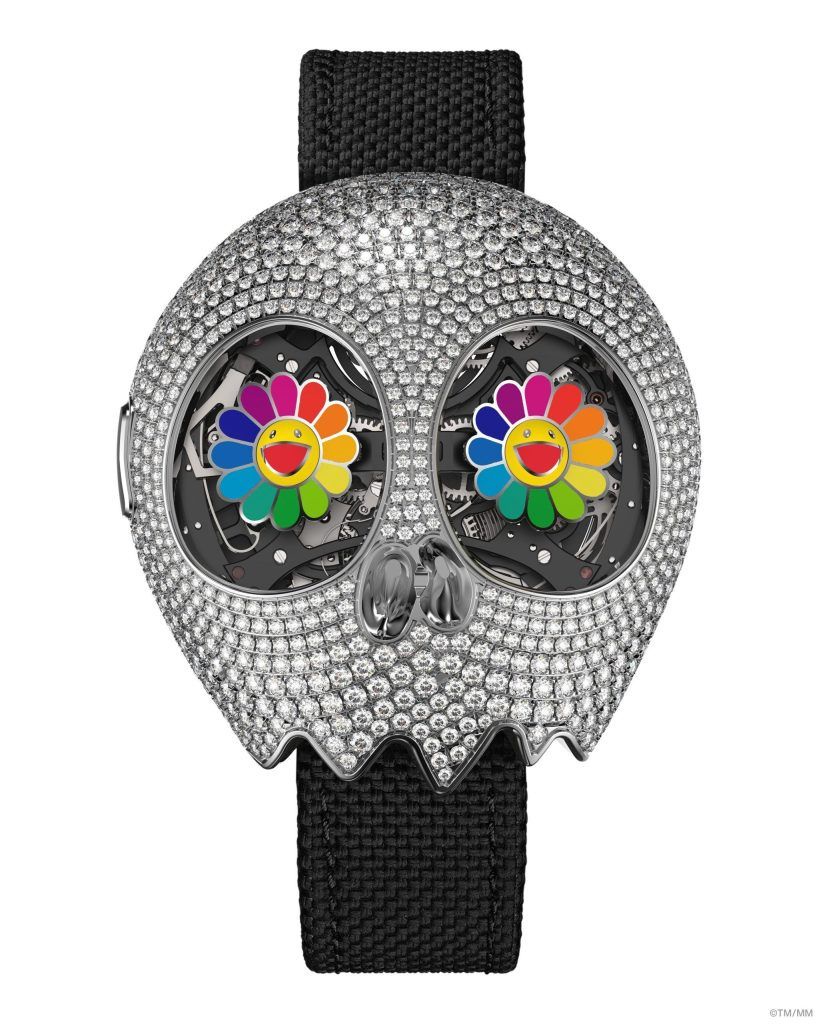
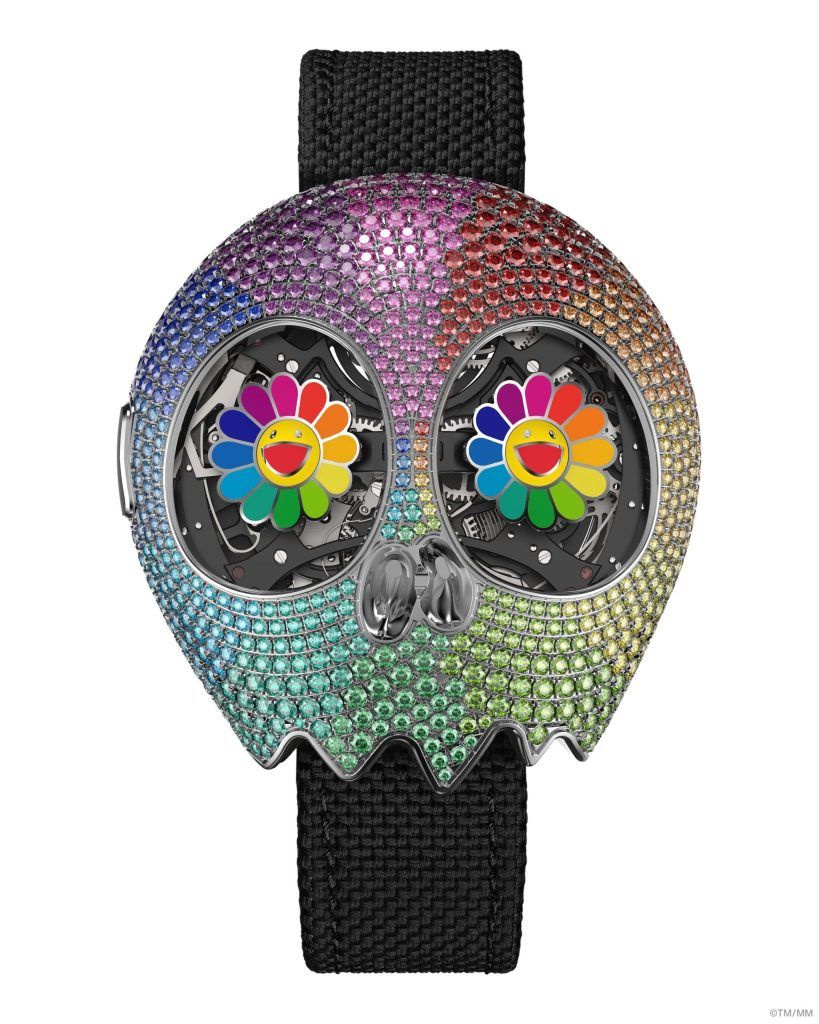
Murakami’s attitude came as a surprise to Tedeschi, who is more used to designers and artists who come in wanting to “revolutionise watchmaking.” While there’s nothing wrong with ambition, Tedeschi believes humility to be a more valuable trait, especially in a field that has been around for centuries. “I am amazed by Murakami’s willingness to understand and learn the intricacies of watchmaking. He was so humble and I’ve never experienced that before. It created a pleasant atmosphere that allowed us to create new ideas,” says Tedeschi.
The skull-shaped case might have been a unique problem. But in Murakami, Tedeschi had a partner who was willing to be a student. And when two complementary souls meet, just like the duality in life, balance is retained – and problems become vessels for magical solutions.
Note : The information in this article is accurate as of the date of publication.