.png)
“HISTORY is not measured by who arrived first, but by who built a civilisation, preserved its memory and left it as an inheritance for future generations.”
Every now and then, the word 'pendatang' finds its way back into our national conversation. It is a word that divides, wounds and oversimplifies centuries of history. Perhaps we have been asking the wrong question.
Instead of asking who is a 'pendatang', perhaps we should ask a different question: What is Tanah Melayu and who built the civilisation that gave it that name?
As Muslims, we begin with a truth greater than race or nationality. We are all children of Adam and Hawa. The Quran reminds us that Allah created us into nations and tribes not so that we may claim superiority over one another, but so that we may know one another. If Adam is the father of us all, then somewhere in history every human family has migrated. No civilisation was born in one place and remained unchanged forever.
The English are the descendants of Celts, Romans, Anglo-Saxons, Vikings and Normans. The Chinese civilisation itself grew through the interaction of many peoples over thousands of years. The Arab world expanded across continents. Human history is a history of movement, encounter and adaptation.
The Malay world is no different.
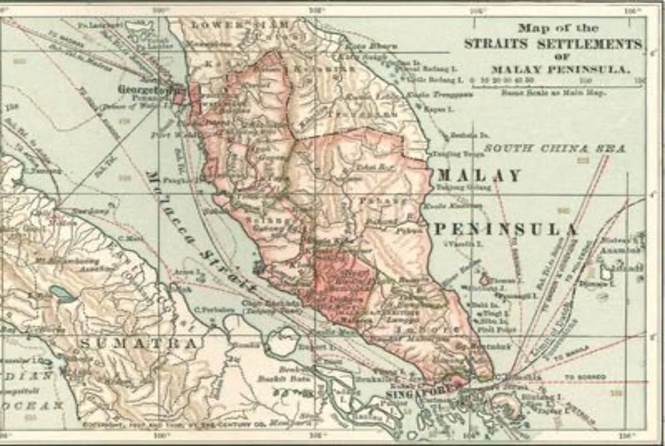
Long before the modern nation-states of Malaysia, Indonesia, Brunei, Singapore and southern Thailand existed, the seas connected rather than divided us. The Straits of Melaka, the Laut Melayu and the rivers of the Peninsula formed highways of civilisation. People travelled, traded, married and settled. Communities interacted over centuries, shaping what would eventually become the Malay world.
Leonard Y. Andaya and Barbara Watson Andaya beautifully described these communities as “leaves of the same tree.” Different leaves, certainly, but nourished by the same roots.
Today we call ourselves Malays, Acehnese, Bugis, Minangkabau, Javanese, Banjar, Melanau, Bajau, Patani Malays and many other names. We speak different dialects, practise different customs and in some cases, profess different religions. Yet history reminds us that these communities have long been interconnected through language, commerce, kinship and shared political traditions.
When I submitted my own DNA analysis, I found traces from across Southeast Asia, China and Europe. Others will discover different mixtures. DNA tells us that human history is one of movement and intermarriage. It does not, however, define civilisation. Civilisations are built not by chromosomes but by language, law, memory and shared institutions.
That is why I believe the question is not who arrived first. The Malay Peninsula has been home to many communities for thousands of years, including the Indigenous peoples whose histories are as much a part of this land as anyone else’s. The more meaningful historical question is this: which civilisation emerged here, what language united it and what institutions sustained it?
The answer is found not in political slogans but in history itself.
The Malay language became the lingua franca of diplomacy, trade and governance throughout much of the Nusantara. The Hukum Kanun Melaka and later the Hukum Kanun Pahang testify to a sophisticated constitutional tradition that regulated rulers, ministers, merchants and ordinary people. These were not merely local customs. They were written legal systems that influenced kingdoms across the region.
Tanah Melayu was therefore never simply a piece of land occupied by one people. It was the heart of a civilisation. Like every great civilisation, it absorbed influences from abroad while preserving its own identity. The Hukum Kanun Pahang itself bears witness to this process, drawing upon Islamic jurisprudence while preserving Malay adat and earlier legal traditions within a distinctly Malay constitutional framework. Traders came and settled. Scholars came and taught. Marriages united families across kingdoms. New ideas were embraced without losing the language, institutions and constitutional traditions that defined the civilisation itself.
To recognise the emergence of a Malay civilisation is not to suggest that others were merely guests within it. A civilisation is not a house with an owner. Every great civilisation is shaped not only by those who first established its institutions, but also by those who came, settled, contributed and ultimately became part of its continuing story. Civilisations endure not by excluding others, but by giving successive generations a common language, shared institutions and a shared sense of belonging. The civilisation was never a possession to be defended. It was a project to be joined.
Perhaps that is why I have never liked seeing people reduced to labels. Growing up in Johor, I never thought of the Orang Seletar who visited our home as “others.” They called my parents Bapak and Emak. They were welcomed into our home as family, and my late father spent nights on their sampan listening to their stories. To me, they were never strangers. They were simply orang kita. There was never a sense that they belonged to a different world from ours. They were not defined by labels, but by relationships.
History, too, tells a story of relationships rather than rigid categories. Communities interacted, traded, intermarried and adapted to changing times. Some lived by the rivers and seas. Some remained in the forests. Some founded ports and kingdoms. Together, over centuries, they shaped the civilisation that came to be known as the Malay world.
So let us stop asking who is a pendatang.
Instead, let us ask a better question.
What language united this region?
What laws governed its kingdoms?
What civilisation gave this land its identity?
The answers are already written in our manuscripts, our history and our constitutional traditions.
Perhaps it is time we began reading them again.
For if we continue asking the wrong questions, we shall continue receiving the wrong answers. History deserves better than slogans. It deserves honesty, humility and the courage to understand the civilisation that shaped us all.
P.S. There is a historical coincidence that makes the publication of this article on my birthday, Aug 5, especially meaningful to me. On Aug 5, 1957, the Federation of Malaya Agreement was signed by the Malay Rulers and the representative of the British Government, before coming into force on Aug 31, 1957. Sixty-nine years later, on the same date, these reflections on Tanah Melayu, its civilisation and its constitutional inheritance are published.
Tunku Azizah Aminah Maimunah Iskandariah is a master’s candidate at the International Institute of Islamic Thought and Civilisation (ISTAC), International Islamic University Malaysia.

.jpg)