BATAM: Cooking and bathing became difficult when taps ran dry in Batam, an Indonesian island where residents are protesting as data centres spring up to power the global artificial intelligence boom.
The area had suffered a “long drought” caused by low rainfall, the local water utility operator told AFP, as a strong El Niño cycle exacerbates dry conditions.
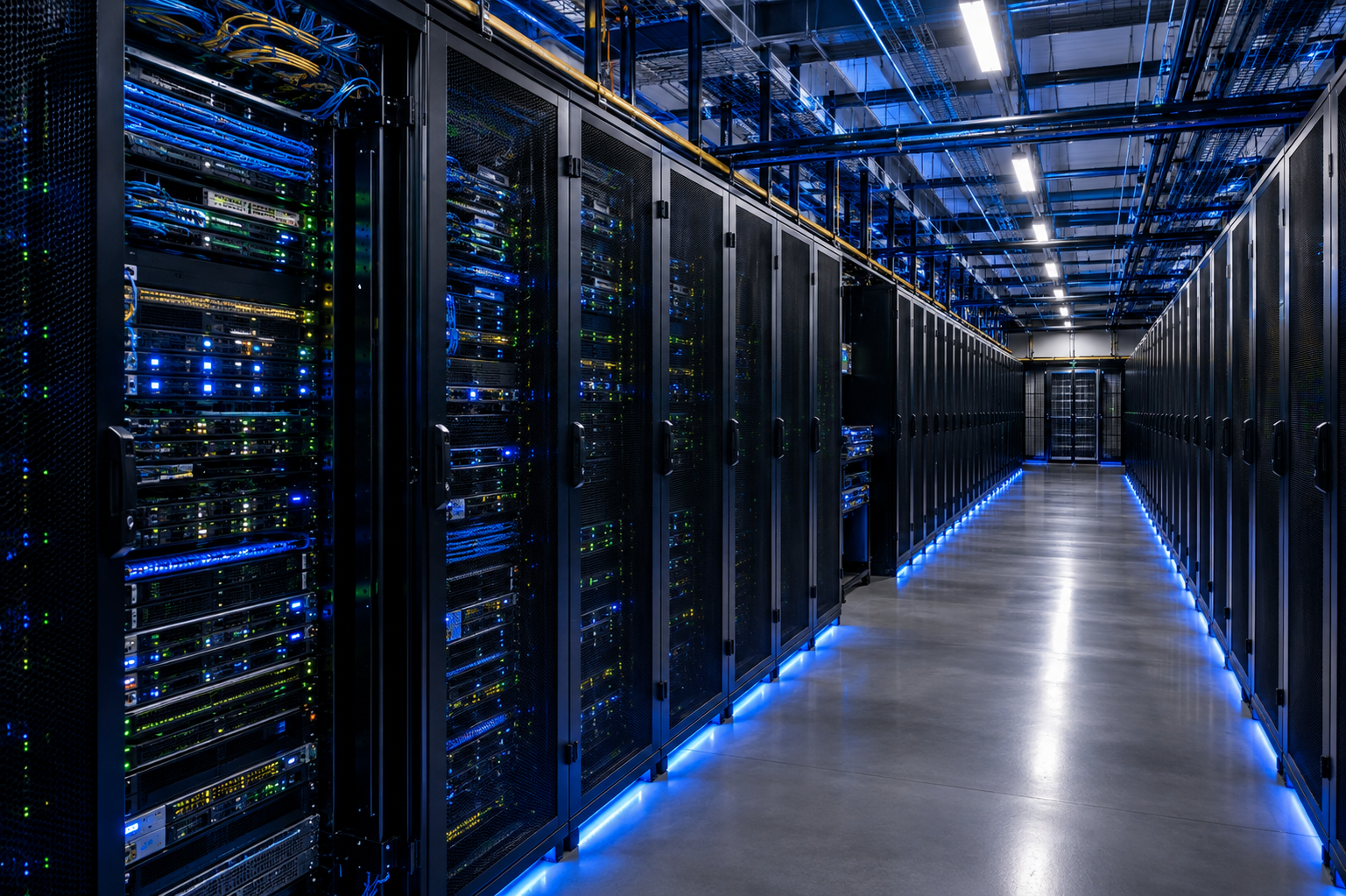
But, as in other countries, anger has been directed at data centres, warehouse-like facilities that keep apps and artificial intelligence tools running, with water often used to cool their humming servers.
Frustration is growing in Indonesia and Malaysia, particularly in regions bordering Singapore that are seen as prime locations for new technology facilities.
At first, the main reaction was, “thank God industry is coming” to Batam, 54-year-old tradesman Juniardi Adinda Sembiring Gurukinayan told AFP.
But severe recent outages affecting the municipal water service in some Batam communities meant that “sometimes I skipped my shower”.
“We cannot eat rice without water. We cannot cook vegetables without water,” he said.
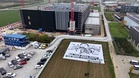
At the worst point, dozens of angry residents staged spontaneous protests outside Nongsa Digital Park, a new cluster of data centres and other amenities designated as a special economic zone.
People in the district believe “that the water shortages… are related to the construction of data centres”, Juniardi said.
The drought caused the nearby Nongsa Reservoir to run very low, while an electrical fault further disrupted supply systems, said Ginda Alamsyah, a spokesman for water utility operator Air Batam Hilir (ABH).
The tech park receives water from a different source, Duriangkang Reservoir, an industry source told AFP.
Smelly, yellowish
In late September, authorities told developers they must build plants to desalinate seawater for cooling to avoid straining local resources.
Companies behind operational or planned data centres at Nongsa Digital Park include Singapore-headquartered BW Digital, DayOne and Princeton Digital Group.
Another owner, Hong Kong-based Gaw Capital Partners, said it was “aware of the distress and frustration expressed by local residents in Nongsa and surrounding Batam communities” over water shortages.
To ensure sustainable operations, “our data centre facilities must deploy a combination of advanced engineering, efficient architectural designs, and renewable energy sourcing,” it said.
This includes using so-called “closed-loop” water systems that reuse resources and therefore require less fresh water.
As residents demanded a return to normal water supply at a protest last month, AFP saw a police officer filling buckets brought by residents at Nongsa Digital Park.
In the nearby coastal village of Mata Ikan, people had to use seawater to wash after defecating, said demonstrator Rahmat, 52, who, like many Indonesians, goes by one name.
“The water crisis has been going on for the past year, but it got worse in the last six months,” 38-year-old Sulastri said at her home, where the water supply was cut off. She poured water from a plastic bottle to wash dishes.
“Many of us here run small stalls. We used to make ice cubes, but we can’t anymore.”
The government has been distributing water using tanker trucks, but Sulastri said it was “smelly” and “yellowish”.
AFP contacted the local government agency BP Batam and Indonesia’s Ministry of Economic Affairs, which regulates Nongsa Digital Park, for comment. Neither responded.
Recent disruption to water distribution “was not caused by data centres or AI or investors entering that sector”, Batam Mayor and BP Batam head Amsakar Achmad said in October, according to local media.
The decline in water supply was instead “due to weather and climate factors”, he said.
Tech boom
Data centre capacity in Southeast Asia is projected to triple from 2025 levels by 2030, driven by a tenfold surge in AI use, according to a KPMG report.
This could put pressure on water supplies and electricity grids, which are still heavily reliant on fossil fuels that contribute to global warming.
The data centre construction boom in Indonesia and Malaysia began after resource constraints led hyper-connected Singapore to halt new developments between 2019 and 2022.
Since then, development has accelerated, boosting both countries’ economies as governments and technology giants pour hundreds of billions of dollars into training and running AI systems.
Ginda said water provider ABH supported policies to encourage investment and development in Batam, south of Singapore and connected to it by undersea cables.
But he added that water demand must be managed properly. ABH is trying to increase the capacity of Batam’s six reservoirs by dredging them, with cloud seeding another option during dry periods.
Inflection point
North of Singapore, Malaysia’s Johor region has become “one of the largest emerging AI infrastructure clusters in the world”, according to researcher James Chai of the ISEAS-Yusof Ishak Institute.
Just half a decade ago, Johor had 10 megawatts of data centre capacity. That figure has ballooned 200-fold to 2.1 gigawatts today, Chai said.
The environmental cost could be high.
By 2035, data centres are forecast to account for one-third of Malaysia’s total energy consumption, the deputy prime minister told Parliament in July.
The government said at the time that it would only approve data centre projects after ensuring sufficient energy and water supply capacity.
Johor residents have protested over dust pollution and flash floods linked to data centre construction as operators build closer to residential areas.
“Johor is at a critical inflection point,” Mohd Fadhil Md Din of Malaysia’s University of Technology told AFP.
“It has the potential to become Southeast Asia’s leading sustainable data centre hub,” but only if it manages resources and spatial planning carefully, he said.
We all feel it
Pushback sometimes works.
In Kota Damansara, on the outskirts of Kuala Lumpur, a plot of land intended for a data centre remains empty after local opposition.
The developer withdrew its planning permission application in August after neighbours spoke out online, lobbied their MP and gathered more than 9,000 petition signatures.
Jahaidi Harun, 72, had been concerned that the proposed data centre could be noisy and put pressure on existing infrastructure.
Data centres “use a lot of water”, the retiree told AFP, adding that, as in Batam, “if the rain doesn’t come for one month, we all feel it”.
Following the withdrawal, Malaysia’s Human Resources Minister Ramanan Ramakrishnan told local media he was not against “development or investment”.
But “for large-scale projects that could affect the residents’ lives, the people must have a say”.