Tesla has unveiled a new Roadster that can fly, flip and get from 0 to 60mph in a claimed 0.81 seconds, with Elon Musk promising the electric sports car’s combination of rocket thrusters and ground-hugging fans will make it just as extraordinary around corners.
The two-seater was revealed at SpaceX’s Rocket Test and Development Center in McGregor, Texas, where demonstrations of its airborne abilities were followed by an acceleration run that beat Musk’s target of reaching 60mph in less than a second.
He says the production version will be quicker still, with the start of manufacturing now pencilled in for 2028.
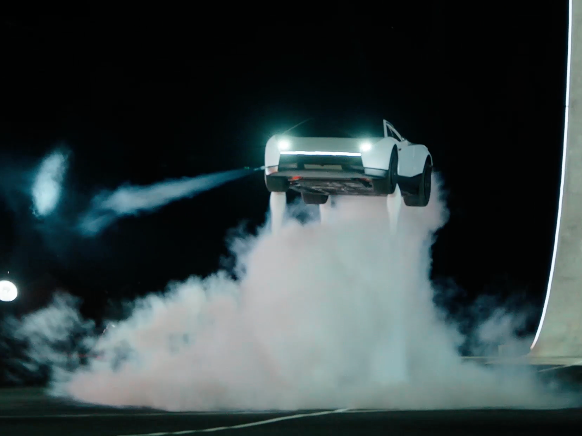
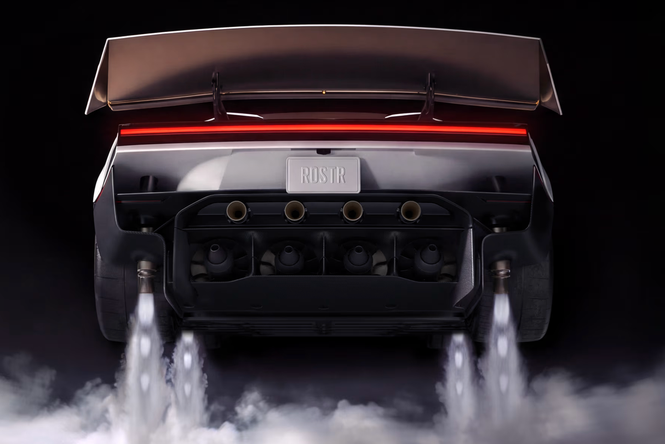
It’s a collaboration between Tesla and SpaceX that uses compressed air rather than rocket fuel, with 10 thruster nozzles helping the Roadster perform manoeuvres beyond the usual car-launch routine. Beneath the body, a fan system sucks the car towards the road to improve grip, with Tesla claiming cornering forces greater than 2g.
“You can corner like it looks like you're breaking physics because the car sticks to the ground so hard. So, acceleration, cornering, it's going to crush every track record that has ever existed,” Musk said.
Tesla says the rocket-assisted features are optional and won’t be available everywhere, while Tesla’s UK website confirms the Roadster will be left-hand drive only.
Musk himself acknowledged the car might not be legal in every market.
“This will be an actual car that's on the roads. I'm not sure it's necessarily legal in all jurisdictions, but there will be such a car that someone can own,” he said. “So, it's going to be pretty wild that you can have a rocket car.”
The setting gave a fair indication of what was coming. SpaceX’s 4,000-acre test site hosted the unveiling, with a Raptor rocket-engine static fire forming part of the pre-show entertainment.
Musk then arrived promising something beyond the cars audiences had seen in films, while admitting that the demonstrations weren’t entirely without risk.
“This is the culmination of incredible work by Tesla and SpaceX engineers working closely together to make something that you haven't seen in any movie, better than any James Bond car, better than... well, I don't know,” he said. “I've never seen anything like this.”
The project had grown as the teams worked together, he explained. “And then things kind of built upon themselves and we're like, well, maybe we could do a little more of this and roll more of that.”
Before the action began, there was a warning for the audience. “By the way, success is not guaranteed,” Musk said. “So, I mean that. It'll probably work, but if it doesn't work, we're at a safe distance.”
He added: “And excitement is 100% guaranteed.”
Tesla’s vice-president of vehicle engineering, Lars Moravy, delivered his verdict after the first demonstration. “Well, it worked,” he said. “Flying cars are real.”
That wasn’t the end of the airborne action, with Musk suggesting the team could go further. “Yeah. I mean, that was just a little flight. Let's do a longer flight.”
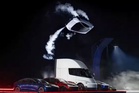
The subsequent manoeuvre somersaulting over a Tesla’s Semi truck and current car line-up prompted Tesla’s chief designer, Franz von Holzhausen, to borrow a name from skateboarding. “Tony Hawk would be proud,” he said. “We call that the kickflip.”
Musk’s reaction was: “I mean, I've seen a lot of things, but I've never seen that before.”
Moravy, meanwhile, said: “I think we could have cleared more than our whole fleet.”
The car’s ability to control itself in the air comes from more than simply giving it a shove from behind. Alongside the main rear thrusters are separate ones that control its angle, allowing it to change its attitude as it flies.
“So the car has obviously attitude control thrusters and main thrusters in the rear,” Musk said. “So, it can basically fly like a rocket and it could do rolls, it could do crazy gymnastics, whatever you want really.”
He also offered a qualification that prospective owners might want to bear in mind: “Now I should say that this is not necessarily a safety optimized car, but it takes the fun meter to 11 out of 10.”
There wasn’t a human driver aboard for the stunt demonstration. Although a Starman figure made an appearance – like the Starman on board the original Roadster that was sent into space aboard one of SpaceXs test flights. Moravy said: “Just to be clear, that is not a real human.”
Musk explained: “Well, it is technically autonomous for this demo to make sure we don't kill anyone!”
The flying hardware is fed by two high-pressure air tanks, with Moravy keen to explain just how much air Tesla has managed to pack into the car. It’s stored under pressure, ready to be released through the thrusters.
Moravy said: “We had the rockets we borrowed from SpaceX technology. You talked about the carbon overlay pressure vessels. I just want to tell everyone because I'm a spec guy, there's two of them in the car. They are a total of 600 liters. It's about 250 kilos of air, and we have 10 nozzles to do all that work.”
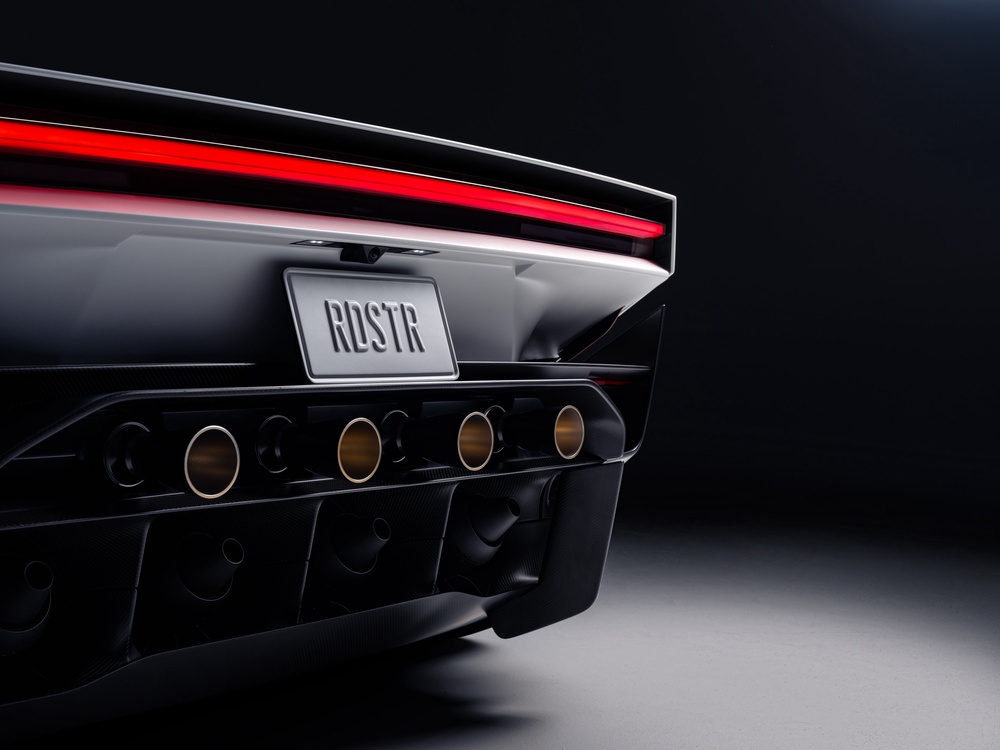
Four rear thrusters alone produce more than 80kN of thrust, according to Tesla, with the air leaving them faster than the speed of sound. The tanks can be replenished by the car, rather than requiring owners to find somewhere selling an exotic propellant.
“And it's using an advanced ultra-high pressure air tank. So, the car can recharge its air tank – it's not like you need special propellant or anything like that,” Musk said. “It literally is just going to puff itself up and be able to do these manoeuvres whenever you'd like.”
The acceleration run provided its own bit of live-event drama. Asked about his target for 0–60mph, Musk said: “Well, you got to break one second, obviously.”
When Moravy referred to a one-second goal, Musk corrected him: “Well, I said less than one second.”
The team then ran the car on the test pad, although getting a usable figure from the timing system took a little longer. Moravy said: “We didn't have a whole lot of room out on the pad, so we had to cut it short, but do we have a live time?”
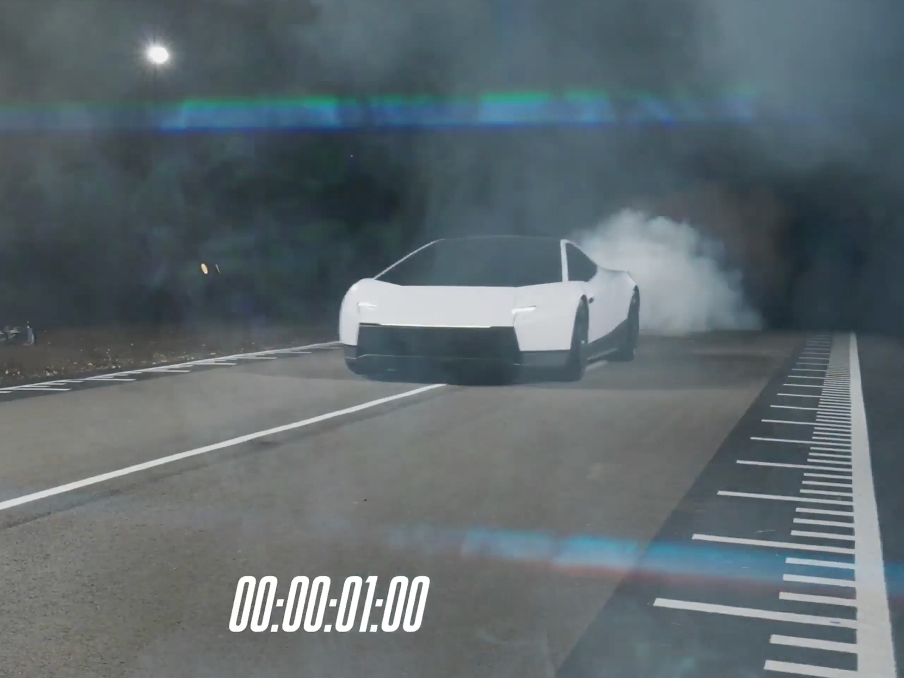
An initial result was dismissed, with Moravy saying: “I think we broke the system. We didn't do it 0.17 seconds.” Musk responded: “Yeah. Okay. 0.1 seconds. I think we'd destroy the human if we did that.”
The figure eventually announced was 0.81 seconds. Musk then said there was more performance to come as the car developed. “As you increase force and decrease mass, you get more acceleration,” he said. “So, the production car will actually do better than that – we'll just ride the limit of don't detach the retina of the human in the car.”
Moravy claimed: “It'll do a half a mile in the time that other cars can do a quarter mile.”
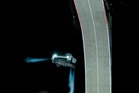
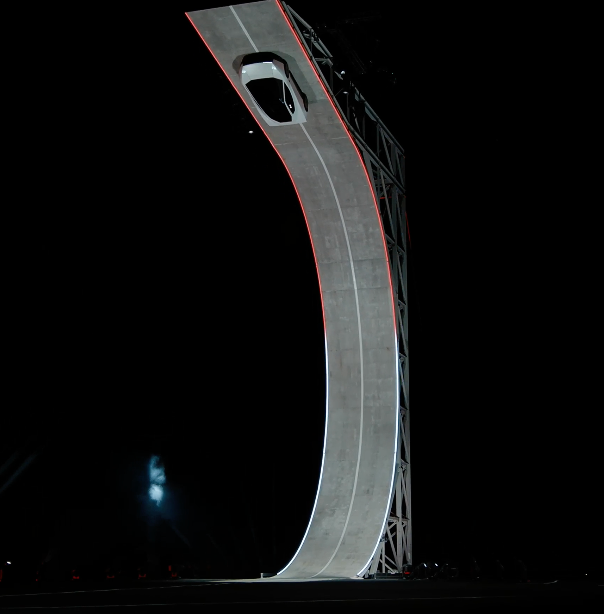
Away from the straight-line performance, the fan system is intended to give the Roadster grip that doesn’t depend only on air flowing over its body at speed. By creating suction underneath, Tesla says it can press the car towards the road even when it’s travelling slowly. And that was proven by the car being driven up what looked like a hot wheels track upside down at the start of the event – before it then went off the track, flipped up the right way and came in to land.
Moravy said: “To do that, we have a fan suction system on the bottom of the car that can pull up to two Gs in order to make the car go upside down. And then we borrowed some technology from SpaceX to do the rest.”
Musk took the opportunity for a joke: “Yeah. I mean, this car really sucks.”
“Now you might say how often do you want to stick upside down in a car?” he went on. “Maybe not that often, but it actually has an actual benefit on the track or just driving where the downforce of the car means you can corner incredibly well.”
There’s more to it than simply turning the fans on. The car has high-downforce and low-drag configurations, while the suction system changes how it works as speed increases.
Moravy said the aim was to combine greater cornering grip with better traction under acceleration. “We put the fan sucker system on there to give us traction to be able to corner at greater than two gs and accelerate with all the traction that goes beyond the tires, which is typically 1.26 gs.”
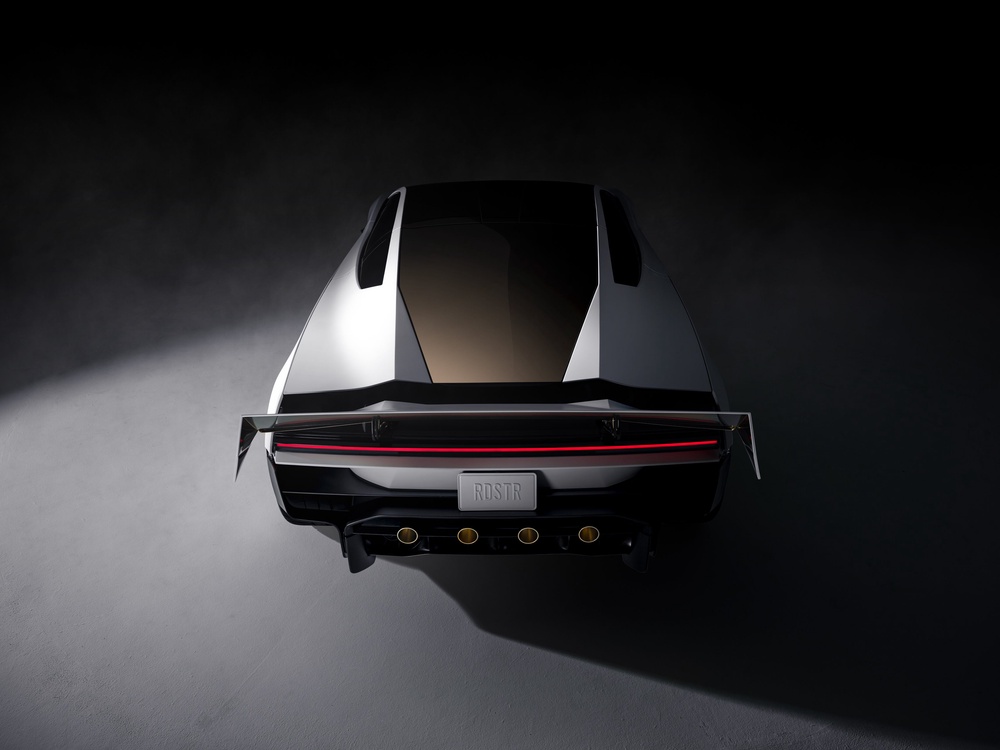
The fan system has two operating modes. “It can suck the car down at low speed to give us traction when we need it. And at high speed, we'll open up the front and rear parts of the suction system to create even more flow underneath the car,” Moravy explained.
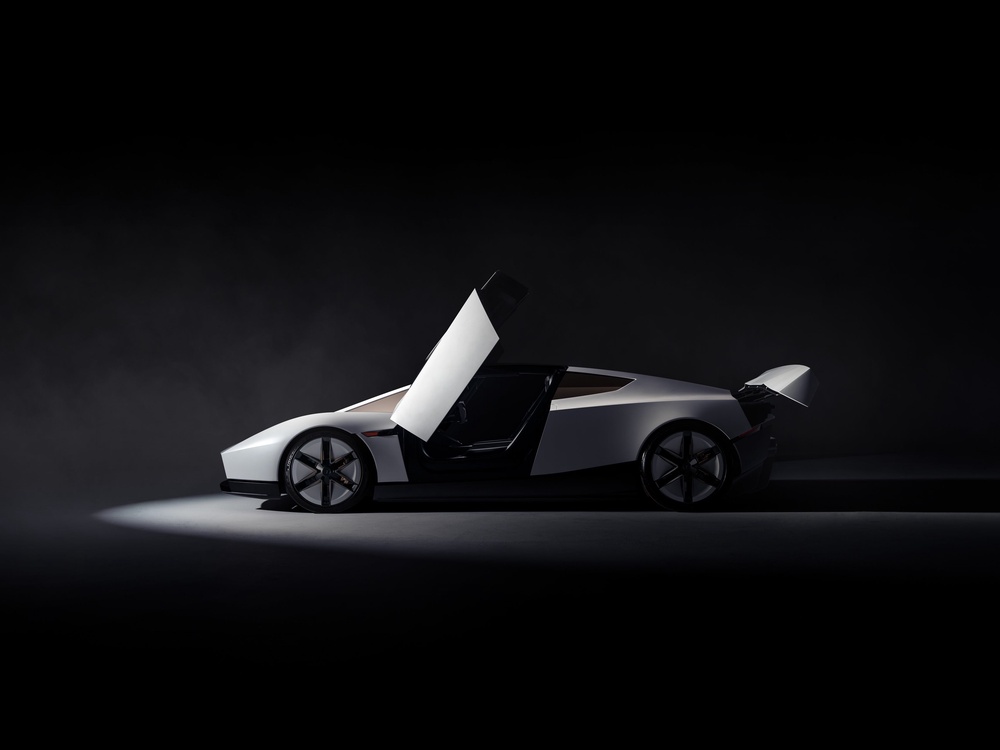
An adjustable rear wing also changes its angle automatically according to the downforce the car calculates it needs on a circuit. The intention is for the aerodynamic systems to adapt to what the driver is doing, rather than leaving the Roadster in one fixed configuration.
The design itself takes inspiration from the SR-71 aircraft, with von Holzhausen saying the team had looked towards aerospace as it worked on a car it knew would be capable of flying. “It's a nice clean aesthetic. Like I said, we leaned into a little bit of some of the aerospace aesthetics. It's a two seater.”
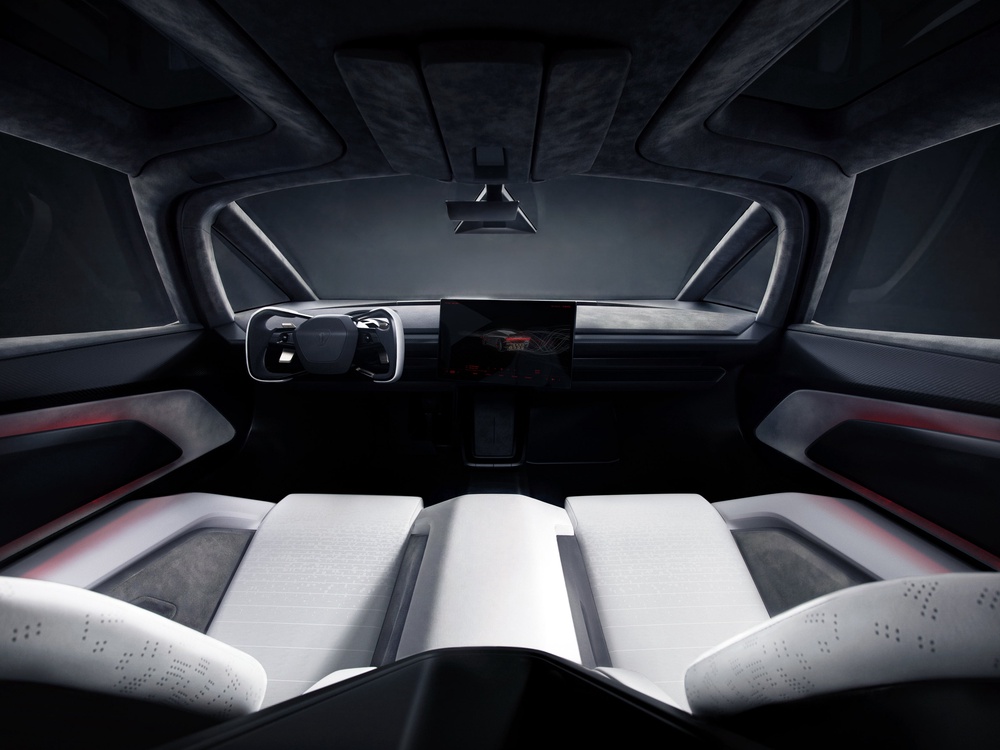
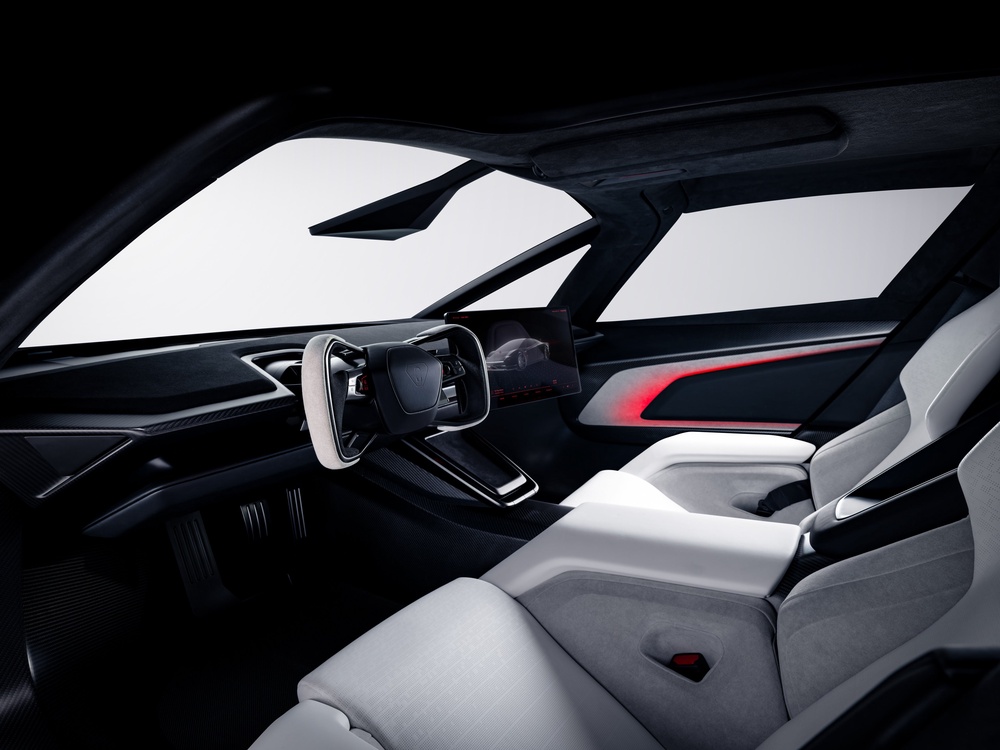
Inside, the seats are incorporated into the chassis as part of the effort to keep weight down. Von Holzhausen said: “We leaned into lightweight as well, so the seats are molded into the chassis. It's a steer-by-wire system.”
There’s a steering yoke, electronic brakes and throttle controls.
The rear diffuser area houses the fans and thrusters, bringing much of the unusual hardware together at the back of the car. The appearance also has to accommodate the changing aerodynamic settings, rather than simply conceal the engineering underneath. Von Holzhausen said: “The car can transform because we wanted to make a pretty car, but also a car that could deliver amazing downforce.”
For all that technology, the Roadster has been given a role within Tesla that’s deliberately about the person behind the wheel. Moravy introduced it by referring to the company’s autonomous future, before Musk made clear that this car is intended to be the exception. “This will actually be long-term the only manually driven car that Tesla makes,” he said. “And so if you're going to have only one manually driven car, let's take it to the limits and way past the limits.”
The event also marked 20 years since the original Roadster was introduced, with von Holzhausen recalling its job of proving an electric car could be enjoyable, usable and capable of covering meaningful distances. He said: “They were real cars. And look at how far we've come in those 20 years.”
For Moravy, the connection was personal. He said: “To be honest, the Roadster is a reason I came to Tesla. I came here and we had a master plan to build an EV that proved that we could make a cheaper EV that people could afford with Model S. And then we built Model 3 and Model Y.”
He also recalled the previous collaboration between the car company and SpaceX. “But the last time we had Roadster and SpaceX together, we put Elon's into orbit.”
This time, the aim is to put some of the rocket technology into a car customers can buy.
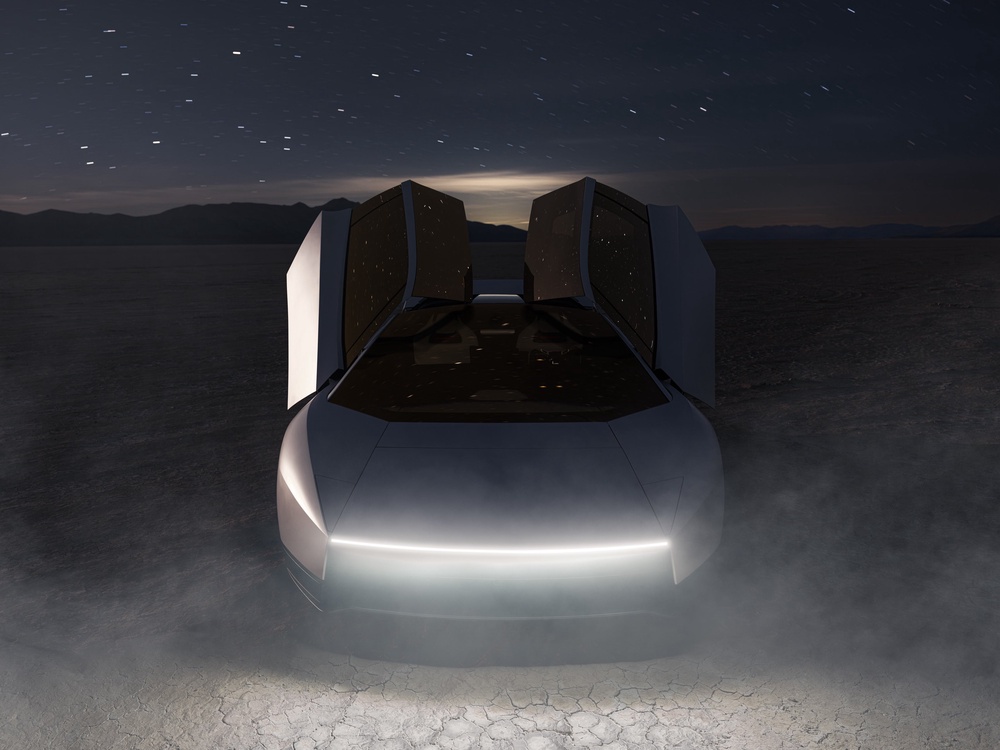
The replacement has already had a much longer journey than originally planned. Tesla first showed it as a four-seater in November 2017 and initially said deliveries would begin in 2020.
A 2028 production start would put it around 11 years after that first unveiling.
Exactly what buyers will pay remains unknown. Tesla hasn’t announced the Roadster’s price, although its US reservation page requires an initial $5,000 credit-card payment followed by a $45,000 bank transfer within 10 days. That $50,000 total is a reservation payment, not the purchase price of the finished car which has yet to be announced.
Asked when customers would get the car, Musk gave 2028 as the production date. There was no mention of battery capacity, maximum claimed range or charging speed yet.
Top speed is another area where there’s a difference between the figure offered by the engineering team and Musk’s ambitions. Moravy said: “The car can go over 230 miles per hour. Hopefully we can get even faster.” Musk’s response was: “Definitely much faster than that.”
Asked how fast, he replied: “You got to crack halfway to the speed of sound, I think.” Moravy answered: “Challenge accepted, sir.”
Musk is also considering another flying display, this time involving the Snake River Canyon and a fresh attempt at the jump associated with stunt rider Evel Knievel.
He acknowledged that he didn’t know whether it was possible, before suggesting: “Let's give it another shot.”
Musk had his own way of summing up the new car: “Where we're going, you don't need tyres.”
Sign up to Steve Fowler’s weekly DriveSmart newsletter for all the latest car news, reviews and insider tips
Read More'I once joked to Elon that making a car wasn't exactly rocket science'
Watch: Tesla unveils ‘flying’ sports car with rocket boosters
Passengers are reporting increased car sickness in electric cars - here's why
With his new Tesla Roadster, has Elon Musk turned flying cars from sci-fi into reality?
Tesla’s new ‘Roadster’ can fly – but you can’t actually drive it on roads
Porsche goes gunning for Ferrari as Mission S previews new mid-engined super sports car
First look inside the award-winning new Chinese Land Rover Defender lookalike
Peugeot goes back to the 80s with concept car that previews the new 208
Iconic Citroën 2CV is back as a cut-price EV - complete with roll-back roof and egg storage
Tiny sideways parking Smart car from the nineties is back with an electric makeover
EV passengers are complaining of increased car sickness - an expert reveals why
I drove VW's marvellous new electric Tiguan - with one key issue