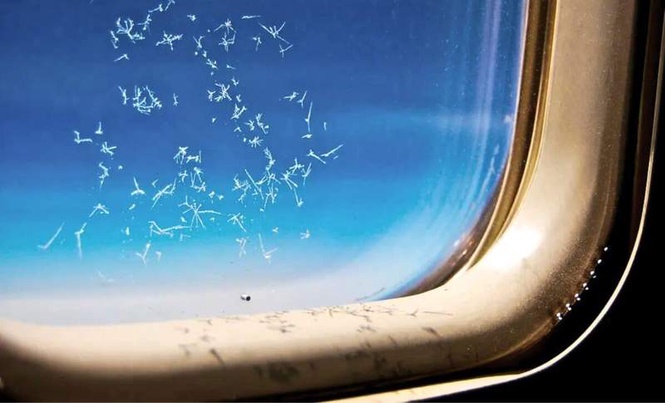
Ever settle into a window seat, glance down, and spot a tiny hole at the bottom of the window? Maybe you’ve even seen a perfect little ring of frost gathered around it on a long flight. Your first thought might be: is that supposed to be there? The answer is yes. That small opening is called a breather hole or a bleed hole, and it pulls off two quiet but critical jobs every time you fly.
This isn’t a flaw or something that sneaked past quality control. The hole is drilled there on purpose. Airline pilot and writer Mark Vanhoenacker unpacked the full story in his Slate column, after talking to engineers at GKN Aerospace and Boeing Commercial Airplanes. What they described is a piece of design that manages enormous forces through an opening no wider than a pencil tip, and it does it without anyone noticing.
Your Airplane Window Is Actually Three Layers, Not One.
Look closely and you’ll see the window isn’t a single thick sheet. The pane closest to you is called the scratch pane. It’s there to take the abuse, from smudges to forehead marks to the odd coffee splash, so the more important layers behind it stay undamaged. The scratch pane handles no pressure at all.
Behind it sit the two panes that do the real work. Both are built from tough acrylic, and each one is strong enough to handle the full pressure gap between the pressurized cabin and the thin outside air on its own. But during a normal flight, only one of them carries that load. The breather hole makes sure the right pane takes the strain.
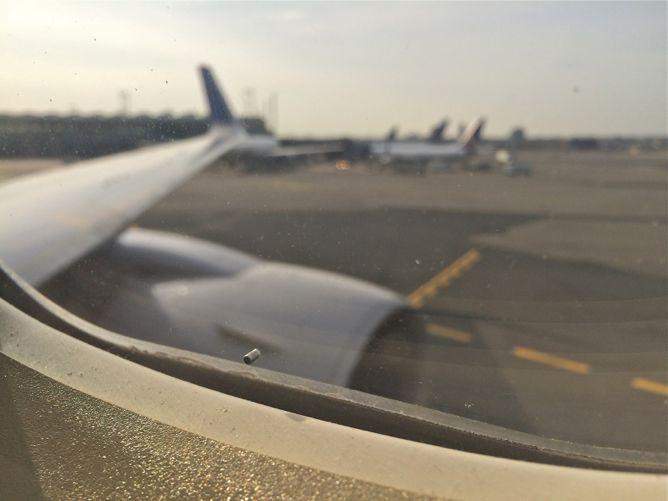
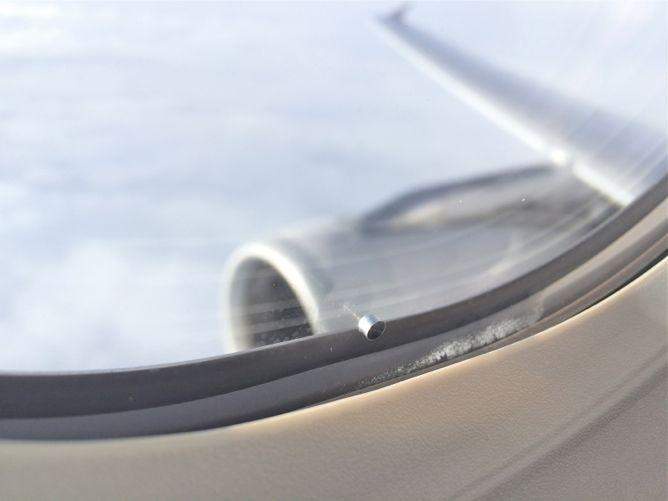
As the plane climbs, the air pressure outside drops hard. Inside, the cabin stays at a comfortable, breathable level. That creates a sharp difference: high pressure inside, low pressure outside. The breather hole is drilled through the middle pane. Because it connects the cabin air to the small gap between the middle and outer panes, the pressure evens out on both sides of the middle layer. The entire outward push bypasses the middle pane and lands squarely on the outer pane.
Marlowe Moncur, director of technology at GKN Aerospace, a leading passenger cabin window manufacturer, put it simply in an email to Vanhoenacker. The bleed hole, he said, lets pressure equalize so that cabin pressure during flight applies to only the outer pane. That leaves the middle pane unloaded, ready and waiting like a backup that rarely gets called.
If the outer pane ever did fail, the middle pane would take over immediately. A small amount of air would leak through the breather hole, but Bret Jensen, an aerospace engineering specialist at Boeing, told Vanhoenacker the aircraft pressurization system would handle that leak without trouble. The whole setup was designed for exactly that backup scenario.
The Hole Also Keeps Your Window From Fogging Up.
The breather hole has a second, more visible job. Moisture can build up in the gap between the middle and outer panes. Without a way out, that moisture would fog the window or freeze into a frost layer that blocks your view entirely. The hole releases that trapped moisture, letting the gap breathe and keeping the window mostly clear.
Boeing’s Jensen confirmed this as a separate but connected function. By releasing moisture from the air gap, the hole stops most fog or frost from forming. So the same tiny opening that manages airplane window safety also protects the view you probably paid extra to enjoy.
Now, about that frost ring. At cruising altitude, the outside air can hit minus 70 degrees Fahrenheit. The window surface turns bitterly cold. When warm, humid cabin air meets that frozen surface right around the breather hole, a small bit of condensation freezes into a delicate snowflake shape.
Moncur told Slate the circular pattern likely comes down to window temperature, cabin humidity, and how fast air moves through the bleed hole. He called the physics behind that little frost pattern an interesting question on its own. The frost isn’t a warning sign. It’s just a visible trace of a system doing its job.
Next time you grab the window seat, that tiny hole won’t look like a defect. It’s a quiet piece of aerospace engineering that manages pressure, keeps a backup pane ready, and stops your view from vanishing behind a wall of fog. The frost that sometimes gathers around it is just the mark of a safety system working exactly as it was designed to, flight after flight.
Enjoyed this article? Subscribe to our free newsletter for engaging stories, exclusive content, and the latest news.